5 from 4 votes
Babi Pongteh (Malaysian Pork Stew)
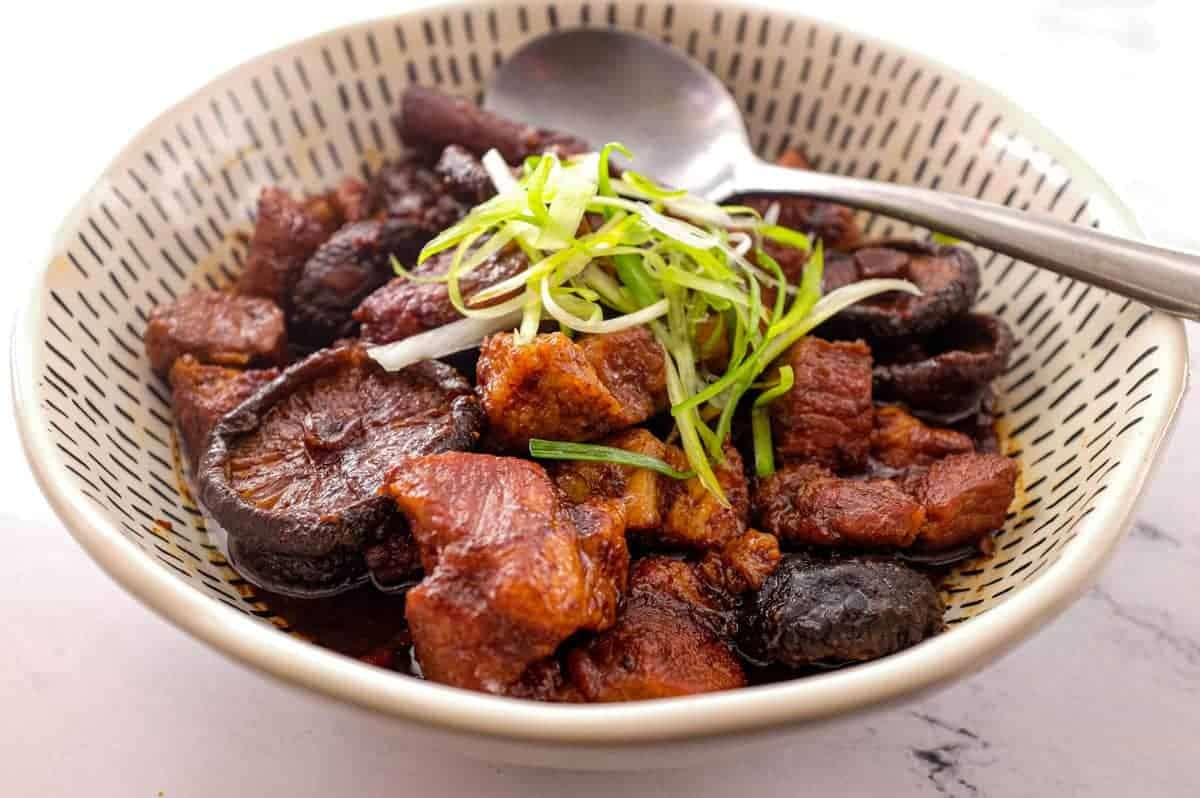
The aromatic delights of Nyonya cuisine are on full display in the wonderful Babi Pongteh, a bold, umami burst of flavour with meltingly tender pork and meaty shiitake mushrooms.
Prep Time
10 mins
Soaking time
30 mins
Total Time
2 hrs 15 mins
Servings:
6
Calories:
857 kcal
Course:
Main Course
Cuisine:
Indonesian, Malaysian
Ingredients
- 8 Chinese dried mushrooms
- 2 lb pork (900g)(belly or marbled shoulder - fatty cut)
- 8 garlic cloves
- 1 cup shallot thinly sliced
- 2 tbsp fermented bean paste
- 3 tbsp vegetable oil
- 1 cinnamon stick
- 4 tbsp dark soy sauce
- 2 tbsp sugar
- 1½ cups water
Instructions
- Add the shiitake mushrooms to a bowl of water and place a small plate on top to submerge them. Soak for 30 minutes then squeeze out the water. Discard the soaking liquid and set aside the mushrooms.
- Using a food processor or stick blender, blend the shallots, 4 of the garlic cloves and bean paste until smooth.
- Heat the oil in a wok or casserole pan over a moderate heat until hot. Add the cinnamon stick and then the shallot paste and fry for 5 minutes until the raw onion smell is gone.
- Add the pork and remaining 4 garlic cloves (whole) and fry for 1-2 minutes before adding the soy sauce and sugar. Stir well and fry for a further 3-4 minutes.
- Add the mushrooms to the pan and pour in the water. Bring to a simmer and then reduce the heat to low. Cover the pan and simmer for 60 minutes.
- Remove the lid and turn up the heat to medium/high. Let the sauce bubble for 30 minutes to reduce the sauce. Stir frequently to avoid sticking.
- Remove from the heat and serve!
Cup of Yum
Notes
- Alternative serving suggestions
- Pro tips
- Instead of Shiitake mushrooms, try chunks of potatoes or turnip. Add in the last 30 minutes of cooking (for potatoes) or 20 minutes (for turnip) to ensure they're cooked through.
- Try sliced lotus root or bamboo shoots (added near the end of cooking)
- Experiment with other Chinese/Malay ingredients to enhance and change the flavour ingredients like cloves, dried tangerine/orange peel, star anise and 5-spice powder will all bring a new personality to the dish.
- The stems of dried mushrooms can become a little tough, even when reconstituted, so I'll often remove them and discard.
- Fermented soy bean paste is eaten in Chinese, Japanese and Korean cuisine, so search all sections of the store if you can't find right away.
- Babi Pongteh works splendidly with noodles. Stir some of the sauce through some freshly boiled egg noodles.
Nutrition Information
Calories
857kcal
(43%)
Carbohydrates
16g
(5%)
Protein
17g
(34%)
Fat
81g
(125%)
Saturated Fat
29g
(145%)
Polyunsaturated Fat
9g
(53%)
Monounsaturated Fat
37g
(185%)
Cholesterol
109mg
(36%)
Sodium
939mg
(39%)
Potassium
488mg
(10%)
Fiber
2g
(8%)
Sugar
8g
(16%)
Vitamin A
24IU
(0%)
Vitamin C
5mg
(6%)
Calcium
43mg
(4%)
Iron
2mg
(11%)
Nutrition Facts
Serving: 6 Serving
Amount Per Serving
Calories 857
% Daily Value*
| Calories | 857kcal | 43% |
| Carbohydrates | 16g | 5% |
| Protein | 17g | 34% |
| Fat | 81g | 125% |
| Saturated Fat | 29g | 145% |
| Polyunsaturated Fat | 9g | 53% |
| Monounsaturated Fat | 37g | 185% |
| Cholesterol | 109mg | 36% |
| Sodium | 939mg | 39% |
| Potassium | 488mg | 10% |
| Fiber | 2g | 8% |
| Sugar | 8g | 16% |
| Vitamin A | 24IU | 0% |
| Vitamin C | 5mg | 6% |
| Calcium | 43mg | 4% |
| Iron | 2mg | 11% |
* Percent Daily Values are based on a 2,000 calorie diet.