5 from 52 votes
Brioche
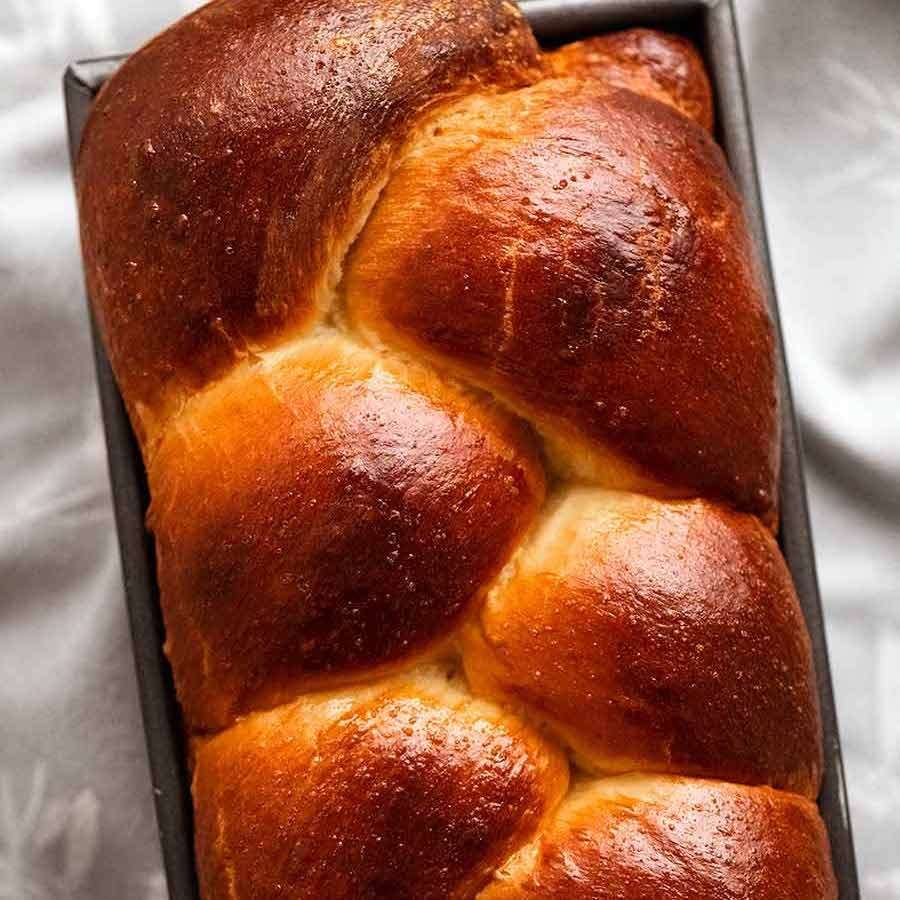
Brioche is a rich, soft bread made with a dough enriched by butter, eggs, and sugar. This recipe guides you through a detailed mixing and kneading process to develop gluten strength and incorporate butter gradually, resulting in a tender crumb with a slight sweetness. The dough's texture is sticky but manageable, and techniques like the windowpane test ensure proper gluten development. The bread has a soft surface and airy interior, making it suitable for slices served plain, with spreads, or as a base for French toast.
Prep Time
45 mins
Cook Time
35 mins
Inactive time
7 hrs 10 mins
Total Time
8 hrs 30 mins
Servings:
10
loaf
Calories:
231 kcal
Course:
Bread
Cuisine:
French
Ingredients
- 2 1/2 tsp instant dried yeast other yeasts see Note 1, rapid rise
- 4 tbsp milk , warm, full fat (Note 2)
- 2 cups all-purpose flour not bread flour, Note 3, aka plain flour
- 3 1/2 tbsp caster sugar Note 4, aka superfine sugar
- 1/2 cup egg lightly whisked, at room temperature (Note 5, 2 1/2 eggs
- 1 tsp salt (cooking/kosher salt, not table salt Note 6)
- 150g / 10.5 tbsp butter cut into 1.25 / 1/2" pieces, softened (but not melting, Note 7, unsalted
Other:
- cooking spray anything neutral flavoured (canola, vegetable, not olive oil
- 1/2 egg lighter whisked (Egg Wash, use leftover egg from above, leftover
Instructions
Dough:
- Bloom yeast (Note 1): In a small bowl, mix 1 tsp sugar, yeast and milk together. Cover with cling wrap and set aside in a warm place for 10 minutes until foamy.
- Dough making methods: Base recipe method uses a Stand Mixer. See Note 5 for faster food processor method.
- Make dough: In the bowl of a stand mixer fitted with a dough hook, add the flour, eggs, salt, rest of the sugar and the foamy yeast. Mix on Speed 1 until ingredients are combined.
- Mixing Part 1: After the ingredients are combined, then mix on Speed 1 for 5 minutes then on Speed 2 for 10 minutes, (Yes really, 15 minutes, see Note 8!)
- Slow add butter: With the stand mixer still on Speed 2, drop butter cubes in gradually, over about 90 seconds to 2 minutes, giving the dough a chance to mix most of the butter in. (Note 9)
- Incorporate butter: Keep mixing until the butter is fully incorporated- about 1 minute. Dough will be pasty and sticky!
- Mixing Part 2: Then mix on Speed 2 for 20 minutes, scraping down the sides of the bowl every now and then.
- Dough goals (Note 8): At first the mixture it will be very pasty and stuck to the sides of the bowl. By the end, the dough should come together, caught up in the dough hook, and not be stuck on the sides of the bowl. Very soft, but able to pick it up. You should be able to do the "window pane" test using a walnut size piece (Note 10). If not, keep kneading! (Note 11 trouble shooting)
Cup of Yum
Rising, Fridge & Shaping:
- Rise #1 (2 hrs): Shape the dough into a ball, put it back into the stand mixer bowl. Cover with cling wrap and put it in a warm place for 2 hours until it has doubled in size.
- Cut into 3: Punch the dough dough to release all the air. Scrape out onto a lightly floured work surface. Fold the outside of the dough in 6 times. Shape into a log then cut into 3 equal portions and shape into a ball (~225g/7.9oz per piece).
- Fridge (1.5 hrs): Line a deep container or roasting pan with baking/parchment paper lightly sprayed with oil. Place dough on paper, cover with cling wrap/lid and refrigerate for 1.5 hours (Note 12).
- Braid: Remove dough from fridge. Place on a lightly floured work surface and roll each piece into a 35cm/14" logs. Braid the logs, and tuck the ends under to make them tidy.
- Loaf pan: Spray a 21.5 x11cm (8.5 x 4.3") loaf pan well coated with oil spray, then place the dough in. Lightly spray cling wrap with oil, then cover the dough.
- Rise #2 (3 hrs): Rise in a warm place for 3 hours or until it is just over double in size. (Note 13)
Baking:
- Preheat oven: Preheat oven to 200°C/390°F (180°C fan) when dough is almost ready.
- Shelf position: Position shelf so loaf will sit in the lowest 1/3 of the oven.
- Egg wash: Brush the brioche surface very gently with whisked egg.
- Bake uncovered 15 min: Bake brioche for 15 minutes, uncovered, until a beautiful deep golden.
- Bake covered 20 min: Remove from oven. Loosely cover with foil. Bake for a further 20 minutes or until the internal temperature is 88°C/190°F. (Note 14)
- Turn out and cool: Immediately turn brioche out onto a rack. Cool for at least 45 minutes before slicing (or tearing!) to serve (still warm).
- Serving: Best served warm, with butter and lovely jams, the French way! Either slice warm loaf, or toast slices. (Note 16) See in post for more serving ideas - savoury, sweet, breakfast, lunch, dessert!
What the finished brioche should be like:
- The crust will be delicately crusty and flake gently when you slice it. It will be ultra soft inside, much softer than usual breads, with a pale yellow colour from the butter and eggs. Though traditionally sliced to serve, a unique characteristic is that if you tear the bread, it shreds like cotton candy. This is the sign off a well made traditional French brioche that you will not find in run-of-the-mill grocery store cheap brioche! Subtly sweet with a beautiful butter flavour (another thing store bought lacks!).
Notes
- Instant yeast produces a softer brioche with a higher rise; blooming it before mixing improves results.
- Use full-fat milk for best texture and flavor.
- All-purpose flour is preferred over bread flour to keep the crumb soft.
- Softened butter should be firm but pliable, not melting, to avoid greasy dough.
- Perform the windowpane test on dough to ensure proper gluten development.
- An optional refrigeration step after initial mixing helps smooth the dough and eases shaping.
- Brioche can be reheated wrapped in foil at 350°F for 10–15 minutes and freezes well for up to 3 months.
- If dough is too sticky or crumbly, adjust flour or moisture gradually to reach desired consistency carefully.
Nutrition Information
Calories
231cal
(12%)
Carbohydrates
24g
(8%)
Protein
4g
(8%)
Fat
13g
(20%)
Saturated Fat
8g
(40%)
Trans Fat
1g
(50%)
Cholesterol
66mg
(22%)
Sodium
250mg
(10%)
Potassium
51mg
(1%)
Fiber
1g
(4%)
Sugar
5g
(10%)
Vitamin A
432IU
(9%)
Calcium
19mg
(2%)
Iron
1mg
(6%)
Nutrition Facts
Serving: 10 loaf
Amount Per Serving
Calories 231
% Daily Value*
| Calories | 231cal | 12% |
| Carbohydrates | 24g | 8% |
| Protein | 4g | 8% |
| Fat | 13g | 20% |
| Saturated Fat | 8g | 40% |
| Trans Fat | 1g | 50% |
| Cholesterol | 66mg | 22% |
| Sodium | 250mg | 10% |
| Potassium | 51mg | 1% |
| Fiber | 1g | 4% |
| Sugar | 5g | 10% |
| Vitamin A | 432IU | 9% |
| Calcium | 19mg | 2% |
| Iron | 1mg | 6% |
* Percent Daily Values are based on a 2,000 calorie diet.