5 from 81 votes
Chinese Black Sesame Paste (and Powder)
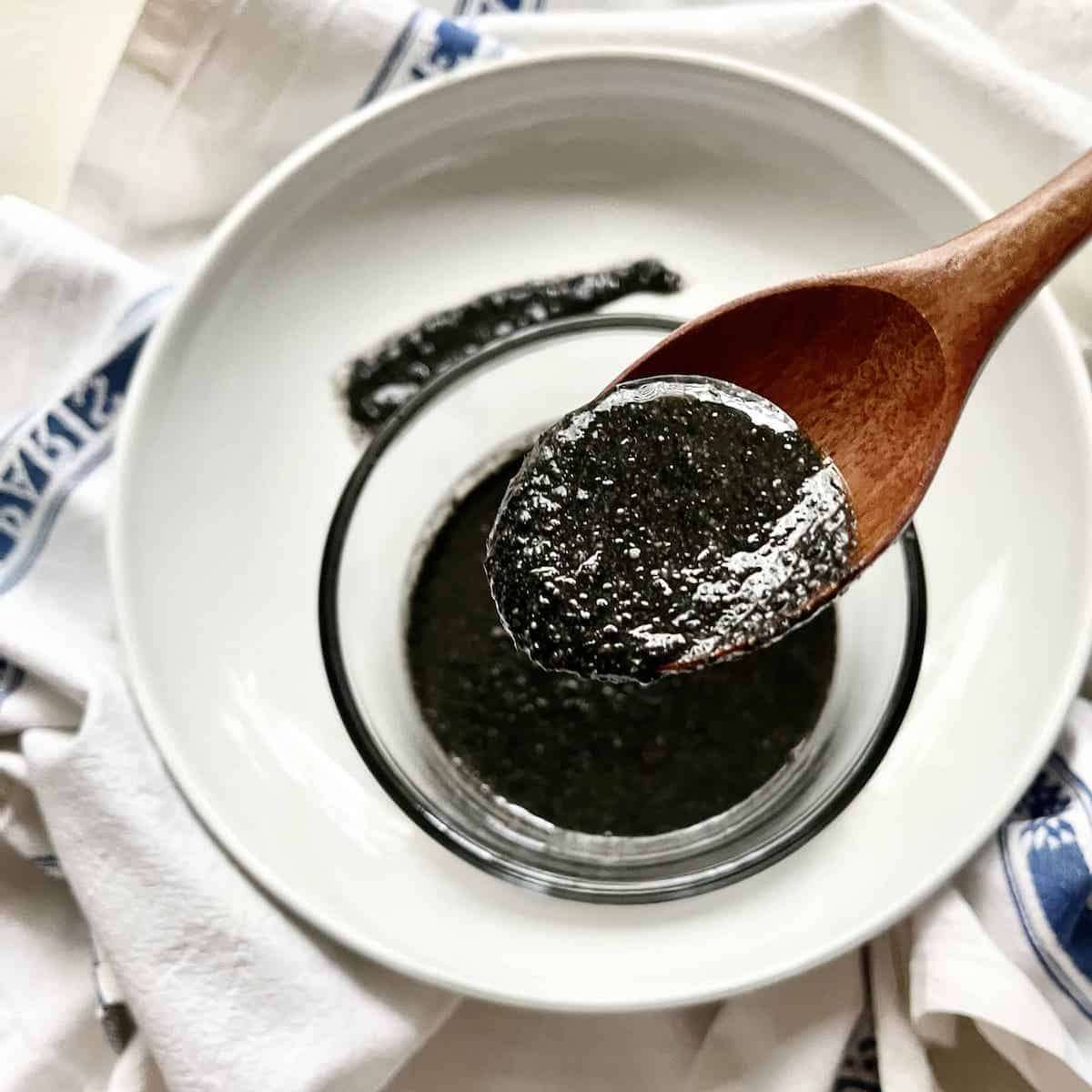
Chinese Black Sesame Paste is made by toasting black sesame seeds until aromatic, then blending them with sesame oil and sweetener to create a smooth, sweet paste. The recipe also explains how to produce black sesame powder by grinding toasted seeds without adding oil or sweeteners. This paste has a rich, nutty flavor and can be used in desserts, spreads, or sauces.
Calories:
731 kcal
Course:
Dessert, Drinks, Snacks
Cuisine:
Chinese, Japanese, Korean
Ingredients
Made with a blender
- ½ Cup black sesame seeds
- 2 Tablespoons sesame oil If using a food processor, you only need 1 Tablespoon, added after the seeds have been crushed. For a coffee grinder or spice grinder, you only need to add 1 Tablespoon of sesame oil after the seeds have been blitzed into powder. (A blender needs more to get the blades working.)
- 1-3 Tablespoons brown sugar syrup Till your desired taste and consistency. Substitute: honey, golden syrup, sugar, maple syrup etc. Using different sweeteners will affect the firmness of the paste.
- salt Optional, a pinch
Instructions
Toasting the seeds
- Note: the following steps are only for non-roasted, raw seeds. If yours come roasted, just dry fry for a couple of seconds to wake up the aroma.
- Slowly toast the seeds in a dry pan (without oil) on LOW heat if using a gas fire and medium-low for an induction stove.
- Stir continuously (or shake the pan) for 5- 12 minutes till you smell the toasted, warm aroma of sesame. (You don't want the seeds to burn or they'll taste super bitter! If you're in a rush and use medium heat, don't stir-fry for more than 2-3 minutes.)
- How to tell when the seeds are toasted They're bigger (Raw, they're flatter.)They have lightened slightly and turned grey.They're more fragile and easier to crush.You may hear some seeds pop when they're "done" but, even if you don't, I recommend switching off the fire once you smell the sesame to prevent over-toasting. (If so, add more sugar to help cover the bitterness.)
Cup of Yum
Blending the seeds
- You may want to let your seeds cool slightly before blending with the sesame oil. If not, you'll (literally) see them smoking in the blender after blitzing for just a bit! Tip: don't let it cool in the pan as the heat from the pan will continue heating the seeds and may burn them.
- Add the sesame oil now as most blenders need some help to get going and the oil helps the seeds that fly up to the top slide back down to the blade! (If using a food processor, coffee grinder or spice grinder, you don't need to add the oil now. See "Equipment" in above post for more details.)
- Blend in intervals of 5-10 seconds, allowing your motor to rest in between to prevent overheating. (Use the time to scrape down the sides. The seeds will fly all the way up to stick to the top of the cover.)
- Optional: you may want to blend in a pinch of salt to enhance the nutty flavor.
- You know the black sesame paste is done when it changes from a grey gritty powder to a glossy and shiny jet black puree.Note: Don't worry about grinding till silky smooth. You can if you want, but a lot of Asian desserts use black sesame paste with some grittiness to it.
- If making sweet black sesame paste: stir in the honey or syrup, to taste. You will need minimum 1 Tablespoon of honey to ½ Cup of black sesame seeds and I'd say no more than 3 Tablespoons without it becoming too sweet!
Notes
- Store the black sesame paste in a sterilized airtight jar and refrigerate for 2-3 weeks, or freeze for up to 6 months.
- To make black sesame powder instead of paste, use only toasted black sesame seeds without adding oil or honey; grinding in short bursts prevents releasing too much oil.
- Caution is needed when toasting seeds to avoid burning, as burnt seeds produce bitterness; watch for aroma and slight color change as doneness cues.
- Different sweeteners change the paste's firmness; adjust quantity to suit taste and texture preferences.
Nutrition Information
Calories
731kcal
(37%)
Carbohydrates
32g
(11%)
Protein
13g
(26%)
Fat
65g
(100%)
Saturated Fat
9g
(45%)
Polyunsaturated Fat
28g
(165%)
Monounsaturated Fat
25g
(125%)
Sodium
20mg
(1%)
Potassium
364mg
(8%)
Fiber
9g
(36%)
Sugar
15g
(30%)
Vitamin A
7IU
(0%)
Calcium
734mg
(73%)
Iron
12mg
(67%)
Nutrition Facts
Serving: 1 Serving
Amount Per Serving
Calories 731
% Daily Value*
| Calories | 731kcal | 37% |
| Carbohydrates | 32g | 11% |
| Protein | 13g | 26% |
| Fat | 65g | 100% |
| Saturated Fat | 9g | 45% |
| Polyunsaturated Fat | 28g | 165% |
| Monounsaturated Fat | 25g | 125% |
| Sodium | 20mg | 1% |
| Potassium | 364mg | 8% |
| Fiber | 9g | 36% |
| Sugar | 15g | 30% |
| Vitamin A | 7IU | 0% |
| Calcium | 734mg | 73% |
| Iron | 12mg | 67% |
* Percent Daily Values are based on a 2,000 calorie diet.