5 from 111 votes
EASY Chinese New Year Cake (Baked Nian Gao)
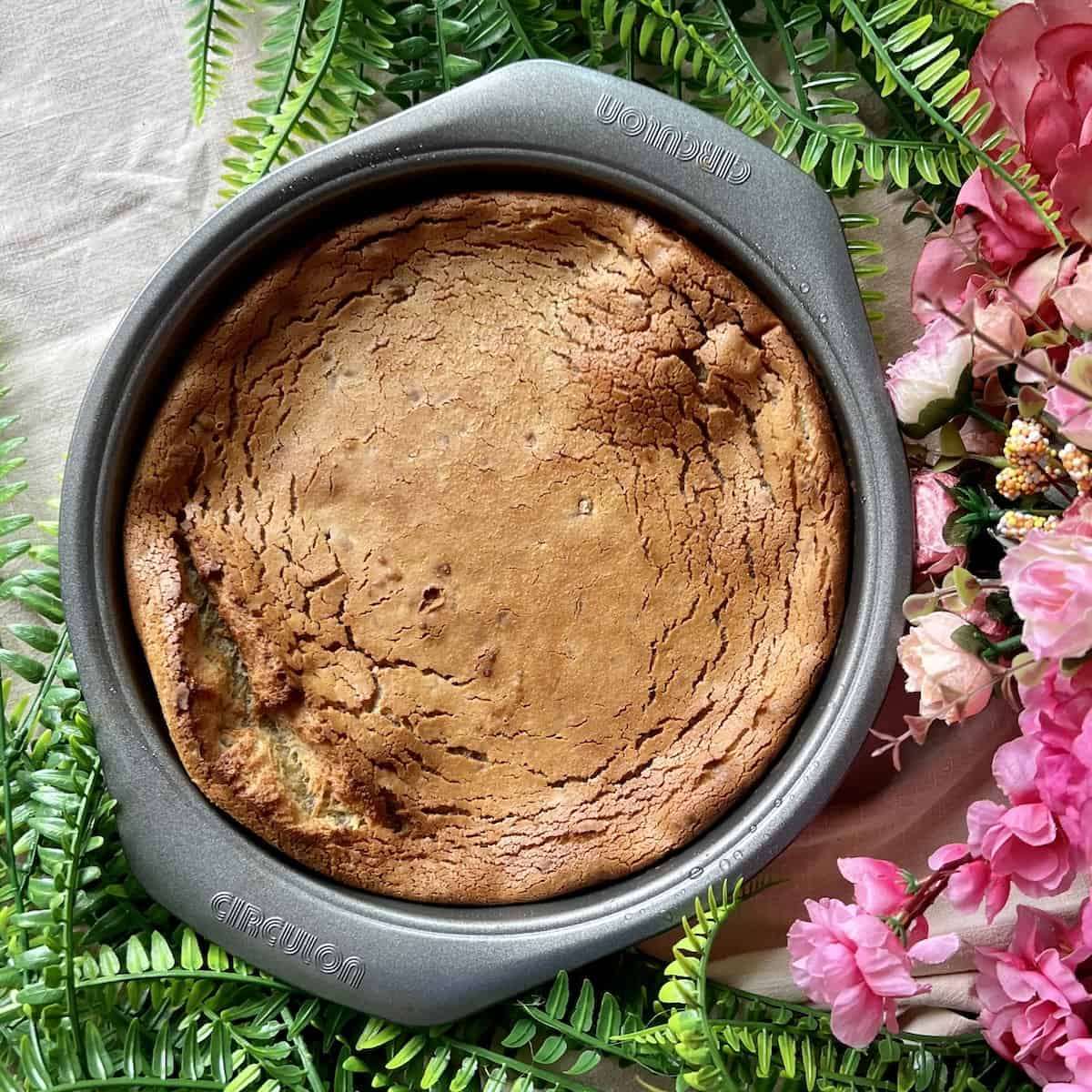
This baked Chinese New Year Cake uses glutinous rice flour, brown sugar, coconut cream, and eggs to create a sweet, chewy dessert. Grated ginger adds a subtle warmth and fragrance. The batter is baked until it forms a translucent, cohesive dough with a golden crust. The texture is sticky and dense, characteristic of traditional nian gao.
Prep Time
5 mins
Cook Time
50 mins
Servings:
8
people
Calories:
380 kcal
Course:
Dessert, Snacks
Cuisine:
Fusion, Chinese
Ingredients
- 7.9 oz glutinous rice flour 225g. Most Chinese people use Thai glutinous rice flour (sticky rice flour) but you can also use Mochiko Flour/ sweet rice flour. DO NOT use regular rice flour as a substitute for glutinous rice flour. I'm too lazy to sift and never received any complaints.
- 1 Cup sugar 7 oz or 200g. Use light brown or dark brown sugar.
- ⅙ teaspoon salt you can omit if you don't like salt in your desserts but it's a flavor enhancer.
- 1 inch ginger peeled and grated. (Use the juice too.) Optional.
- 9.3 oz coconut cream 265g.
- 3 oz water 85g. Omit if using coconut milk. I will update with the exact quantity to substitute after testing.
- 0.7 oz neutral cooking oil 20g. Use sesame oil or a neutral vegetable oil. Do NOT use olive oil. Substitute: melted butter, generic cooking oil
- 2 egg beaten
Instructions
- Preheat the oven to 350F/ 177C/ 167 C fan.
- Mix the dry ingredients (glutinous rice flour, sugar, salt. If adding ginger or other spices such as cinnamon, you can add it now.)
- Stir in the coconut cream, water, and oil or melted butter till you don't see any flour. (The batter will be a bit lumpy, don't worry.)
- Slowly fold in the beaten eggs.
- Pour into an oiled 9-inch cake tin. Bake for 50 minutes or till cooked through. (The inside will look wet and underbaked, but it should have formed a cohesive translucent dough, instead of being a wet batter. Refer to the Step-by-Step for a photo of what the cooked batter looks like.)
- Once baked and golden brown, remove from the oven and allow to cool for about 10 minutes before removing from tin and cutting.
Cup of Yum
Notes
- Store the cake for no more than one to two days as reduced sugar affects its shelf life.
- Reheat by pan-frying or microwaving to soften, avoiding steaming to preserve the crust.
- Traditional methods include dipping the cake in egg and deep-frying for a different texture, though this recipe has not been tested that way.
Nutrition Information
Calories
380kcal
(19%)
Carbohydrates
71g
(24%)
Protein
3g
(6%)
Fat
10g
(15%)
Saturated Fat
6g
(30%)
Polyunsaturated Fat
1g
(6%)
Monounsaturated Fat
2g
(10%)
Trans Fat
0.01g
(1%)
Cholesterol
41mg
(14%)
Sodium
81mg
(3%)
Potassium
41mg
(1%)
Fiber
2g
(8%)
Sugar
47g
(94%)
Vitamin A
59IU
(1%)
Vitamin C
0.04mg
(0%)
Calcium
10mg
(1%)
Iron
0.3mg
(2%)
Nutrition Facts
Serving: 8 people
Amount Per Serving
Calories 380
% Daily Value*
| Calories | 380kcal | 19% |
| Carbohydrates | 71g | 24% |
| Protein | 3g | 6% |
| Fat | 10g | 15% |
| Saturated Fat | 6g | 30% |
| Polyunsaturated Fat | 1g | 6% |
| Monounsaturated Fat | 2g | 10% |
| Trans Fat | 0.01g | 1% |
| Cholesterol | 41mg | 14% |
| Sodium | 81mg | 3% |
| Potassium | 41mg | 1% |
| Fiber | 2g | 8% |
| Sugar | 47g | 94% |
| Vitamin A | 59IU | 1% |
| Vitamin C | 0.04mg | 0% |
| Calcium | 10mg | 1% |
| Iron | 0.3mg | 2% |
* Percent Daily Values are based on a 2,000 calorie diet.