4.6 from 51 votes
Folded kimbap (or gimbap)
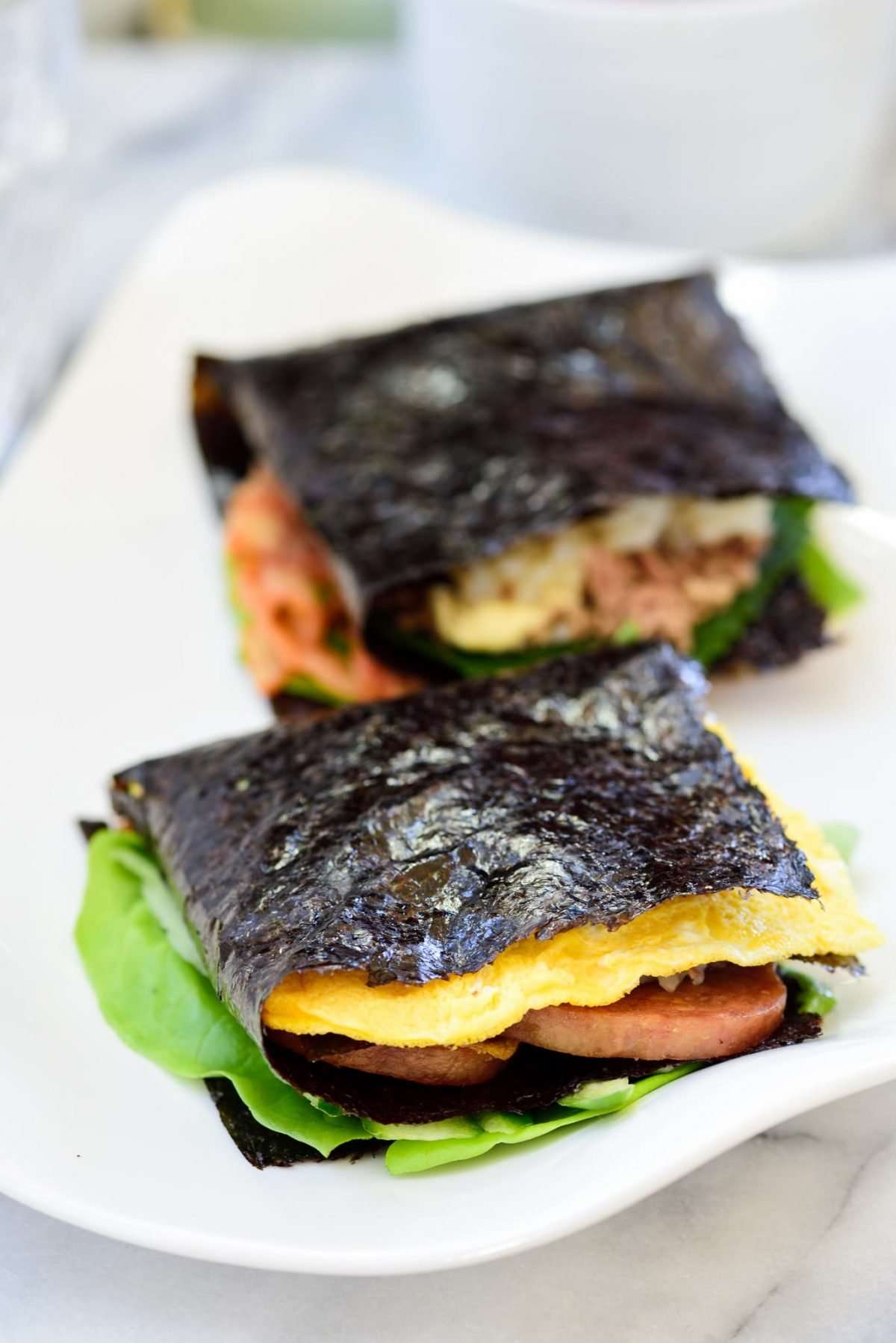
Folded kimbap is a Korean rice roll made by spreading seasoned rice and fillings on a seaweed sheet, then folding it in quarters to encase the ingredients. This version uses cooked rice flavored with sesame oil and salt, combined with protein choices like pan-fried Spam or egg, and fresh vegetables such as lettuce and cucumber, arranged within a slit seaweed sheet to form a compact, handheld roll.
Prep Time
10 mins
Cook Time
5 mins
Servings:
1
Course:
Main Course, Snacks
Cuisine:
Korean
Ingredients
For 1 folded kimbap (only an example)
- 1/4 cup rice cooked
- 1/4 teaspoon sesame oil
- salt to taste
- 1/4 teaspoon sesame seeds optional
- 1 seaweed sheet aka gim (김밥용 김), laver, nori
For proteins
- 2 SPAM or other cooked or processed meat, or 2 tablespoons canned tuna (press out the liquid), thin slices
- 1 egg or cheese, eomuk (fish cake), fried tofu, etc, fried, no runny yolk
For vegetables
- 1 lettuce you can use 2 or double up with a perilla leaf, leaf
- 1/2 cucumber or your choice of veggies thinly sliced or julienned as necessary, or carrot, small
Instructions
- Mix warm rice with a little bit of sesame oil, salt to taste, and optional sesame seeds
- If using Spam, thinly slice and pan fry for a minute or two on each side over medium heat. If using leftover cooked meat, you can heat it in the microwave as necessary. If using canned tuna, press the liquid out.
- Clean and pat dry the vegetables with a paper/kitchen towel. Thinly slice, shave (with a peeler), or julienne the cucumber or carrot. You can lightly sauté the cucumber or carrot, but not necessary. If using kimchi, thinly slice and squeeze out the liquid. You can mix kimchi with sesame oil and/or stir-fry in lightly oiled pan, but not necessary.
- Put a sheet of nori, shiny side down and shorter side towards you (the photo may not look like that because of the camera angle), on a cutting board or plate. Cut a slit to the middle of gim (seaweed sheet) from the short side.
- Spread the rice evenly over the bottom left quarter of the seaweed sheet. Arrange the other ingredients on each quarter. Lift the bottom left quarter and fold it onto the top left quarter, then to the top right, and finally to the bottom right. Press lightly and tuck the filling in after each fold.
Cup of Yum
Notes
- Squeeze excess liquid from wet fillings to prevent sogginess.
- Pat vegetables dry before assembling to keep rolls firm.
- Do not overfill the rice and fillings to allow easy folding and neat bites.
- Layer smaller or loose ingredients near the rice so they adhere and stay inside the roll.
- You can double ingredient amounts on each quarter as long as the roll does not become bulky.