4.8 from 109 votes
Gulab Jamun Recipe
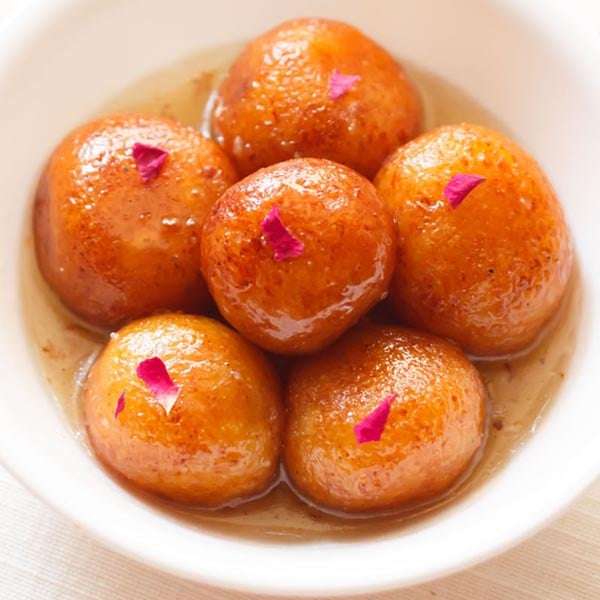
Gulab Jamun is a traditional Indian dessert featuring soft, sweet dough balls made from khoya and paneer, fried until golden and soaked in fragrant cardamom-flavored sugar syrup. The dough combines moist, finely mashed ingredients with semolina and flour, which are gently formed into balls and fried in oil or ghee over moderate heat. The syrup is sticky yet not watery, ensuring jamuns soak just right without becoming mushy.
Prep Time
35 mins
Cook Time
10 mins
Total Time
45 mins
Servings:
20
Gulab Jamun
Calories:
126 kcal
Course:
Dessert
Cuisine:
Indian
Ingredients
For the jamun dough
- 1 cup (200 grams) khoya (mawa)
- ¾ cup (100 grams) paneer Indian cottage cheese, grated
- 3 tablespoons all-purpose flour
- 2 tablespoons sooji (rava or semolina), finer variety
- 4 green cardamom powdered in a mortar-pestle or ½ teaspoon cardamom powder
- 1 tablespoon milk or add as required
- ¼ teaspoon baking powder
- neutral cooking oil for deep frying - as required, generic cooking oil
For sugar syrup
- 1.75 cups (250 grams) sugar
- 1 cup water
- 1 tablespoon rose water
- 1 tablespoon milk (optional) - *read notes
Instructions
Making dough
- Take khoya (mawa or evaporated milk) in a bowl. Mash it very well. There should be no lumps. You can also grate and then mash the khoya.
- Then add grated paneer, rava (sooji), all purpose flour (maida), baking powder and cardamom powder to the mashed khoya.
- There should be no lumps in both the mawa and paneer. As if they are there, then you will find the texture of the gulab jamun not so good. The bits and pieces of mava or paneer will give a bite in the mouth, when you have the gulab jamun. They won't be smooth.
- Mix well. Add milk and gather together to form a dough with milk. Don't knead.
- Just gently mix. If you are unable to form balls or if the mixture appears dry, then add a few teaspoons of milk. Cover the dough and keep aside for 30 mins.
- Make small balls from the dough. Cover the balls and keep aside.
Cup of Yum
Making sugar syrup
- Dissolve sugar in water. Heat the sugar solution till it become sticky. You just need to switch off the fire before the syrup reaches a one thread consistency.
- Add rose water and stir. Keep the sugar solution aside. On cooling if the sugar syrup crystallizes, then just add 2 to 3 tbsp water and warm the syrup again. It will again return to a liquid state.
Frying
- Meanwhile, while the sugar syrup is cooking, heat oil till its medium hot. Lower the flame and wait for a minute. Then gently place the dough balls in the oil.
- Once they start to have tiny golden spots, keep on rotating them in the oil, so that the jamun are evenly browned.
- Remove the fried jamun and then drain them on kitchen paper towels to remove excess oil.
Making gulab jamun
- Then place the hot fried dough balls in the sugar syrup. Continue frying the rest of the dough balls in batches.
- When all the jamuns are placed in the sugar syrup, then keep the whole pan with the sugar syrup and the gulab jamun, on a low heat for 1 to 2 minutes till the jamun become soft.
- Heating helps the gulab jamun to absorb the syrup and become soft. The jamun increase a bit in size. Don't overcook as then the jamun can break.
- Use a large pan, so that the jamuns are not overcrowded and you can easily stir them gently while they are simmering.
- Serve gulab jamun warm or at room temperature. You can also chill them and serve them cold. Garnish with rose petals or almond slivers.
Notes
- To avoid jamuns breaking during frying, ensure dough moisture is balanced and avoid excessive baking powder.
- Fry on medium heat to allow even browning and structural firmness before turning.
- Avoid kneading the dough to prevent dense, chewy jamuns; mix gently instead.
- Syrup should be sticky but not watery to keep jamuns soft without becoming mushy.
- Add milk to sugar syrup and remove impurities by skimming the scum layer for clarity.
- Traditionally fried in ghee, but neutral oil works well; temperature control is crucial to prevent oil absorption or undercooking.
Nutrition Information
Serving
1gulab jamun
Calories
126kcal
(6%)
Carbohydrates
17g
(6%)
Protein
3g
(6%)
Fat
5g
(8%)
Saturated Fat
2g
(10%)
Cholesterol
5mg
(2%)
Sodium
30mg
(1%)
Potassium
16mg
(0%)
Fiber
1g
(4%)
Sugar
12g
(24%)
Vitamin A
46IU
(1%)
Vitamin B1 (Thiamine)
1mg
Vitamin B2 (Riboflavin)
1mg
Vitamin B3 (Niacin)
1mg
Vitamin B6
1mg
Vitamin B12
1µg
(42%)
Vitamin C
1mg
(1%)
Vitamin D
1µg
(5%)
Vitamin E
1mg
Vitamin K
1µg
Calcium
99mg
(10%)
Vitamin B9 (Folate)
5µg
Iron
1mg
(6%)
Magnesium
2mg
(1%)
Phosphorus
9mg
Zinc
1mg
Nutrition Facts
Serving: 20 Gulab Jamun
Amount Per Serving
Calories 126
% Daily Value*
| Serving | 1gulab jamun | |
| Calories | 126kcal | 6% |
| Carbohydrates | 17g | 6% |
| Protein | 3g | 6% |
| Fat | 5g | 8% |
| Saturated Fat | 2g | 10% |
| Cholesterol | 5mg | 2% |
| Sodium | 30mg | 1% |
| Potassium | 16mg | 0% |
| Fiber | 1g | 4% |
| Sugar | 12g | 24% |
| Vitamin A | 46IU | 1% |
| Vitamin B1 (Thiamine) | 1mg | |
| Vitamin B2 (Riboflavin) | 1mg | |
| Vitamin B3 (Niacin) | 1mg | |
| Vitamin B6 | 1mg | |
| Vitamin B12 | 1µg | 42% |
| Vitamin C | 1mg | 1% |
| Vitamin D | 1µg | 5% |
| Vitamin E | 1mg | |
| Vitamin K | 1µg | |
| Calcium | 99mg | 10% |
| Vitamin B9 (Folate) | 5µg | |
| Iron | 1mg | 6% |
| Magnesium | 2mg | 1% |
| Phosphorus | 9mg | |
| Zinc | 1mg |
* Percent Daily Values are based on a 2,000 calorie diet.