4.7 from 146 votes
Hamachi Kama (Grilled Yellowtail Collar)
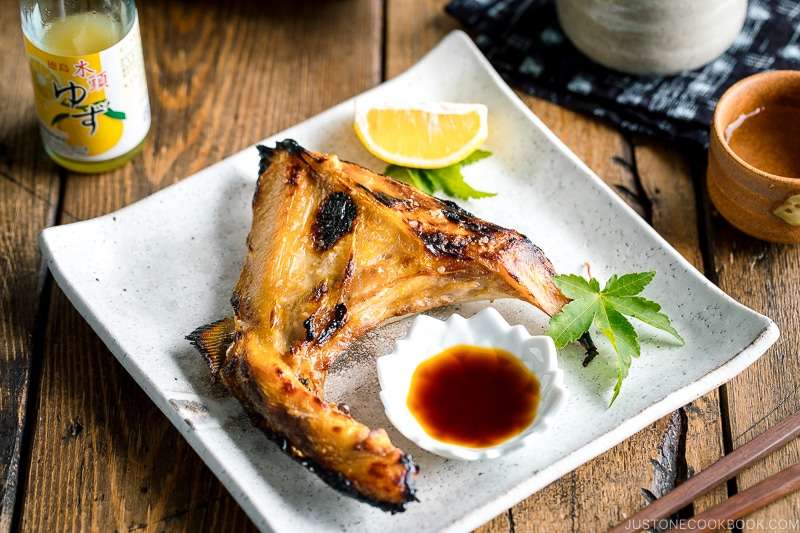
Hamachi Kama is grilled yellowtail collar typically cooked by broiling, designed to crisp the skin while retaining moisture inside. The recipe involves simple seasoning to highlight the rich flavor of the collar, complemented by dipping sauce made of soy and yuzu juice and optional lemon wedges for brightness. It requires thawing if frozen and careful broiler settings to avoid overcooking.
Prep Time
5 mins
Cook Time
10 mins
Total Time
15 mins
Servings:
2
(as
Calories:
164 kcal
Course:
Main Course
Cuisine:
Japanese
Ingredients
- 2 pieces hamachi yellowtail collar (11 oz, 312 g; available in Japanese markets)
- ⅛ tsp kosher salt optional; skip if you plan to lightly dip your fish in yuzu-flavored soy sauce, Diamond Crystal brand
For Serving
- 1 Tbsp soy sauce
- ½ tsp yuzu juice extract
- 2 wedges lemon (optional)
Instructions
- Gather the ingredients. If the hamachi kama is frozen, thaw it beforehand by placing the fish, still in its vacuum-sealed package, in a bowl under a thin stream of cold running water for 20 minutes. Alternatively, you can put the fish in a bowl of iced water to defrost for 2 hours (takes longer but saves water), or in the refrigerator for 9 hours.
Cup of Yum
To Broil (Recommended)
- Preheat the broiler* with a rack placed about 6 inches (15 cm) away from the top heating element (in the center of the oven) for 5 minutes. When broiling, you don‘t control the temperature in the oven; instead, you control the distance between the broiler and the surface of the food. It‘s similar to using hotter and cooler zones on your grill. *Broiler setting: Low (450ºF/232ºC), Medium (500ºF/260ºC), and High (550ºF/288ºC). I usually use the Medium (6 inches away) or High (8 inches away) setting.
- Crinkle a sheet of aluminum foil and line the baking sheet. This helps prevent the fish skin from sticking to the foil.
- Place 2 pieces hamachi kama (yellowtail collar) on the foil, skin side down. Sprinkle ⅛ tsp Diamond Crystal kosher salt over the fish.
- Broil on Medium (500ºF/260°C) for 8–10 minutes until the surface is blistered and browned a bit. Please remember the cooking time varies depending on the thickness of the fish and the distance between the broiler and the food. You do not need to flip the fish. It should flake easily with chopsticks or a fork.
To Bake (optional)
- Preheat the oven to 425°F/218ºC with a rack placed in the middle and bake for 10–12 minutes, until the edges are crispy and the top is golden brown and opaque. A good rule of thumb to remember is to bake 5 minutes per ½ inch thickness (measure at the thickest part of the fish). You do not need to flip it. It should flake easily with chopsticks or a fork.
To Serve
- To make the yuzu-flavored soy sauce, mix 1 Tbsp soy sauce and ½ tsp yuzu juice (extract) together and divide into individual small dipping dishes. Serve the freshly grilled fish immediately on individual plates with the dipping sauce on the side and an optional 2 wedges lemon. Squeeze the lemon over the fish and dip the Hamachi Kama lightly in the sauce to eat. Enjoy!
To Store
- You can keep the leftovers in an airtight container and store it in the refrigerator for up to 2 days or in the freezer for a month.
Notes
- This recipe originates from Namiko Chen of Just One Cookbook and should be properly credited if shared elsewhere.
- Thaw frozen hamachi kama gently to preserve texture, preferably with cold running water or overnight in refrigeration.
- Adjust broiler distance and setting according to your oven’s heat intensity to avoid overcooking or burning.
- Lightly seasoning with kosher salt is optional if you prefer dipping in yuzu-flavored soy sauce for added flavor.
- Serve with fresh lemon wedges to add brightness and cut the rich flavor of the collar.
Nutrition Information
Calories
164kcal
(8%)
Carbohydrates
2g
(1%)
Protein
33g
(66%)
Fat
2g
(3%)
Saturated Fat
1g
(5%)
Cholesterol
58mg
(19%)
Sodium
460mg
(19%)
Potassium
665mg
(14%)
Fiber
1g
(4%)
Sugar
1g
(2%)
Vitamin A
167IU
(3%)
Vitamin C
8mg
(9%)
Calcium
52mg
(5%)
Iron
1mg
(6%)
Nutrition Facts
Serving: 2 (as
Amount Per Serving
Calories 164
% Daily Value*
| Calories | 164kcal | 8% |
| Carbohydrates | 2g | 1% |
| Protein | 33g | 66% |
| Fat | 2g | 3% |
| Saturated Fat | 1g | 5% |
| Cholesterol | 58mg | 19% |
| Sodium | 460mg | 19% |
| Potassium | 665mg | 14% |
| Fiber | 1g | 4% |
| Sugar | 1g | 2% |
| Vitamin A | 167IU | 3% |
| Vitamin C | 8mg | 9% |
| Calcium | 52mg | 5% |
| Iron | 1mg | 6% |
* Percent Daily Values are based on a 2,000 calorie diet.