5 from 204 votes
How to Blanch Almonds
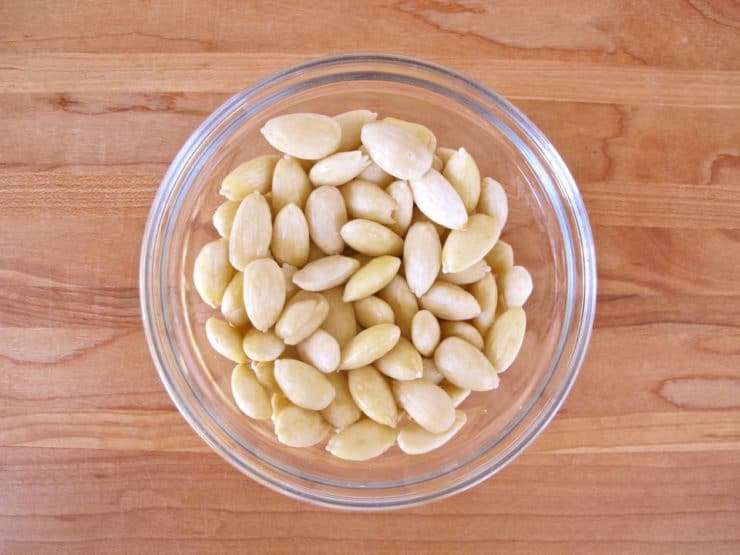
This recipe explains how to blanch almonds by boiling them briefly to loosen their skins for easy removal. The process results in almonds with a smooth texture, free of their bitter skins, ready to be used in other recipes or eaten as a snack. Blanching almonds softens them just enough to remove peels without cooking the nut itself.
Prep Time
15 mins
Cook Time
1 min
Total Time
16 mins
Servings:
8
Varies
Calories:
669 kcal
Course:
Snacks
Cuisine:
American
Ingredients
- almonds more or less as needed, raw, unsalted
- pot for boiling, strainer
Instructions
- Bring a small pot of water to a boil.
- Place your raw almonds into the boiling water. Let them boil for exactly one minute. Don't boil for any longer than 60 seconds, or your almonds will start to soften.
- Drain the almonds immediately in a colander or strainer and rinse them with cold water to cool them.
- Blot the almonds dry with a paper towel. You'll notice that the skins will be slightly shriveled.
- Use your fingers to gently squeeze the almonds and loosen the skin from them. Careful, if you squeeze too hard they'll shoot across the room-- which is fun, but not super practical! You can squeeze them from one hand into another to keep them from "launching" too far.
- Once you remove the skins, let the almonds dry off completely. Discard the skins.
- Now the almonds are blanched and ready to use in your recipe!
Cup of Yum
Notes
- Use raw, unsalted almonds for best results when blanching.
- Boil almonds exactly for one minute; longer boiling softens them undesirably.
- After boiling, rinse immediately in cold water to stop cooking and cool.
- Dry almonds well before squeezing off skins to avoid slipping hazards.
- Discard skins and let almonds dry completely before using or storing.
Nutrition Information
Calories
669kcal
(33%)
Carbohydrates
21g
(7%)
Protein
24g
(48%)
Fat
59g
(91%)
Saturated Fat
4g
(20%)
Sodium
21mg
(1%)
Potassium
747mg
(16%)
Fiber
11g
(44%)
Sugar
5g
(10%)
Calcium
268mg
(27%)
Iron
3.7mg
(21%)
Nutrition Facts
Serving: 8 Varies
Amount Per Serving
Calories 669
% Daily Value*
| Calories | 669kcal | 33% |
| Carbohydrates | 21g | 7% |
| Protein | 24g | 48% |
| Fat | 59g | 91% |
| Saturated Fat | 4g | 20% |
| Sodium | 21mg | 1% |
| Potassium | 747mg | 16% |
| Fiber | 11g | 44% |
| Sugar | 5g | 10% |
| Calcium | 268mg | 27% |
| Iron | 3.7mg | 21% |
* Percent Daily Values are based on a 2,000 calorie diet.