4.6 from 75 votes
How to Make Almond Milk
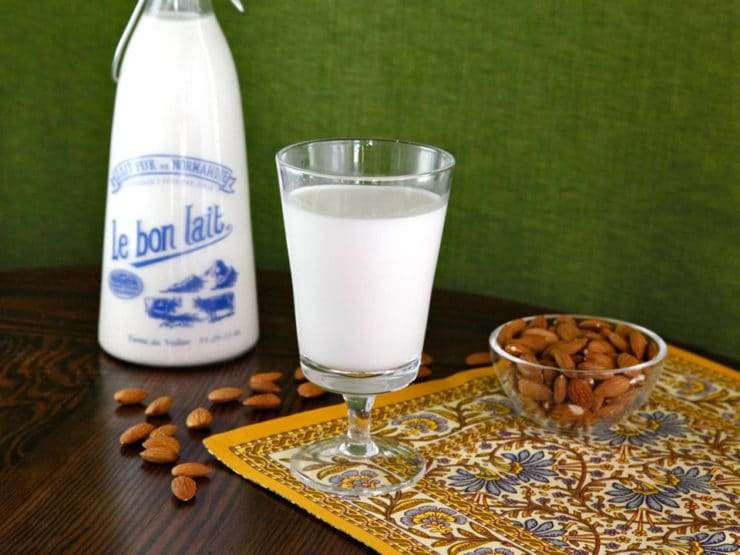
Making almond milk at home involves soaking raw almonds, blending them with filtered water, and optionally sweetening with honey, vanilla, and salt. The soaking softens the almonds, and blending them with water creates a smooth, creamy liquid. The skins remain on to reduce grittiness. The process requires straining through a fine mesh or nut bag for a smooth milk. Adjusting water ratios changes the milk's thickness.
Prep Time
5 mins
Cook Time
12 hrs
Total Time
12 hrs 5 mins
Servings:
4
servings
Calories:
192 kcal
Course:
Drinks
Cuisine:
American
Ingredients
- 1 cup almonds raw, unsalted, skin-on
- 4 cups water filtered; plus more for soaking almonds
- 1 1/2 teaspoons honey or agave nectar, maple syrup, or one whole pitted date (optional
- 1 teaspoon vanilla extract optional
- Dash salt optional, sea salt
Instructions
- Place raw almonds in a bowl and cover with cold water. Allow to soak overnight up to 48 hours, then drain and rinse. If soaking longer than overnight, change the cold soaking water every 12 hours.
- After soaking, drain and rinse the almonds. Do not peel the almonds; according to my recipe testing, keeping the skins on actually helps to reduce the grittiness of the almond milk (counter intuitive, I know!). Combine soaked almonds and 4 cups of filtered water in a blender.For a whole milk texture, I use 4 cups of water to 1 cup almonds. For a thinner texture, feel free to add more water-- you can adjust the texture to taste. The more water you add, the lower in fat the milk will be per serving; however, you don't want to add too much liquid or it will turn watery. Best to add water in small batches till the texture seems right to you.
- Blend on low, then slowly raise the speed to high for 1-2 minutes till the milk is completely smooth and no chunks of nuts remain. If desired, add sweetener, vanilla and/or salt to taste, then blend again to combine (if using a date, make sure you blend till it's completely pulverized). Feel free to adjust the sweetness to taste.
- Strain milk through a fine mesh strainer, tea towel, cheesecloth or nut milk bag into a storage container. A nut bag will work best for keeping your milk smooth and chunk-free. I usually strain the milk into a quart mason jar, which works perfectly with the 4 cup to 1 cup ratio of water to almonds.
- If using a mesh strainer, you will need to agitate the solids a bit to help all the milk drip through. I don't scrape them (this can push the solids through the strainer), but I do gently stir and move the solids around to make room for the liquid to come through. Similarly, if using a nut bag, you will need to gently squeeze the bag till all of the milk seeps through.
- Transfer milk to the refrigerator and chill thoroughly. It should keep for 3-4 days if refrigerated. I usually shake mine a bit before pouring to make sure it's well blended.
- Once you're finished straining the milk, you will have a small amount of leftover almond pulp. This can be discarded or dehydrated into almond flour and used as a gluten free breading for fish or chicken or mixed into baked goods. To do this, first adjust your oven to the lowest heat setting. Place the leftover almond pulp in a mesh strainer for about 30 minutes to allow any remaining liquid to drain off.
- With a rubber spatula, spread the pulp as thinly as possible onto a baking pan lined with parchment or a silicone baking sheet. Place in the oven at 200 degrees.
- Allow the paste to dehydrate for a few hours up to overnight. Check every couple of hours; when the meal hardens into a dry sheet, it's finished.
- Break up the dehydrated paste and pulverize using a food processor for 1-2 minutes. You can also use a fork, but a food processor will give you a much finer grind.
- You will be left with about ½ cup of almond flour.
- Use almond milk anywhere you would use regular milk-- in coffee or tea, on cereal, or as a milk substitute in recipes.
Cup of Yum
Notes
- Soak almonds for at least overnight, changing the water every 12 hours if soaking longer than 24 hours.
- Keep almond skins on after soaking to reduce grittiness in the milk.
- Adjust water quantity to control milk thickness, with 4 cups water per 1 cup almonds for whole milk texture.
- Use a blender, nut bag, fine mesh strainer, or cheesecloth to ensure smooth milk and strain out pulp.
- Store almond milk in a quart-sized glass jar or airtight container in the refrigerator.
Nutrition Information
Calories
192kcal
(10%)
Carbohydrates
7g
(2%)
Protein
6g
(12%)
Fat
16g
(25%)
Saturated Fat
1g
(5%)
Sodium
18mg
(1%)
Potassium
205mg
(4%)
Fiber
3g
(12%)
Sugar
3g
(6%)
Calcium
81mg
(8%)
Iron
1mg
(6%)
Nutrition Facts
Serving: 4 servings
Amount Per Serving
Calories 192
% Daily Value*
| Calories | 192kcal | 10% |
| Carbohydrates | 7g | 2% |
| Protein | 6g | 12% |
| Fat | 16g | 25% |
| Saturated Fat | 1g | 5% |
| Sodium | 18mg | 1% |
| Potassium | 205mg | 4% |
| Fiber | 3g | 12% |
| Sugar | 3g | 6% |
| Calcium | 81mg | 8% |
| Iron | 1mg | 6% |
* Percent Daily Values are based on a 2,000 calorie diet.