4.9 from 1,044 votes
Japanese Mayonnaise (Kewpie Mayo)
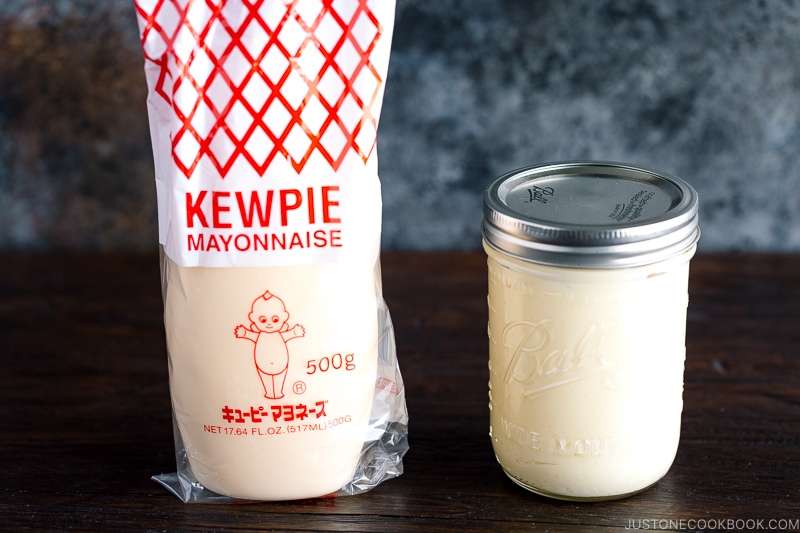
Japanese Mayonnaise, popularly known as Kewpie Mayo, is a creamy emulsion made with pasteurized egg yolks, Dijon mustard, neutral oil, and a balance of rice vinegar and lemon juice. It includes a subtle umami touch from dashi powder, providing a distinctive savory flavor. The texture is smooth and thick, achieved by slowly drizzling oil into the blended egg mixture to ensure proper emulsification. This mayo is a versatile condiment often used to add richness to dishes and sandwiches.
Prep Time
10 mins
Total Time
10 mins
Servings:
2
cups
Calories:
1495 kcal
Course:
Condiments
Cuisine:
Japanese
Ingredients
- 2 egg at room temperature; from the market, or pasteurize eggs at home, pasteurized, yolks
- 2 tsp Dijon mustard
- 1½ cups neutral oil
- 1 tsp kosher salt Diamond Crystal brand
- 2 tsp sugar (plus more, to taste)
- ½ tsp dashi powder
- 2 Tbsp rice vinegar unseasoned
- 4 tsp lemon juice fresh
Instructions
- Before You Start: This recipe calls for pasteurized egg yolks. If you cannot find pasteurized eggs, use the best, freshest eggs you can find for this recipe. You can also follow my tutorial to pasteurize your eggs using an immersion circulator.
- Gather all the ingredients. Tip: If you reduce the recipe ingredients, there won’t be enough volume for the food processor or blender to do its work, so you may need to hand whisk the ingredients (or use a hand mixer or immersion blender).
- Make sure the egg yolks are at room temperature. Put 2 pasteurized egg yolks and 2 tsp Dijon mustard into the bowl of a food processor or a blender; I used a food processor with a 3-cup bowl for one batch (yields 2 cups) of this recipe. Process for 20 seconds. Tip: Mustard adds flavor and helps to emulsify the mixture, reducing the risk of the mayonnaise breaking.
- With the food processor running, SLOWLY drizzle about one-third of the 1½ cups neutral oil in a thin, steady stream—about ½ cup oil for one batch of mayonnaise. The mixture will begin to thicken and emulsify. Tip: If you add the oil too fast, it won’t emulsify.
- Add 1 tsp Diamond Crystal kosher salt, 2 tsp sugar, and ½ tsp dashi powder and give everything a whirl again.
- Continue to add another one-third of the oil in a thin, steady stream. I use the Stir setting while adding the oil.
- Finally, add 2 Tbsp rice vinegar (unseasoned), 4 tsp fresh lemon juice, and the remaining one-third of the oil and process for an extra 10 seconds, just until the ingredients are combined and emulsified. Tip: Don’t blend the mayonnaise too long, as homemade mayonnaise comes together pretty quickly in the food processor or blender. When blended too long, the emulsion that brought the spread together is more likely to break, either from overprocessing or overheating.
- Taste the mayonnaise and adjust with salt, sugar, or lemon juice to your liking. I personally added 2 more teaspoons of sugar for a total of 4 teaspoons for one batch.
Cup of Yum
To Store
- You can keep the mayonnaise in an airtight container and store it in the refrigerator for about 4 days.
Nutrition Information
Serving
1cup
Calories
1495kcal
(75%)
Carbohydrates
6g
(2%)
Protein
3g
(6%)
Fat
169g
(260%)
Saturated Fat
135g
(675%)
Polyunsaturated Fat
3g
(18%)
Monounsaturated Fat
21g
(105%)
Cholesterol
195mg
(65%)
Sodium
695mg
(29%)
Potassium
37mg
(1%)
Fiber
1g
(4%)
Sugar
5g
(10%)
Vitamin A
264IU
(5%)
Vitamin C
4mg
(4%)
Calcium
28mg
(3%)
Iron
1mg
(6%)
Nutrition Facts
Serving: 2 cups
Amount Per Serving
Calories 1495
% Daily Value*
| Serving | 1cup | |
| Calories | 1495kcal | 75% |
| Carbohydrates | 6g | 2% |
| Protein | 3g | 6% |
| Fat | 169g | 260% |
| Saturated Fat | 135g | 675% |
| Polyunsaturated Fat | 3g | 18% |
| Monounsaturated Fat | 21g | 105% |
| Cholesterol | 195mg | 65% |
| Sodium | 695mg | 29% |
| Potassium | 37mg | 1% |
| Fiber | 1g | 4% |
| Sugar | 5g | 10% |
| Vitamin A | 264IU | 5% |
| Vitamin C | 4mg | 4% |
| Calcium | 28mg | 3% |
| Iron | 1mg | 6% |
* Percent Daily Values are based on a 2,000 calorie diet.