5 from 8 votes
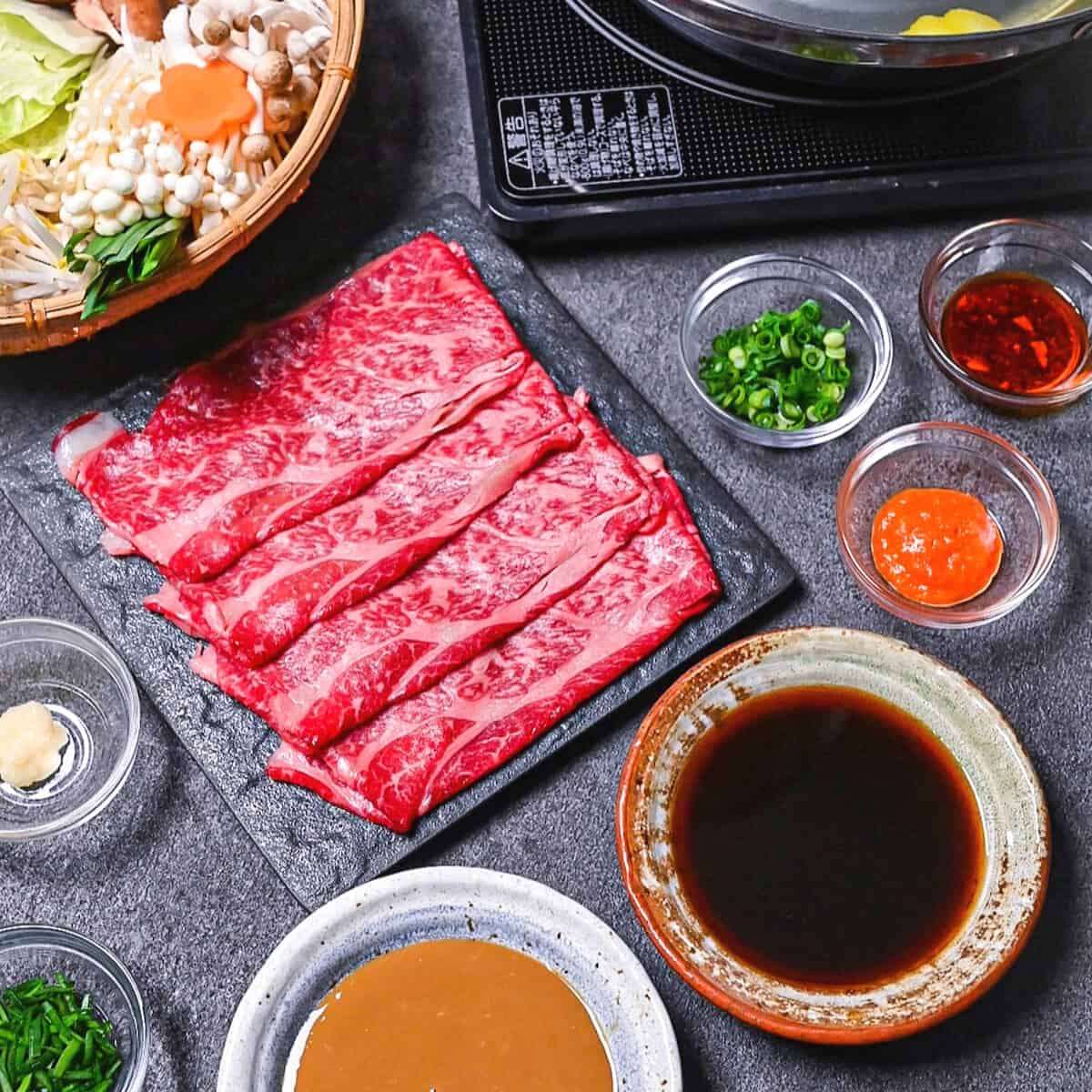
Japanese Shabu Shabu with homemade sauce
Bring something special to the table with this well-loved recipe.
Prep Time
30 mins
Cook Time
30 mins
Total Time
1 hr
Servings:
2
portions
Calories:
1129 kcal
Course:
Main Course, Dinner
Cuisine:
Japanese
Ingredients
Shabu shabu broth
- 10 g dried kelp kombu
- 1 liter water
- 50 ml sake
- yuzu peel optional
Shabu shabu ingredients
- 400 g wagyu beef thinly sliced
- 200g g Napa cabbage (hakusai) roughly cut
- 100 g Chrysanthemum Greens shungiku, aka crown daisy/shungiku/tong ho
- 50 g carrot peeled and thinly sliced
- 100 g enoki mushrooms roots removed
- 100 g tofu cubed, firm
- 2-3 shiitake mushroom stems trimmed, fresh
- 50 g vermicelli noodles with short cooking time
- 200 g udon noodles optional, cooked
- 2 rice cakes kirimochi) optional, toasted
Ponzu sauce and additions
- ponzu sauce for dipping, see my ponzu recipe here
- green onion momiji oroshi) optional, finely chopped
- daikon radish daikon oroshi) optional, grated
- daikon radish momiji oroshi) optional, grated, spicy
Homemade sesame shabu shabu sauce
- 2 tbsp sesame paste (neri goma)
- 1 tbsp soy sauce
- 2 tbsp rice vinegar
- ½ tbsp yellow miso paste awase/mixed miso, awase miso
- 2 tbsp sugar
- 1 pinch salt
- garlic chives optional
- Chili oil optional, rayu
- garlic optional, grated
Instructions
Preparation
- Soak 10 g dried kelp (kombu) in 1 liter water in a pot for at least 30 minutes or until rehydrated. (You can soak it longer if you prefer, some people soak it overnight.)
- While the kombu is soaking, prepare the meat, vegetables and tofu according to the instructions on the ingredient list. Arrange them on a plate or tray and place them near the stove. Take the beef out of the refrigerator 20 minutes before cooking.
- Make the sesame sauce by mixing 2 tbsp sesame paste, 1 tbsp soy sauce, 2 tbsp rice vinegar, ½ tbsp yellow miso paste (awase miso), 2 tbsp sugar and 1 pinch salt in a small bowl until smooth. Divide between individual serving bowls.
- In small bowls, prepare garlic chive(s), chili oil (rayu) and grated garlic (to add to the sesame sauce) and finely chopped green onions and grated daikon radish or spicy grated daikon radish (for the ponzu sauce). Lay them out on the table.
- Once the kombu is rehydrated, add 50 ml sake and yuzu peel to the broth and place the pot on the stove. Heat until almost boiling, then remove the kombu. Allow the broth to bubble for a few minutes and then remove the yuzu peel before you start to cook.
Cup of Yum
Cooking and eating
- Course 1: Tasting the BeefEach guest should take one piece of beef and swish it in the broth until cooked to their preferred done-ness (slightly pink is recommended for shabu shabu beef). Once cooked, dip in your choice of sauce and enjoy the beef on its own.
- Course 2: Vegetables & TofuAdd the carrot, napa cabbage, mushrooms and tofu. Each guest can cook more beef and help themselves while the vegetables and tofu are cooking. (Tip: try and space out cooking the beef so that you can enjoy it throughout the duration of the meal.) Be sure to try different ingredients and sauce combinations.
- Once more space becomes available in the pot, add the beansprouts, shungiku and chives. Eat up until there are no more ingredients left in the pot.
- Course 3: Glass/rice noodlesGive each guest a small portion of glass/rice noodles. Swish them in the broth until cooked and enjoy with your choice of dipping sauce.
- Course 4: Finishing noodlesScoop out any scum that's formed on top of the broth and remove leftover broken ingredients using a mesh spoon. Divide the broth into individual serving bowls and season generously with salt and pepper to taste. Add cooked udon/kishimen noodles (and mochi) to the leftover broth and warm through. Once hot, divide between the individual bowls of broth and top with chopped spring onions.
- Enjoy!
Nutrition Information
Serving
1089.6g
Calories
1129kcal
(56%)
Carbohydrates
55g
(18%)
Protein
39.6g
(79%)
Fat
87.1g
(134%)
Saturated Fat
26.12g
(131%)
Polyunsaturated Fat
8g
(47%)
Cholesterol
177mg
(59%)
Sodium
1410mg
(59%)
Fiber
9.6g
(38%)
Nutrition Facts
Serving: 2 portions
Amount Per Serving
Calories 1129
% Daily Value*
| Serving | 1089.6g | |
| Calories | 1129kcal | 56% |
| Carbohydrates | 55g | 18% |
| Protein | 39.6g | 79% |
| Fat | 87.1g | 134% |
| Saturated Fat | 26.12g | 131% |
| Polyunsaturated Fat | 8g | 47% |
| Cholesterol | 177mg | 59% |
| Sodium | 1410mg | 59% |
| Fiber | 9.6g | 38% |
* Percent Daily Values are based on a 2,000 calorie diet.