5 from 15 votes
Methi Dhebra
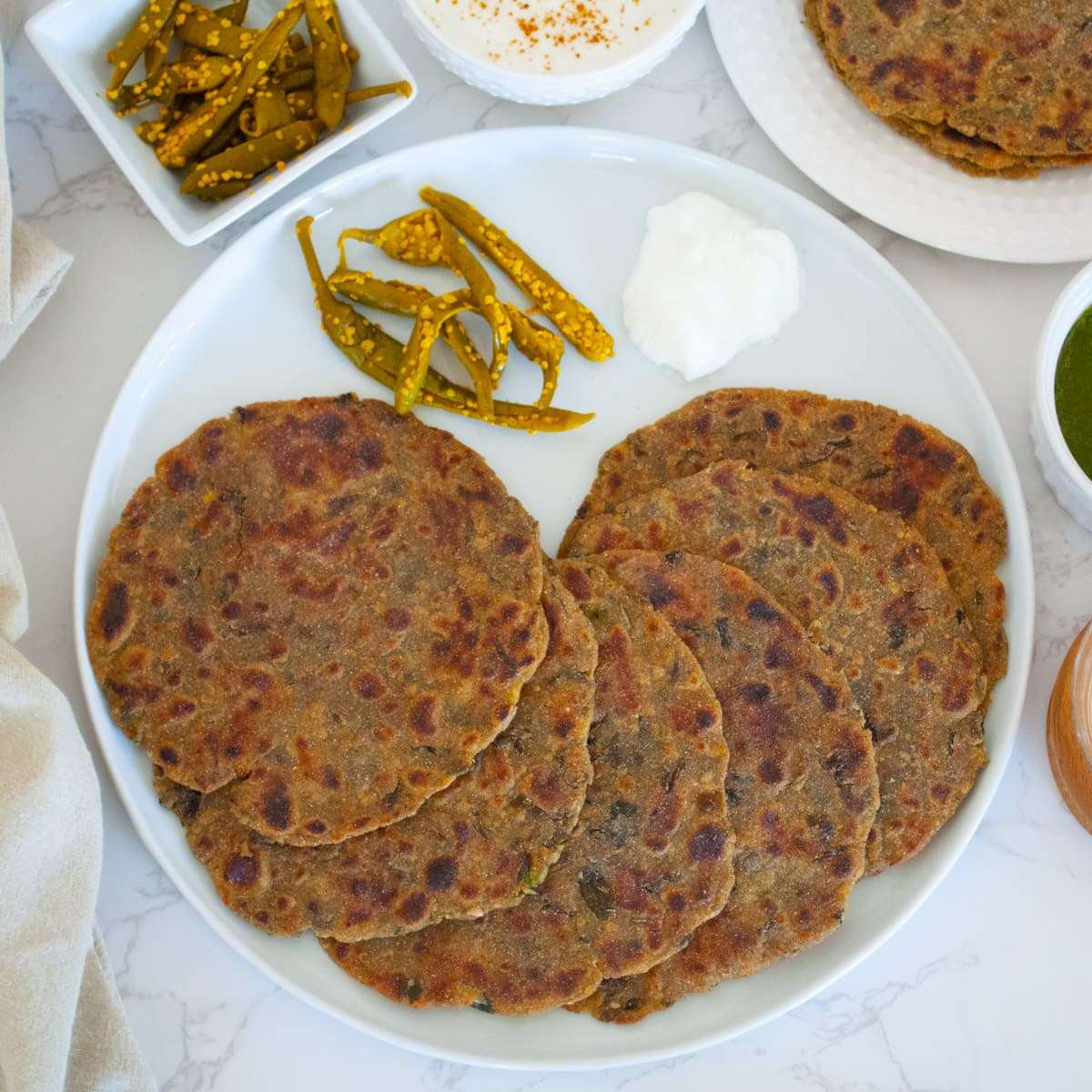
Methi Dhebra is a flatbread made from pearl millet flour combined with finely chopped fenugreek leaves, whole wheat flour, yogurt, and spices like turmeric, ginger, and green chili paste. Roasted on a hot griddle, it results in a soft, flavorful bread with a slight bitterness balanced by spice and tang from yogurt. Sesame and ajwain seeds add aroma and texture.
Prep Time
20 mins
Cook Time
30 mins
Total Time
50 mins
Servings:
10
Dhebras
Calories:
151 kcal
Course:
Side Dish, Main Course
Cuisine:
Indian
Ingredients
- 2 cup bajra flour or pearl millet flour
- 1/2 cup whole wheat flour
- 2 cup fenugreek leaves finely chopped
- 1 cup PLAIN yogurt
- 1/2 teaspoon salt
- 1 tablespoon ginger paste
- 1 tablespoon green chili paste
- 1/2 teaspoon turmeric powder aka haldi
- 1 teaspoon ajwain seeds aka carom seeds
- 3/4 tablespoon sesame seeds
- 1 tablespoon sugar
- vegetable oil for roasting
Instructions
- First, prepare the fenugreek: Pluck the Methi leaves from the stem and wash them in cool running water. After that, completely drain them and dry them with a paper towel or kitchen towel. Finely chop the leaves, then place them aside.
- Let's combine fenugreek leaves, ginger paste, green chilies, sesame seeds, turmeric powder, sugar, and asafoetida in a large mixing dish. Mix thoroughly.
- Mix in the bajra flour, whole wheat flour, and salt.
- Using your finger, thoroughly combine the fenugreek mixture with the flours. The texture will be crumbly.
- Knead in 1 tablespoon of yogurt at a time to make a soft dough. Allow it to stand for 10-15 minutes, covered.
- Knead it again after 15 minutes to smooth it out.
- Make it into equal halves. Roll each piece between your palms and press to form a circle.
- Warm the Tawa over medium heat.
- Coat the flattened ball well in dry chapati flour. Roll it carefully.
- When the pan is heated, lay the rolled dhebra on it. Flip it when you notice bubbles on it. After a few seconds, drizzle oil on it and flip it again, pressing gently with a spatula until you see some brown spots on the bottom.
- Apply more oil to the other side, flip, and cook on that side.
- When done, remove from skillet/tawa and repeat until all of the dough is used up.
Cup of Yum
Notes
- Including yogurt is essential to balance the bitterness of fenugreek leaves.
- Cook dhebras over medium to high heat to avoid a brittle and hard texture.
- The dough tends to be sticky and requires gentle handling during rolling to prevent tearing.
- Expect irregular shapes due to bajra flour’s lack of gluten, which also makes rolling more challenging; wheat flour aids binding.
- Use minimal whole wheat flour for dusting to avoid drying the dough during cooking.
Nutrition Information
Calories
151kcal
(8%)
Carbohydrates
27g
(9%)
Protein
7g
(14%)
Fat
3g
(5%)
Saturated Fat
1g
(5%)
Polyunsaturated Fat
0.5g
(3%)
Monounsaturated Fat
1g
(5%)
Cholesterol
3mg
(1%)
Sodium
131mg
(5%)
Potassium
204mg
(4%)
Fiber
4g
(16%)
Sugar
3g
(6%)
Vitamin A
25IU
(1%)
Vitamin C
0.1mg
(0%)
Calcium
48mg
(5%)
Iron
2mg
(11%)
Nutrition Facts
Serving: 10 Dhebras
Amount Per Serving
Calories 151
% Daily Value*
| Calories | 151kcal | 8% |
| Carbohydrates | 27g | 9% |
| Protein | 7g | 14% |
| Fat | 3g | 5% |
| Saturated Fat | 1g | 5% |
| Polyunsaturated Fat | 0.5g | 3% |
| Monounsaturated Fat | 1g | 5% |
| Cholesterol | 3mg | 1% |
| Sodium | 131mg | 5% |
| Potassium | 204mg | 4% |
| Fiber | 4g | 16% |
| Sugar | 3g | 6% |
| Vitamin A | 25IU | 1% |
| Vitamin C | 0.1mg | 0% |
| Calcium | 48mg | 5% |
| Iron | 2mg | 11% |
* Percent Daily Values are based on a 2,000 calorie diet.