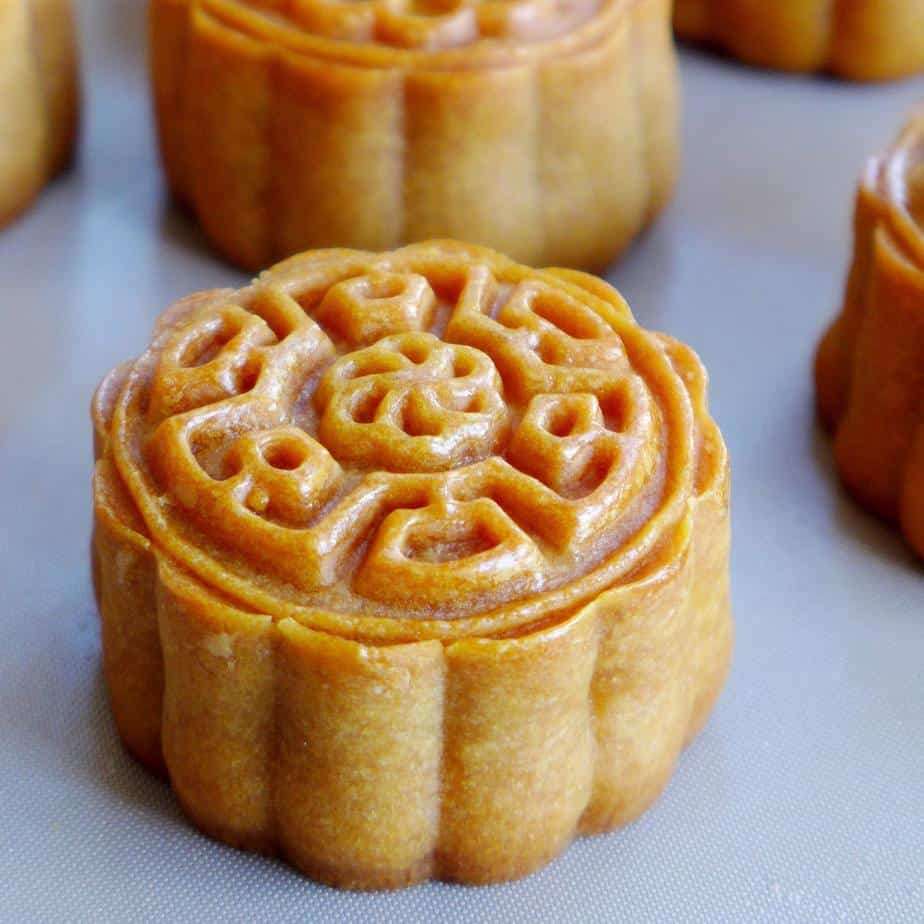
Mooncakes, a Classic Recipe (广式月饼)
Mooncakes are traditional pastries featuring a tender dough wrapped around lotus seed paste and salted egg yolks. Preparing the lotus seed paste involves cooking and pureeing dried seeds, sweetened and fried to a thick consistency. The dough combines golden syrup, lye water, oil, and flour to form a soft wrapper. The filled paste encases the salted yolk, shaped and finished with an egg yolk glaze for a glossy, patterned surface. These mooncakes offer a dense, sweet filling contrasted by the slightly chewy dough, making them a cherished treat during mid-autumn festivals or celebratory occasions.
Ingredients
For the paste (see note 1 for substitutes)
- 100 g lotus seeds dried
- 75 g sugar or to taste
- 50 g neutral cooking oil such as sunflower, canola, vegetable, peanut, rapeseed oil, etc.
For the dough
- 150 g golden syrup
- ½ teaspoon lye water aka Kansui (see note 2)
- 50 g neutral cooking oil such as sunflower, canola, vegetable, peanut, rapeseed oil, etc.
- 220 g all-purpose flour aka plain flour (see note 3)
You also need
- 20 egg ready-to-use ones (see note 4, salted yolks
- cornstarch for dusting
- 1 egg for brushing, yolk
Instructions
Cook the paste (skip if using shop-bought one)
- Soak dried lotus seeds in water overnight. Drain well and remove the green bit in the center (if any).
- Cook the seeds in simmering water (enough to cover) until soft (about 30-40 minutes). Drain then puree them in a food processor (add a little water if necessary).
- Transfer the puree into a non-stick pan. Cook over medium heat. Add sugar and oil in batches. Stir and flip constantly. Once the paste becomes dry and holds in shape, remove from the heat to cool (see note 3 & 4).
Prepare the dough
- Mix golden syrup, oil and lye water until well incorporated. Add flour. Combine and knead briefly to form a soft dough (see note 5).
- Cover with plastic wrap and rest for 30 minutes.
Assemble
- Put one salted egg yolk and some lotus seed paste on the scale. Adjust the filling to reach 30g.
- Flatten the paste into a round wrapper. Place the egg yolk in the middle. Gently push the paste upwards to seal the yolk completely.
- Flatten 20g of the dough into a wrapper. Use the same method to tightly wrap around the filling and make a ball (Please refer to the video below).
Shape
- Coat the ball with a thin layer of cornstarch. Put it into a mooncake mold.
- Over a baking tray lined with parchment paper, place the mold with the opening facing down. Gently press the handle to shape the cake. Lift the mold and press again to release the cake.
Bake
- Preheat the oven to 375°F/190°C. Bake the cakes for 5 minutes. While waiting, mix the egg yolk with 1 teaspoon of water for brushing later.
- When the time is up, reduce the oven temperature to 320°F/160°C. Take out the mooncakes and brush their top with a thin layer of the egg wash (see note 5).
- Put them back into the oven and bake for a further 5 minutes. Take out and coat them with another layer of egg wash. Then continue to bake for 10-15 minutes until evenly brown.
Rest & store
- Transfer the baked mooncakes to a cooling rack. Once completely cooled, store them in an airtight container for 1-2 days before consumption. They are ready to be served once soft to touch and appear shiny.
- You may keep them in the fridge for up to 2 weeks. Bring back to room temperature before serving.
Notes
- Ready-made lotus seed paste can be used as a shortcut or substituted with red bean or black sesame paste.
- If lye water is unavailable, homemade versions using baking powder can be made as detailed in additional resources.
- Flour amount may need adjustment based on syrup thickness and flour absorption.
- Salted egg yolks can be purchased pre-made or prepared at home from raw salted duck eggs.
- When applying egg wash, avoid excess liquid to preserve the detailed patterned surface.
Nutrition Information
Nutrition Facts
Serving: 20 mooncakes
Amount Per Serving
Calories 200
% Daily Value*
| Serving | 1mooncake | |
| Calories | 200kcal | 10% |
| Carbohydrates | 21g | 7% |
| Protein | 5g | 10% |
| Fat | 11g | 17% |
| Saturated Fat | 1g | 5% |
| Polyunsaturated Fat | 3g | 18% |
| Monounsaturated Fat | 1g | 5% |
| Trans Fat | 0.1g | 5% |
| Sodium | 71mg | 3% |
| Potassium | 80mg | 2% |
| Fiber | 0.3g | 1% |
| Sugar | 10g | 20% |
| Calcium | 2mg | 0% |
| Iron | 1mg | 6% |
* Percent Daily Values are based on a 2,000 calorie diet.