5 from 102 votes
Oat Milk With Enzymes (NEW and Improved Recipe!)
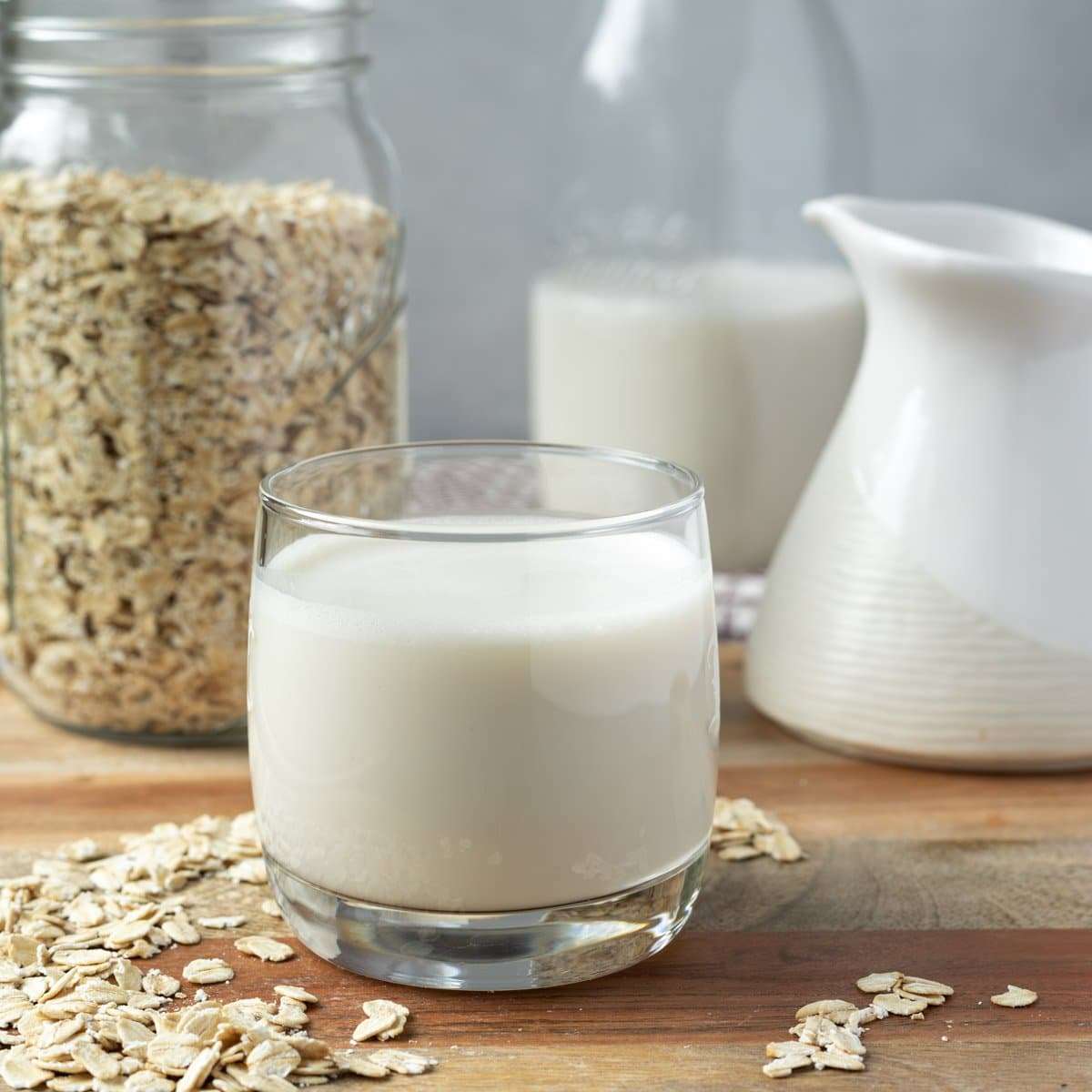
Oat Milk With Enzymes uses rolled oats blended into flour and combined with digestive enzymes to break down starches into natural sugars. Heated water at a precise temperature activates the enzymes, producing a mildly sweet oat milk after a resting period. The milk is then strained to remove solids, resulting in a smooth dairy alternative without added sweeteners.
Prep Time
7 mins
Cook Time
3 mins
Additional Time
1 hr 30 mins
Total Time
1 hr 40 mins
Servings:
4
servings
Calories:
102 kcal
Course:
Drinks
Cuisine:
American
Ingredients
- 1 cup rolled oats certified gluten-free, if needed
- 1 capsule vegan digestive enzymes tap for recommendation: should contain amylase and glucoamylase. Amount is approx. ⅛ teaspoon powder.
- 4 cups water
- pinch of salt sea salt
- ¼ teaspoon vanilla extract or clear artificial vanilla, optional
Optional ingredients for richer oat milk:
- 2 tablespoons vegetable oil or ¼ cup raw cashews, blended into the finished milk, flavorless
- 1 teaspoon sunflower lecithin helps emulsify oil and water
Instructions
Soak
- Pour the oats into a dry blender. Blend for about 5 seconds or until the consistency of a coarse flour. Pour oat flour into a large bowl.
- Open one digestive enzyme capsule and dump the powder into the bowl (discard the capsule).
- Heat the water to approximately 150°F (66°C). I like to microwave it in a large bowl. At this temperature water feels very hot but won't immediately scald you (I use this infrared thermometer).
- Pour the hot water into the bowl with the oat flour and enzymes, and stir well. For reference, use a spoon to taste the oat water (will be very bland). Set aside for 30 to 45 minutes. I like to stir occasionally during this time. After 30 minutes, taste the water again. It should now taste lightly sweet. If it doesn't, either the enzymes used aren't effective or the water wasn't the correct temperature. If you think the water was too cool, microwave the bowl for about 30 seconds to raise the temperature, and check again in 15 minutes.
Cup of Yum
Blend and Strain
- Rinse out the blender to remove any oat flour, and pour the oat-water mixture into the blender. Starting on low, quickly increase to high speed, and blend for about 10 seconds. We don't need to blend long since the oats were already broken down to flour. If not using a Vitamix or other high-speed blender, you may need to blend in two batches due to the large volume.
- Use a nut milk bag to strain the oat milk into a large heavy-bottom pot or saucepan. I like to place one nut milk bag inside another, for a double layer. Or you can strain it twice using the same bag (rinse in between uses). Since the starch has been broken down into sugars, it's fine to squeeze the bag and won't result in slimy oat milk. However, if you notice that it feels slimy while straining it through the bag, this means the enzymes did not work. Review the tips in the Notes section below before proceeding.Save the oat pulp for baking or add it to smoothies for extra fiber.
Heat the Oat Milk
- Over medium heat and whisking frequently, slowly bring the oat milk to a simmer. Aim for 195 degrees F. If you don't own a thermometer, look for these visual clues: tiny bubbles around the edges and slight movement in the center. Whisking, maintain this low simmer for about 10 seconds, then remove from heat. Add a pinch of salt and the vanilla, if using.
- OPTION: add oil or cashews. Let the oat milk cool for about 20 minutes or until barely warm (so it's safe to blend on high speed). Rinse out the blender, and pour in the milk. If using cashews, simply blend with the milk until completely smooth. To add oil, while blending on high speed, remove the cap from the pour spout and slowly drizzle in the oil. Add the sunflower lecithin and blend for a few more seconds.
- Let the oat milk cool, and pour into a clean, lidded glass jar. Store in the refrigerator for up to 5 days.
Notes
- Use digestive enzymes containing amylase and glucoamylase for best starch conversion.
- Blending oats into a coarse flour allows enzymes better access to starch for sweetness.
- If sweetener is desired, add medjool dates or sweetener of choice after straining.
- Slimy oat milk indicates ineffective enzyme activity — adjust water temperature or enzyme source and try again.
Nutrition Information
Serving
1cup
Calories
102kcal
(5%)
Carbohydrates
17g
(6%)
Protein
3g
(6%)
Fat
2g
(3%)
Sodium
50mg
(2%)
Nutrition Facts
Serving: 4 servings
Amount Per Serving
Calories 102
% Daily Value*
| Serving | 1cup | |
| Calories | 102kcal | 5% |
| Carbohydrates | 17g | 6% |
| Protein | 3g | 6% |
| Fat | 2g | 3% |
| Sodium | 50mg | 2% |
* Percent Daily Values are based on a 2,000 calorie diet.