4.5 from 141 votes
Osso Bucco (Braised Beef Shanks Recipe)
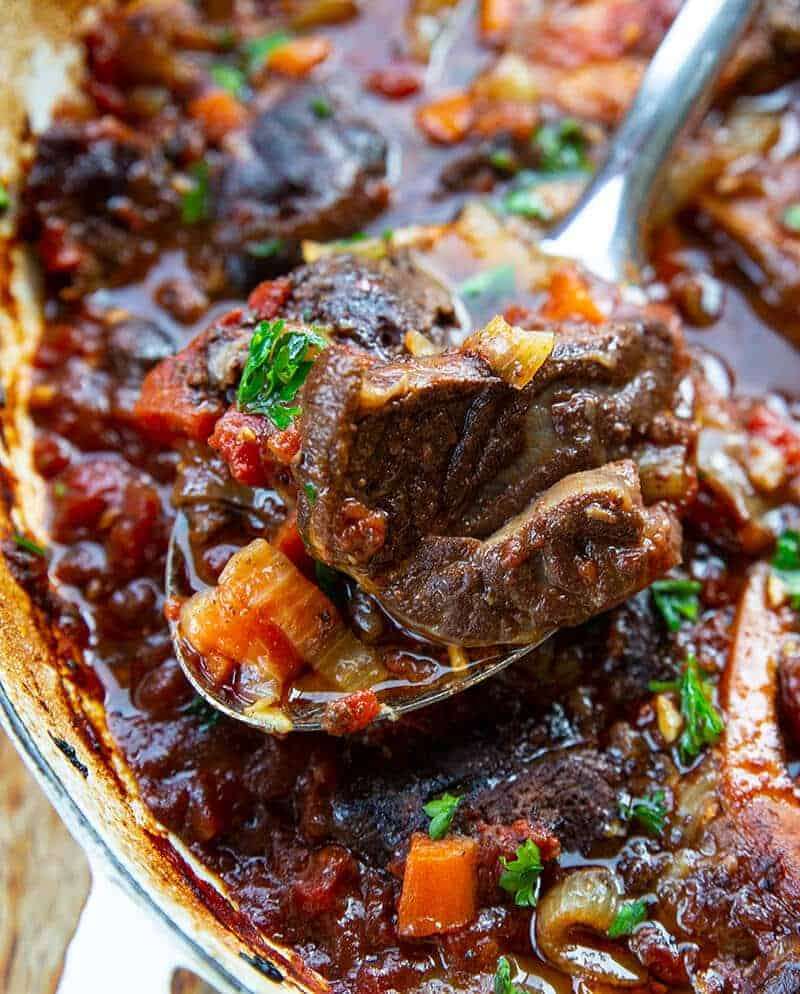
Osso Bucco is a braised beef shank dish cooked slowly until the meat becomes tender and falls off the bone. This recipe uses beef shanks simmered in a sauce made from onions, garlic, carrots, white wine, diced tomatoes, and beef stock. The result is a rich, hearty stew with robust savory flavors and velvety texture. It’s suited to slow cooking in the oven or on the stovetop, developing deep flavor and meltingly soft meat.
Prep Time
15 mins
Cook Time
5 hrs
Total Time
5 hrs 15 mins
Servings:
4
Course:
Main Course
Cuisine:
Italian
Ingredients
- 2-3 pounds beef shank cut into 3-4 inch pieces
- 1/4 cup butter
- 2 tablespoons garlic minced
- 1/2 white onion sliced into rings, large
- 2 medium carrot chopped
- 1/2 cup white wine dry
- one millilitres can diced tomatoes
- 1/2 cup beef stock
- salt to taste
- black pepper to taste
Instructions
- If you want, dredge the beef shanks through flour and coat it. ( I skip this to keep it lower carb)
- Melt the butter in a large oven safe braising pan over medium to medium-high heat.
- Fry the beef shanks in the butter until browned on the outside.
- Remove the beef shanks to a plate, and keep warm.
- Add the onion slices to the skillet; cook and stir until the onion is tender. Add in the garlic and the carrots and fry until the garlic is fragrant.
- Pour in the white wine and deglaze the pan at this point. Stir in the beef broth and the tomatoes.
- Return the beef to the pan, making sure the shanks are submerged in the sauce.
- The best way to cook now is to place the lid on top and cook the shanks in a 300 °F for 4-5 hours, until the meat is tender and falling off the bone.
- For stove top, cover and simmer on the stove top over low heat for 2-3 hours, checking and moving the meat occasionally to ensure that the bottom is not burning.
Cup of Yum
Notes
- Choosing whether to dredge shanks in flour affects sauce thickness and carb content; skipping flour keeps it lower carb.
- Cook until the meat reaches preferred texture—either tender and falling apart or intact like steak.
- Serve traditionally with gremolata and polenta for authenticity.
- Stovetop cooking requires occasional stirring to prevent sticking and burning.