5 from 6 votes
Pickled Cauliflower
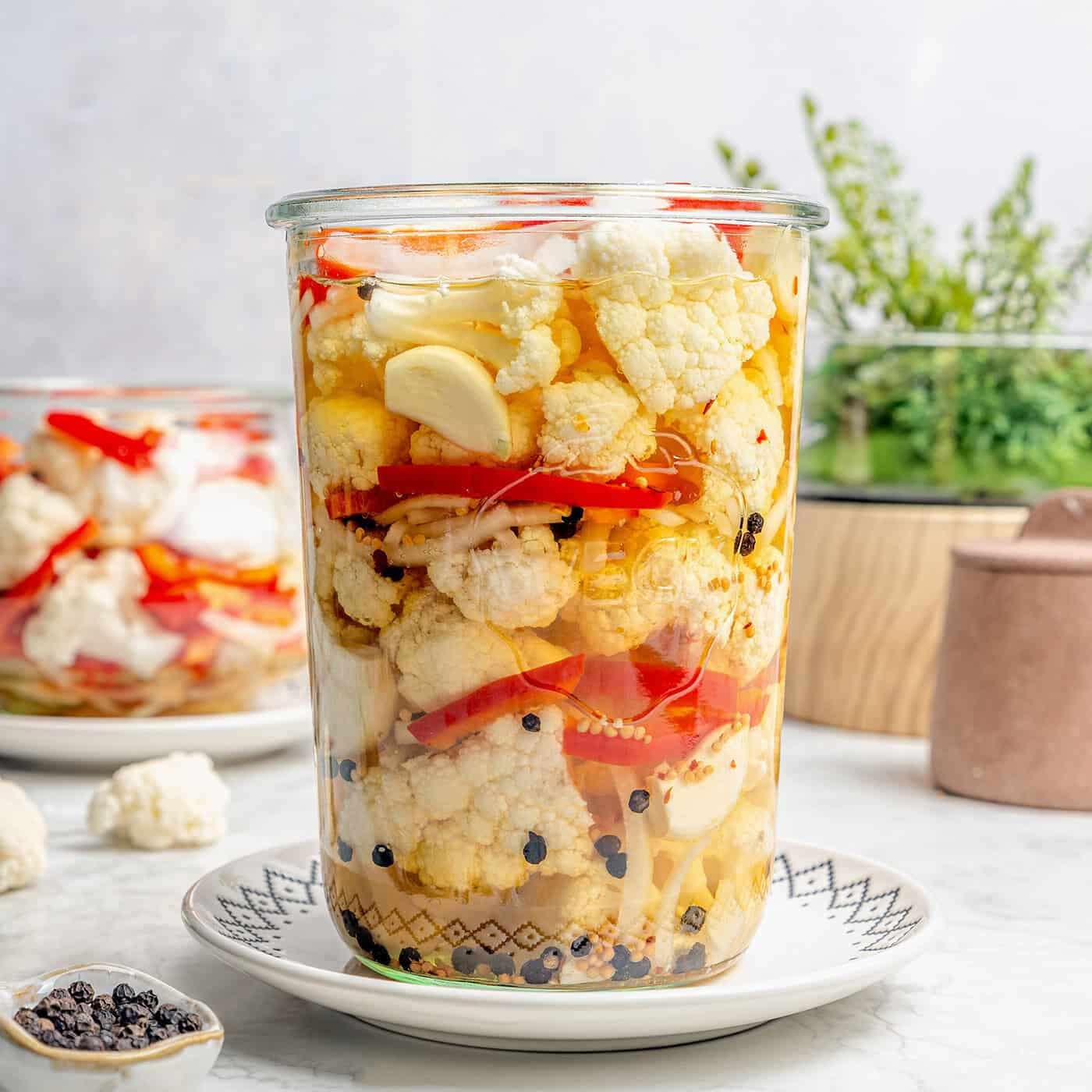
Crisp and tangy Pickled Cauliflower is about to become your new favorite condiment. It's ridiculously easy to make, with the perfect crunch!
Prep Time
10 mins
Cook Time
5 mins
Additional Time
4 hrs
Total Time
4 hrs 15 mins
Servings:
12
servings
Calories:
27 kcal
Course:
Side Dish, Appetizer, Condiments
Cuisine:
American
Ingredients
- 3 cups cauliflower 1" to 1½" in size, fresh; pieces
- ¼ cup yellow onion thinly sliced
- ¼ cup red bell pepper thinly sliced
- 2 large garlic halved, cloves
- 1 teaspoon black peppercorns whole
- 1 teaspoon yellow mustard seeds
- ¼ teaspoon red pepper flakes crushed
- 1¼ cups apple cider vinegar (see Notes)
- 1¼ cups water
- 1 tablespoon kosher salt Morton brand
- 2 tablespoons honey
Instructions
- To a clean 1-quart jar, layer in ⅓ of the cauliflower, onion, bell pepper, garlic, peppercorns, mustard seeds, and red pepper flakes. Repeat with a second layer. Finish with a third layer.
- In a small saucepan over medium-high heat, bring vinegar, water, salt, and honey to a boil. Stir until salt dissolves. Pour hot mixture over cauliflower mixture in the jar, pressing down on the vegetables so the brine covers them completely - the veggies will shrink a bit, so press them in fairly firmly.
- Let cool on the counter to room temperature. Twist on a lid and refrigerate for at least 4 hours. Pickled flavor will increase the longer it sits. Store in fridge for up to 4 weeks.
Cup of Yum
Notes
- We like the flavor of apple cider vinegar best for this recipe. Just know that, the longer the cauliflower sits in the brine, that the cauliflower will not be as brilliant white. If you want the cauliflower to retain its white color, use white distilled vinegar, rice vinegar, etc.
Nutrition Information
Calories
27kcal
(1%)
Carbohydrates
5g
(2%)
Protein
1g
(2%)
Fat
0.2g
(0%)
Saturated Fat
0.05g
(0%)
Polyunsaturated Fat
0.05g
(0%)
Monounsaturated Fat
0.1g
(1%)
Sodium
593mg
(25%)
Potassium
116mg
(2%)
Fiber
1g
(4%)
Sugar
4g
(8%)
Vitamin A
112IU
(2%)
Vitamin C
16mg
(18%)
Calcium
13mg
(1%)
Iron
0.3mg
(2%)
Nutrition Facts
Serving: 12 servings
Amount Per Serving
Calories 27
% Daily Value*
| Calories | 27kcal | 1% |
| Carbohydrates | 5g | 2% |
| Protein | 1g | 2% |
| Fat | 0.2g | 0% |
| Saturated Fat | 0.05g | 0% |
| Polyunsaturated Fat | 0.05g | 0% |
| Monounsaturated Fat | 0.1g | 1% |
| Sodium | 593mg | 25% |
| Potassium | 116mg | 2% |
| Fiber | 1g | 4% |
| Sugar | 4g | 8% |
| Vitamin A | 112IU | 2% |
| Vitamin C | 16mg | 18% |
| Calcium | 13mg | 1% |
| Iron | 0.3mg | 2% |
* Percent Daily Values are based on a 2,000 calorie diet.