4.8 from 60 votes
Quick dongchimi
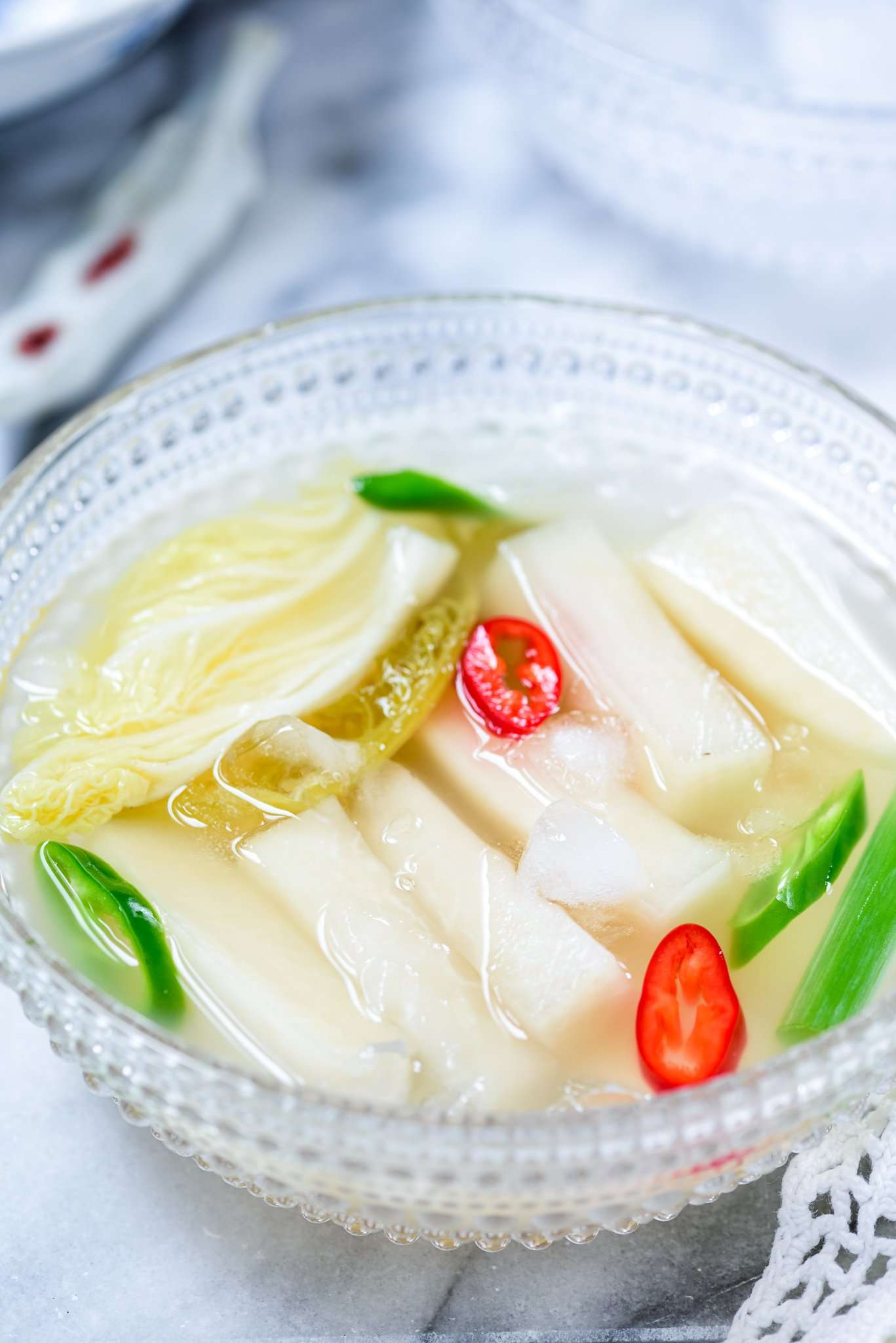
Quick dongchimi is a Korean radish water kimchi made of radish sticks, optional Napa cabbage, chili peppers, and scallions, salted and brined with a seasoning paste that includes garlic, ginger, and Korean pear. It produces a refreshing, lightly fermented chilled kimchi with a crisp texture and mild, tangy flavor to complement spicy or savory dishes.
Prep Time
20 mins
Cook Time
10 mins
Salting time
40 mins
Course:
Side Dish
Cuisine:
Korean
Ingredients
For the vegetables
- 2 pounds Korean white radish mu (무
- 1/2 pound Napa cabbage See note 1, tender inner parts, or 1/2 pound more radish
- 2 green chili pepper thinly sliced
- 2 red chili pepper thinly sliced
- 2 scallions cut into about 1-inch lengths
- 3 tablespoons coarse sea salt Use less (about 25% less) if using small grain salt, divided
- 1 tablespoon sugar optional if your radish is bitter
For the brine
- 1/2 Korean pear peeled and cored, or 1 small Asian pear or apple
- 5 to 7 garlic plump cloves
- 1 inch ginger piece
- 1/4 onion small, optional
- 1 tablespoon glutinous rice flour to make a paste with 1 cup water
- 2 salt Use less (about 25% less) if using small grain salt, measured in tablespoons
Instructions
- Clean the radishes by scrubbing with a brush and/or scratching off the impurities with a small knife. Peel the skin only if necessary. The skin is packed with nutrients. Cut each radish crosswise into about 2-inch logs. Then cut each log into 1/2-inch thick pieces and then each piece into 1/2-inch thick sticks, placing in a large bowl.
- Sprinkle about 2 tablespoons of salt and optional 1 tablespoon sugar (use it if your radish is bitter) over the radishes and toss well to coat evenly. Let sit for about 30 - 40 minutes until the radish sticks have softened and released some liquid. Drain, saving the liquid in a bowl or pot you'll be using to make the brine. Do NOT rinse the radish. Place the radish in the jar or kimchi container.
- If using the optional cabbage, rinse the cabbage, and cut each leaf of the cabbage into 2-inch long and 1/2 - 1-inch pieces.
- Dissolve 1 tablespoon of salt in a cup of water and pour over the cabbage. Stir to coat the cabbage pieces with salt water. Let sit for 30 to 40 minutes until softened. Rotate the bottom ones to the top once or twice midway through the process. Drain, saving the liquid in a bowl or pot you'll be using to make the brine. Do NOT rinse the cabbage. Place the cabbage in the jar or kimchi container.
- While the radish is salting, whisk together the glutinous rice powder and 1 cup of water, and simmer over low heat, stirring occasionally, until the mixture thickens into a thin paste. Set aside to cool it.
- Place the pear (or apple), garlic, ginger and optional onion in the blender. Add 1/2 cup water. Puree it as fine as possible. Run it through a fine strainer to remove leftover solids for cleaner broth, if desired.
- To make the brine, add about 9 cups of water to the reserved liquid from salting the radish and cabbage. Add the aromatic vegetable puree and glutinous rice paste. Stir in salt, starting with a tablespoon. Stir well to dissolve the salt, and taste it before adding more salt.
- Place the salted radish and cabbage in a jar or air-tight container. Add the scallion and peppers. Pour the brine over. Stir well together. Taste the brine. Add more salt if necessary. If the brine is too salty, add more water to dilute. It should be a tad salty to eat as is.
- Leave it out at room temperature for a full day or two until bubbles rise through the brine. Taste again and add more salt if necessary or add more water if too salty. Then, store in the fridge. Although you can start eating it any time at this point, it will need about a week or two in the fridge to fully develop the acidic, tangy flavors. It keeps well for several weeks in the fridge. Stir from the bottom each time you ladle the broth from the jar or container to serve.
Cup of Yum
Notes
- For larger batches and longer storage, cut radishes and pears into big chunks without blending aromatics; salting radishes and cabbage beforehand is essential.
- The brine should taste slightly too salty before fermentation, as radish water content will dilute it over time.
- Optional additions such as jujubes and Korean red mustard leaves can enhance flavor if available.
- If not using Napa cabbage in dongchimi, increase radish quantity by half a pound.
- Discard or use leftover cabbage for making baechu guk (cabbage soup) if omitted from dongchimi.