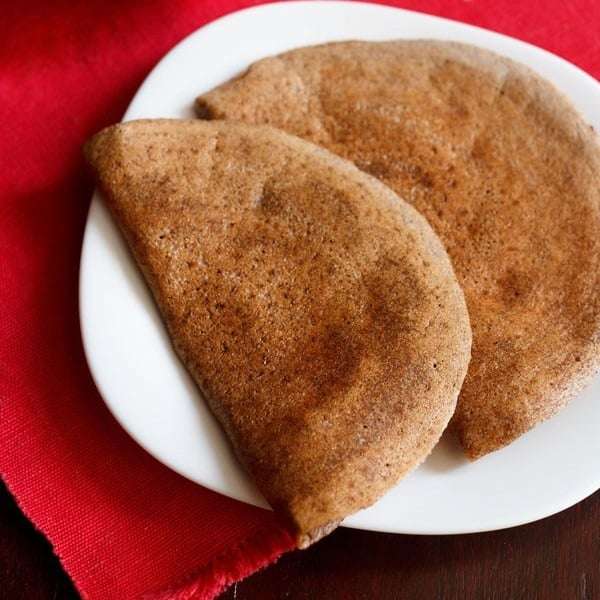
Ragi Dosa Recipe (Nachni Dosa)
Ragi Dosa combines ground idli rice, urad dal, poha, and ragi flour into a blended batter traditionally fermented before cooking. The addition of fenugreek seeds aids fermentation and flavor development. This dosa batter yields a savory crepe with a mildly earthy taste from the finger millet flour offering a different grain profile compared to regular dosa. Mixing the ragi flour carefully helps avoid lumps, creating an even texture. Fermentation time varies with temperature, affecting batter readiness. It suits cooks aiming to incorporate millet in a traditional South Indian breakfast or snack.
Ingredients
- 1 cup idli rice or parboiled rice - 200 grams
- ½ cup urad dal (husked black gram) - 100 to 120 grams
- ¼ cup poha (flattened rice or parched rice)
- 1 cup ragi flour (nachni or finger millet flour) - 120 grams
- ¼ teaspoon fenugreek seeds (methi seeds)
- ½ cup water - for grinding urad dal or add as required
- ¾ cup water - for grinding rice or add as required
- ⅓ to ½ cup water - to be added later whiling mixing ragi flour
- 1 teaspoon rock salt food grade and edible (sendha namak) or sea salt - add as required, edible and food grade
- neutral cooking oil as required for making ragi dosa, generic cooking oil
Instructions
Soaking rice and lentils
- In a bowl, rinse both the rice and poha. Then soak the rice with poha for 3 to 4 hours.
- In another bowl, rinse and soak the urad dal with the fenugreek seeds for 3 to 4 hours.
Making batter
- Drain the rice and poha of all the water. Then in a wet grinder, first grind the rice and poha, adding about ¾ cup water to a fine and smooth consistency. A fine granular consistency is also fine.
- Pour the rice batter in a deep bowl. Remove the batter clinging at the sides with a spatula and add in the bowl.
- Drain the urad dal. Then in the same grinder grind the urad dal and fenugreek seeds till you get a smooth and fluffy batter. Add ½ cup water in parts while grinding the urad dal.
- Pour the urad dal batter in the same deep bowl. Mix well.
- Add the ragi flour and ⅓ to ½ cup water. Again mix very well and thoroughly. There should be no lumps in the batter.
- Stir in salt. Close the bowl with a lid. Not airtight but just kept over it.
- Keep the ragi dosa batter in a warm place for 8 to 9 hours or more till the batter doubles up and is well fermented.
- If the batter does not increase in volume, then add 1.5 to 2 tablespoons of yogurt and ¼ teaspoon of baking soda in the batter. Stir and let it sit for some 30 minutes more and then proceed making with the dosa or idli.
Cooking ragi dosa
- Heat a cast iron skillet or tawa or a nonstick pan. Dip half of an onion in oil and smear the oil on the iron tava or griddle. If using non stick pan, then don't smear oil.
- Pour a ladle of the batter and quickly spread it with the help of ladle in a circular motion.
- Let the one side cook. Drizzle with ½ to 1 teaspoon oil on the top and sides.
- Flip and cook the other side of dosa till crisp and browned.
- Instead of cooking the ragi dosa on both sides, you can just cook one side.
- For cooking only on once side, after spreading the dosa batter on the hot tava, sprinkle oil on sides and top.
- Cover the dosa with a lid and cook till the base gets golden and the top is also cooked.
- Using the batter, make ragi dosa in batches this way. Regulate the stovetop heat as needed when making the dosa.
- Remove and serve the ragi dosa hot with coconut chutney and vegetable sambar.
Notes
- Mix the ragi flour with water separately before combining with batter to avoid lumps and ease mixing.
- Fermentation times vary with temperature; cooler climates need longer for batter to ferment properly.
- Store any leftover batter covered in the refrigerator for up to 3 days.
- Recipe quantities can be halved or doubled to suit serving needs.
Nutrition Information
Nutrition Facts
Serving: 6 Serving
Amount Per Serving
Calories 390
% Daily Value*
| Calories | 390kcal | 20% |
| Carbohydrates | 69g | 23% |
| Protein | 10g | 20% |
| Fat | 8g | 12% |
| Saturated Fat | 1g | 5% |
| Polyunsaturated Fat | 0.5g | 3% |
| Monounsaturated Fat | 6g | 30% |
| Sodium | 397mg | 17% |
| Potassium | 196mg | 4% |
| Fiber | 4g | 16% |
| Sugar | 0.01g | 0% |
| Vitamin A | 1IU | 0% |
| Vitamin B1 (Thiamine) | 0.4mg | |
| Vitamin B2 (Riboflavin) | 0.1mg | |
| Vitamin B3 (Niacin) | 2mg | |
| Vitamin B6 | 0.1mg | |
| Vitamin C | 1mg | 1% |
| Vitamin E | 3mg | |
| Vitamin K | 0.4µg | |
| Calcium | 151mg | 15% |
| Vitamin B9 (Folate) | 85µg | |
| Iron | 4mg | 22% |
| Magnesium | 65mg | 16% |
| Phosphorus | 153mg | |
| Zinc | 1mg |
* Percent Daily Values are based on a 2,000 calorie diet.