4.9 from 131 votes
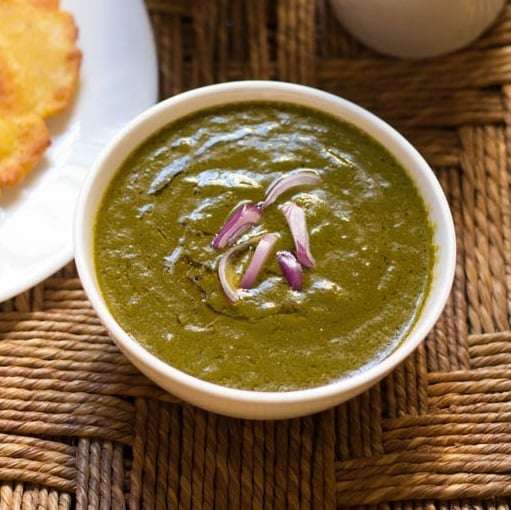
Sarson ka Saag Recipe (Authentic Punjabi Style)
Sarson ka Saag is a traditional Punjabi dish made by cooking a blend of mustard greens, bathua, spinach, radish leaves, fenugreek, and white radish, pureed into a smooth, thick green vegetable curry. The saag is simmered with spices and then tempered with sautéed onions and oil or ghee to enhance its flavor and texture. This dish showcases deep, earthy greens with a slightly bitter and spicy profile.
Prep Time
2 hrs
Cook Time
2 hrs
Total Time
4 hrs
Servings:
8
Calories:
59 kcal
Course:
Main Course
Cuisine:
Indian
Ingredients
For sarson ka saag
- 1 bunch mustard greens (sarson)
- ½ bunch bathua leaves (chenopodium/goosefoot/melde)
- ½ bunch spinach palak, leaves
- 1 cup radish leaves use tender leaves, (mooli ke patte, chopped
- 3 to 4 inches white radish root
- 1 cup fenugreek leaves - chopped
- 1 cup onion or 2 medium sized onions, chopped
- 1.5 cups tomato or 3 medium-sized tomatoes, chopped
- 2 inches ginger - chopped
- 2 green chilies - chopped
- 7 to 8 garlic - medium sized, chopped
- ½ teaspoon red chili powder
- 2 to 3 pinches asafoetida or ⅛ teaspoon asafoetida powder (hing)
- 2 to 3 cups water or add as required
- 2 tablespoon corn flour or fine cornmeal
- salt as required
Tempering saag for 3 servings
- ⅓ cup onion or 1 small to medium-sized onion, finely chopped
- 1 to 2 tablespoons neutral cooking oil or ghee, generic cooking oil
- 2 cups saag or as required, cooked
Instructions
Making sarson ka saag
- Firstly clean and chop all the greens. Then wash or rinse the greens very well in running water.
- In a 5 litre stovetop pressure cooker or pan add all the ingredients listed under "for sarson ka saag" except for maize flour.
- Cover the pressure cook and cook for 6 to 7 minutes or more on medium-high heat.
- If cooking in a pan, then cover and let the greens cook till tender and softened. Do check occasionally.
- Pour the greens along with the stock and maize flour in a blender. Blend till smooth.
- In another deep pan or in the same cooker, pour the pureed greens.
- Simmer for a good 25 to 30 minutes on a low heat stirring at intervals.
Cup of Yum
Tempering for sarson da saag
- In another small pan, heat oil. Use any neutral oil. You can also make the tempering with ghee if you prefer.
- Add the chopped onions and saute them till light brown on medium-low heat.
- Add the prepared saag. Stir and simmer for a couple of minutes.
- Stir ocaasionally when the saag is simmering.
Serving Suggestions
- Serve sarson ka saag hot with a side of some chopped onions, whole green chilies or mango pickle. Top the saag with a dollop of white butter and serve with Makki di Roti. Also serve a few jaggery cubes by the side.
- For a vegan saag, omit adding white butter or use vegan butter.
Storage
- Store the pureed and simmered saag in an airtight container for 4 to 5 days in the refrigerarot. You can also freeze it for a month.
- When ready to serve, remove the quantity you need from the refrigerator and temper it with the required amout of oil and onions.
Notes
- Use fresh mustard, bathua, spinach, radish leaves, and fenugreek for best flavor.
- Adjust water quantity to thin or thicken the saag as preferred.
- Sauté onions in oil or ghee before adding saag to add richness and balance bitterness.
- Blending the cooked greens yields a creamy texture; blend to desired smoothness.
- This saag pairs traditionally with Indian flatbreads like makki ki roti.
- Nutrition information given refers to the saag without the onion tempering.
Nutrition Information
Calories
59kcal
(3%)
Carbohydrates
10g
(3%)
Protein
4g
(8%)
Fat
1g
(2%)
Saturated Fat
1g
(5%)
Polyunsaturated Fat
1g
(6%)
Monounsaturated Fat
1g
(5%)
Sodium
385mg
(16%)
Potassium
142mg
(3%)
Fiber
2g
(8%)
Sugar
2g
(4%)
Vitamin A
321IU
(6%)
Vitamin B1 (Thiamine)
1mg
Vitamin B2 (Riboflavin)
1mg
Vitamin B3 (Niacin)
1mg
Vitamin B6
1mg
Vitamin C
36mg
(40%)
Vitamin E
1mg
Vitamin K
4µg
Calcium
112mg
(11%)
Vitamin B9 (Folate)
10µg
Iron
1mg
(6%)
Magnesium
18mg
(5%)
Phosphorus
62mg
Zinc
1mg
Nutrition Facts
Serving: 8 Serving
Amount Per Serving
Calories 59
% Daily Value*
| Calories | 59kcal | 3% |
| Carbohydrates | 10g | 3% |
| Protein | 4g | 8% |
| Fat | 1g | 2% |
| Saturated Fat | 1g | 5% |
| Polyunsaturated Fat | 1g | 6% |
| Monounsaturated Fat | 1g | 5% |
| Sodium | 385mg | 16% |
| Potassium | 142mg | 3% |
| Fiber | 2g | 8% |
| Sugar | 2g | 4% |
| Vitamin A | 321IU | 6% |
| Vitamin B1 (Thiamine) | 1mg | |
| Vitamin B2 (Riboflavin) | 1mg | |
| Vitamin B3 (Niacin) | 1mg | |
| Vitamin B6 | 1mg | |
| Vitamin C | 36mg | 40% |
| Vitamin E | 1mg | |
| Vitamin K | 4µg | |
| Calcium | 112mg | 11% |
| Vitamin B9 (Folate) | 10µg | |
| Iron | 1mg | 6% |
| Magnesium | 18mg | 5% |
| Phosphorus | 62mg | |
| Zinc | 1mg |
* Percent Daily Values are based on a 2,000 calorie diet.