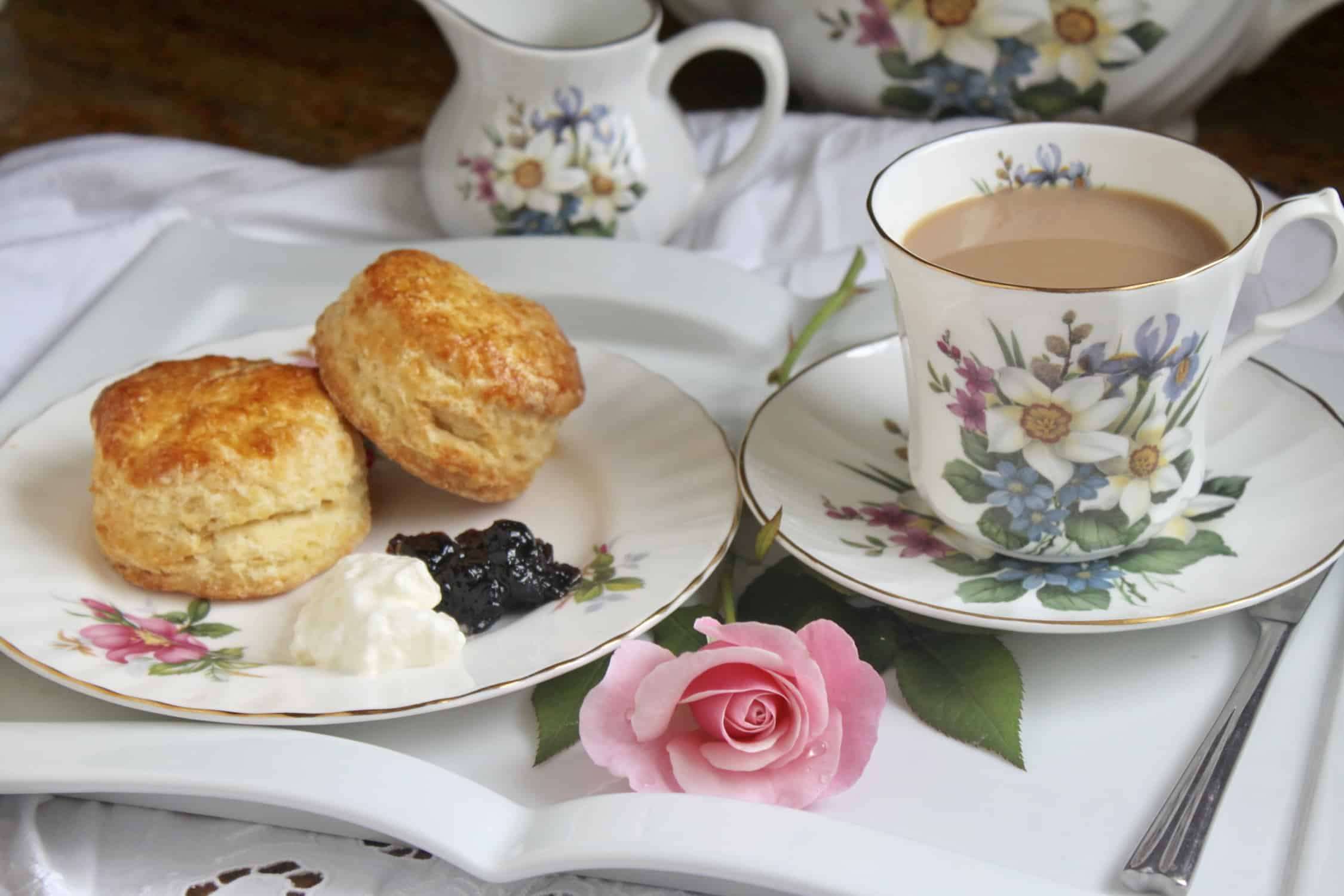
Afternoon Tea Scones
User Reviews
4.7
-
Prep Time
15 mins
-
Cook Time
18 mins
-
Total Time
33 mins
-
Servings
8 medium sized scones
-
Calories
327 kcal
-
Course
Bread, Baked Goods
-
Cuisine
British
Afternoon Tea Scones
Description
Afternoon Tea Scones combine flour, sugar, baking powder, and salt with cold unsalted butter cut into the dry ingredients until the mixture resembles coarse crumbs. Incorporating buttermilk and beaten egg forms a soft dough that is lightly handled to prevent gluten overdevelopment, avoiding tough scones. Optional dried fruit like raisins or currants can be folded in for additional sweetness and texture. The dough is formed into a thick disc and typically cut into wedges before baking at high heat.
The result is scones with a tender crumb and slightly crisp exterior. The use of buttermilk adds a subtle tang that balances the sweetness. These scones are traditionally served warm with jam and clotted cream or whipped cream, complementing tea or coffee nicely.
For best results, avoid overworking the dough to maintain lightness. Using cold butter in small pieces ensures flakiness. Adjust salt if using salted butter. The recipe notes include the full nutritional inclusion of jam, cream, and raisins, emphasizing their role in the classic scone experience.
Ingredients
- 2 cups all-purpose flour
- 2 tsp baking powder
- 2 Tbsp sugar
- ⅛ tsp salt
- ⅓ cup butter cold, unsalted
- 1 egg room temperature
- 4 oz buttermilk (plus 1 Tbsp more)
- ¼ cup raisins or currants (optional)
- 1 jar jam to serve
- 1 cup cream to serve
Instructions
- Heat oven to 400ºF (205ºC)
- In a bowl, place the dry ingredients. Mix lightly to combine.
- In a measuring jug, put the buttermilk (including the 1 tbsp.) Beat the egg in a small bowl, then pour into the buttermilk. Stir to combine.
- Place the butter in the center of the dry ingredients and cut with a knife into about 16 pieces. Next, take another knife, or pastry blender and cut/mix the butter into the flour until resembles coarse crumbs, finishing off the pastry using your hands once the pieces have become quite small.
- Make a well in the center of the dry ingredients and pour in the egg and buttermilk, (reserving one tablespoon of liquid in the jug).
- Mix gently with a wooden spoon until a dough forms, just about 10 seconds. (If you are adding dried fruit or any additions, add it now.)
- Place dough onto a clean, well-floured surface. Form into a ball, then pat out to approximately 3/4″ in thickness. Do not knead the dough or it will make the scones tough. With sharp cutters, cut out scones and place on silicone baking mat or parchment lined baking tray. Gently knead scraps together and repeat until dough is finished, (make a “runt” with the remaining little bit of dough).
- Using a pastry brush, brush the tops of the scones with the remaining egg/buttermilk mixture.
- Place in middle of preheated oven for about 9 minutes, then turn tray 180º and continue to bake for another 9 minutes or until scones look golden brown on top.
- Remove from oven, and place in a towel lined basket, or on a cooling rack if you wish to serve them on a plate. Serve with butter, or real cream and jam.
Notes
- Use cold, unsalted butter for proper flakiness; omit added salt if your butter is salted.
- Mix the dough gently and briefly to keep scones tender and avoid toughness.
- Include dried fruit like raisins or currants as desired for extra sweetness and texture.
- Serve scones warm with jam and cream to complete the traditional afternoon tea experience.
Nutrition Information
Show DetailsNutrition Facts
Serving: 8medium sized scones
Amount Per Serving
Calories 327 kcal
% Daily Value*
| Serving | 1 scone | |
| Calories | 327kcal | 16% |
| Carbohydrates | 32g | 11% |
| Protein | 6g | 12% |
| Fat | 20g | 31% |
| Saturated Fat | 12g | 60% |
| Polyunsaturated Fat | 1g | 6% |
| Monounsaturated Fat | 5g | 25% |
| Trans Fat | 0.3g | 15% |
| Cholesterol | 79mg | 26% |
| Sodium | 238mg | 10% |
| Potassium | 130mg | 3% |
| Fiber | 1g | 4% |
| Sugar | 5g | 10% |
| Vitamin A | 732IU | 15% |
| Vitamin C | 0.4mg | 0% |
| Calcium | 107mg | 11% |
| Iron | 2mg | 11% |
* Percent Daily Values are based on a 2,000 calorie diet.
User Reviews
Overall Rating
4.7
You'll Also Love