4.9 from 102 votes
How to Roast Spaghetti Squash
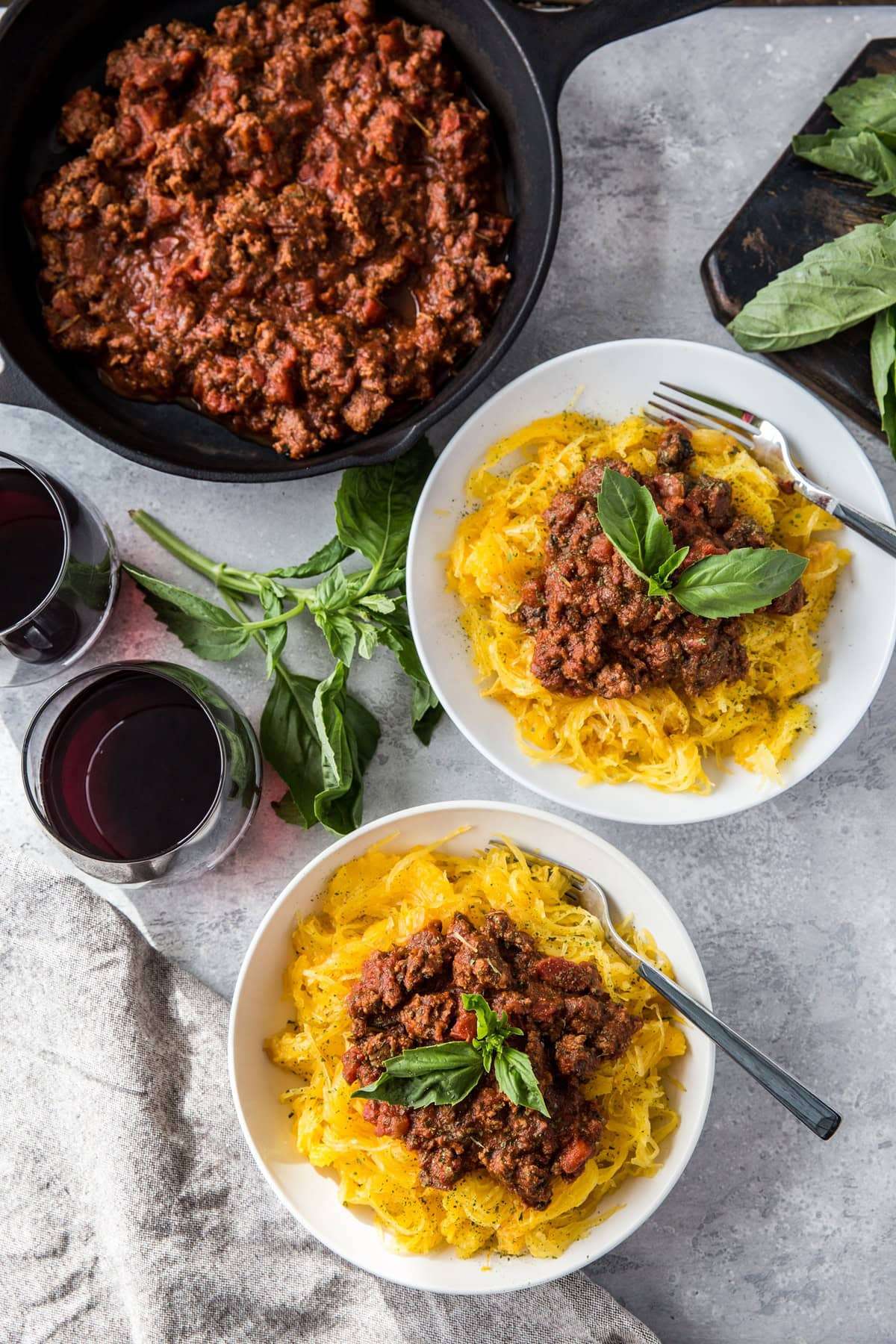
Roasting spaghetti squash yields fork-tender, slightly sweet strands resembling noodles. By cutting and seasoning the squash halves with oil, salt, and pepper, and roasting cut-side down, the flesh softens and can be scraped into spaghetti-like strands. Varying roasting times adjusts the texture from crunchy to tender, making it a versatile vegetable base for meals.
Prep Time
5 mins
Cook Time
45 mins
Total Time
50 mins
Servings:
4
Servings
Calories:
48 kcal
Course:
Side Dish
Cuisine:
American
Ingredients
- 1 spaghetti squash large
- 2 Tbsp olive oil or avocado oil
- kosher salt fresh ground black pepper
- black pepper fresh ground black pepper
Instructions
- Preheat the oven to 400 degrees F.
- If you'd like to make the squash easier to cut, microwave the whole squash for 2 minutes. This is an optional step and it's one I don't take.
- Use a sharp knife to chop the tip and the tail off of the spaghetti squash. Cut it in half length-wise, and scoop the seeds out of each half using a sturdy metal spoon.
- Rub about a tablespoon of olive oil over the flesh of each half. Sprinkle the flesh with salt and pepper.
- Place the squash cut-side down on a baking sheet.
- Roast the squash for 35 to 50 minutes or until fork tender. Note: For crunchy noodles, roast for 35 minutes. For al dente noodles, roast for 40-45. For tender noodles, roast for 50 to 55 minutes.
- When the squash is cool enough to handle, use a fork to gently scrape the flesh, releasing spaghetti-like stands. Do this until both halves of the spaghetti squash are scraped clean and place the “spaghetti” into a large serving bowl.
- Note that some water will seep out of the “spaghetti” – in order to drain the water, allow the spaghetti to sit in a bowl (or fine colander) and use a slotted spoon to scoop it on plates.
- Serve spaghetti squash with your favorite sauce and parmesan cheese.
Cup of Yum
Nutrition Information
Serving
1cup
Calories
48kcal
(2%)
Carbohydrates
11g
(4%)
Protein
1g
(2%)
Fat
1g
(2%)
Fiber
2g
(8%)
Sugar
4g
(8%)
Nutrition Facts
Serving: 4 Servings
Amount Per Serving
Calories 48
% Daily Value*
| Serving | 1cup | |
| Calories | 48kcal | 2% |
| Carbohydrates | 11g | 4% |
| Protein | 1g | 2% |
| Fat | 1g | 2% |
| Fiber | 2g | 8% |
| Sugar | 4g | 8% |
* Percent Daily Values are based on a 2,000 calorie diet.