Kipes or Quipes [Recipe + Video] The Dominican Kibbeh
User Reviews
5
-
Prep Time
5 hrs
-
Cook Time
1 hr
-
Total Time
6 hrs
-
Servings
4 servings
-
Calories
469 kcal
-
Course
Snacks
-
Cuisine
Mediterranean, Dominican
Kipes or Quipes [Recipe + Video] The Dominican Kibbeh
Description
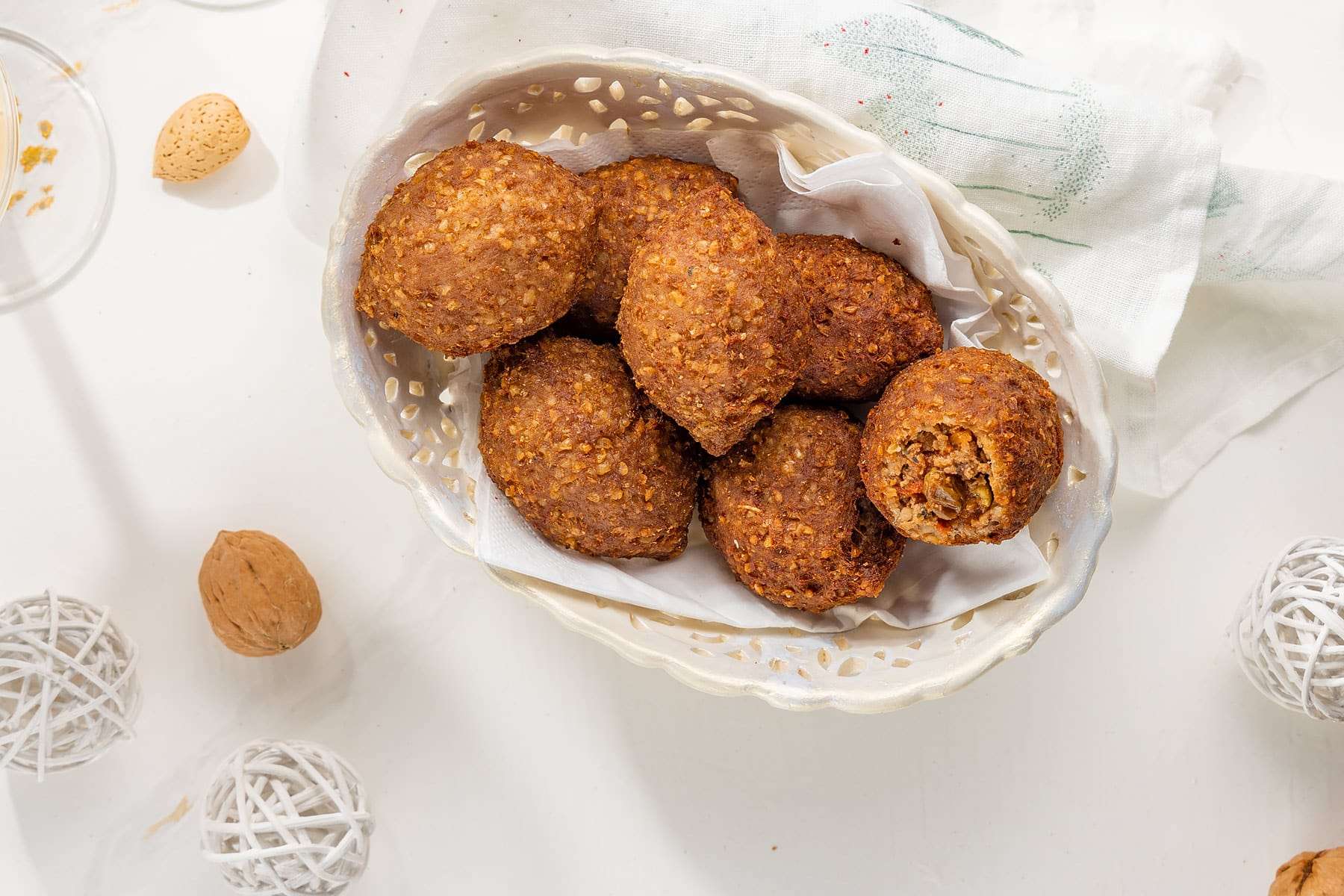
Kipes or Quipes are a version of kibbeh featuring bulgur soaked overnight to soften, combined with minced beef, finely chopped bell pepper, parsley, and red onion forming the base mixture. This mixture is divided, with a portion cooked into a filling along with tomato sauce, raisins, and seasonings, then cooled. The soaked bulgur is drained and used to shape the kipes around the cooled filling before frying.
The long soaking of bulgur softens it enough to mix uniformly with the meat and vegetable paste, creating a cohesive dough that crisps nicely when fried. The filling adds moisture and a tangy-sweet contrast from tomato sauce and raisins. The use of fresh parsley and onion paste ensures a pronounced herbaceous flavor, complemented by seasoning of salt and pepper.
Kipes can be served hot as a snack or party food and work well alongside sauces or salads. The recipe accommodates resting and thorough soaking times, which are essential for the desired texture and binding of the bulgur and meat. Variations may include herbs such as basil, although parsley remains traditional.
Note that soaking the bulgur overnight is preferred, but a minimum of four hours is advised for proper softening. Mixing the meat thoroughly with the seasoning paste ensures uniform flavor and texture. Frying should be done carefully at the right oil temperature to avoid burning while crisping the outside.
Ingredients
- 1 cup bulgur (see notes)
- 1 pound beef 0.4 kg, minced
- 1 bell pepper or cubanelle pepper, very finely diced
- 2 bunches parsley chopped
- 1 red onion very finely diced, small
- 3 teaspoon salt (or more, to taste)
- ½ cup tomato sauce
- ¼ cup raisins
- 2 cups cooking oil vegetable oil, for frying
- ¼ teaspoon black pepper freshly-cracked or ground
Instructions
1. Soaking the bulgur
- Put the bulgur wheat in a bowl and add enough water to cover and let it rest overnight, stir a couple of times while it rests (see notes).
2. Make seasoning paste
- Pulse onion and parsley in the food processor until you obtain a paste.
3. Season the meat
- In a bowl, mix meat, and seasoning paste. Add a teaspoon of pepper and three teaspoons of salt.Using your hands, mix the meat with the vegetables until you get a uniform mixture.Split the meat into thirds and set aside ⅔ of the meat for later use.
4. Cook the filling
- Heat 2 tablespoons of oil in a pan over medium heat. Add ⅓ of the meat you've taken out. Cook stirring until it's lightly browned. Add tomato sauce and mix well. Stir in ½ cup of water and the raisins and simmer over medium heat.When all the liquid has evaporated, remove it from the heat. Let it cool down to room temperature. Set aside.
5. Drain water from bulgur
- Drain the leftover water from the bulgur and sieve to eliminate all the unabsorbed water (this is very important!). I suggest squeezing the bulgur with a clean cotton tea towel if you are not sure if there's water left after sieving.
6. Make mix for crust
- Combine the remaining ⅔ raw meat with the bulgur. With your hands, mix the bulgur and raw meat, kneading it until it is mixed uniformly. This is a crucial step and may take over 10 minutes. The better kneaded this is, the better the chances of kipes not breaking apart in the hot oil. You should be left with a mixture that resembles dough. If you want to cut on time, you can also pulse for a couple of minutes in the food processor for a more compact texture, but I prefer the texture of hand-kneaded crust.
6. Shape and make kipes
- Put 2 tablespoons of the mixture on the palm of your hands and roll it into a ball.Make a deep indentation in the ball by poking it with your index finger.Place 1 tablespoon of the cooked meat filling in the indentation. Gather around the hole, closing it, and roll the kipe with the palm of your hands making it as compact as possible. Pinch the ends to give it its traditional shape.Refrigerate for at least 6 hours.
7. Heat the oil
- Pour oil into a small saucepan (so it's high enough to cover the kipes), and heat over medium-high heat (350 ºF [175 ºC]). The oil has to be very hot, cool oil will make your kipes break down and possibly ruin the oil too.
8. Fry
- When it is time to fry them give them another quick squeeze to make them even more compact.Being very, very careful with splatters (hot oil and cold liquids do not get along well) fry your kipes, preferably one at a time, carefully lowering them into the oil with a slotted spoon to avoid burning yourself.
9. Serve
- After frying, the kipe has to be deep golden brown color outside. Open the first one when you are done; if there is any pink part inside it means there is still raw meat, a bad thing, fry the next one longer. Place them on a paper towel to drain excess oil before serving.
Notes
- Soak the bulgur overnight or for at least four hours to ensure it softens well enough to mix.
- Mix the minced beef thoroughly with the parsley and onion paste for a uniform texture.
- Cook the filling mixture fully and allow it to cool before stuffing the kipes for easier handling.
- Fry kipes in vegetable oil at proper temperature to avoid burning and achieve a crispy exterior.
- Optional: Adding basil can change the flavor profile but parsley is the traditional choice.
Nutrition Information
Show DetailsNutrition Facts
Serving: 4servings
Amount Per Serving
Calories 469 kcal
% Daily Value*
| Calories | 469kcal | 23% |
| Carbohydrates | 38g | 13% |
| Protein | 27g | 54% |
| Fat | 23g | 35% |
| Saturated Fat | 5g | 25% |
| Cholesterol | 73mg | 24% |
| Sodium | 1987mg | 83% |
| Potassium | 711mg | 15% |
| Fiber | 8g | 32% |
| Sugar | 8g | 16% |
| Vitamin A | 1065IU | 21% |
| Vitamin C | 42.2mg | 47% |
| Calcium | 36mg | 4% |
| Iron | 3.9mg | 22% |
* Percent Daily Values are based on a 2,000 calorie diet.
User Reviews
Overall Rating
5
You'll Also Love

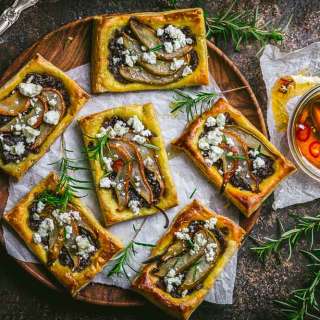
Puff Pastry Tartlets with Roasted Pear, Caramelized Red Onions, Goat Cheese and Spicy Honey Drizzle