Lussekatter (Swedish Saffron Buns)
User Reviews
4.9
Lussekatter (Swedish Saffron Buns)
Description
This recipe begins by gently infusing saffron threads in warm milk and rehydrating raisins ahead of preparing the dough. The dough combines warm milk, active dry yeast, sugar, melted butter, egg, and saffron milk along with salt and flour gradually added for the right structure. The dough is kneaded and allowed to rise before shaping into characteristic curled shapes often associated with Lussekatter.
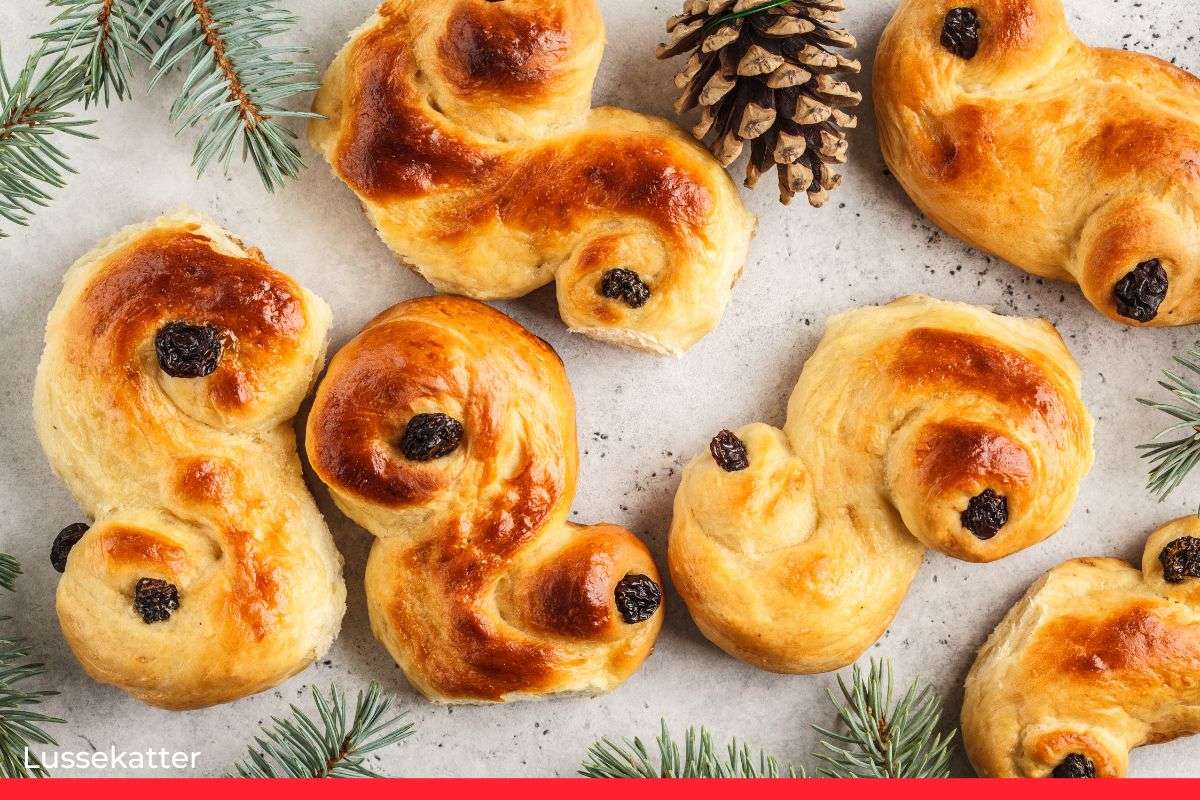
The saffron lends a distinctive golden color and a subtle floral aroma, while the raisins add texture and bursts of sweetness in each bite. The dough’s soft and tender crumb contrasts with the slight chew of the raisins. Lussekatter are baked until golden and brushed with an egg wash to create a shiny surface.
These buns are traditionally enjoyed during Swedish Saint Lucia celebrations but make a flavorful snack or breakfast at any time of year. They pair well with butter or jam and warm beverages. The recipe’s steps provide an approach for preparing, proofing, and baking a visually appealing saffron bread with cultural significance.
Ingredients
To prepare ahead:
- ½ tsp saffron threads
- 2 tbsp milk warmed to 80° F
- ½ cup raisins
For the dough:
- 1 ½ cup milk
- 2 ¼ tsp active dry yeast
- ¾ cup sugar
- 6 tbsp butter melted and cooled, unsalted
- 1 egg lightly beaten
- ½ tsp salt
- 6 - 6 ½ cups all-purpose flour unbleached
For the egg wash:
- 1 egg
- water
Instructions
How to Make Lussekatter:
- We'll begin by preparing some of our ingredients about 1 - 1 ½ hours ahead of making the dough.
- Place the raisins in a bowl and top with warm water and leave to rehydrate.
- Grind the saffron threads either in a bowl or by using a mortar and pestle. Put the ground saffron in a small bowl and add 2 tablespoons of milk on top. Leave the milk to infuse with color from the saffron until it's time to make the dough.
How to Make the Dough:
- Warm the milk in a saucepan (careful it's not too hot!) and add it to a mixing bowl along with a couple of tablespoons of the sugar and 2 ¼ tablespoons of active dry yeast.
- Stir together until everything has fully dissolved and leave to proof for 5 -10 minutes until bubbles start to form on the surface.
- Meanwhile, in a separate bowl combine the melted butter, egg, sugar and saffron milk. Add a pinch of salt for flavor and start gradually incorporating the flour 1 cup at a time, incorporating well between additions.
- Knead the resulting dough onto a lightly floured surface for about 5 minutes, adjusting the consistency with more flour if necessary until you get a smooth and elastic dough that doesn't stick to the hands.
- Place the dough into a clean and lightly greased bowl, cover with a damp kitchen cloth or plastic wrap to keep the dough moist and let it double in size in a warm spot in the kitchen for 1 - 1 ½ hours.
- After doubling, knead the dough for a minute to deflate and take out handfuls of dough at a time. Roll between your hands to shape into a ball.
- Roll out your dough ball onto a floured surface into 12-inch (30 cm) long ropes, about the width of a finger.
- Coil each end of the rope in a spiral (each going in the opposite direction from the other to form the traditional "scrolled" S-shaped Lussekatter.
- Place the finished buns on a tray lined with parchment paper. Repeat the process until you use up all the dough.
- Drain the raisins and dry them on a piece of kitchen paper. Add one in the middle of each spiral of the bun.
- Cover the buns in a damp tea towel and place them in a warm and draft-free place to rise for about 30 minutes.
- When it's almost time to bake them, preheat your oven to 425° F/ 220° C.
- Beat the egg set aside for the egg wash, adding a few drops of water to loosen it a little and brush the mixture on the buns.
- Place in the oven and bake the buns for 8-10 min minutes, until beautifully golden-brown.
- Take out of the oven and place on a wire rack to cool a little before eating. Enjoy warm or cold, preferably within 3 days of making them!
Notes
User Reviews
Overall Rating
4.9
You'll Also Love