5 from 249 votes
White Sandwich Bread
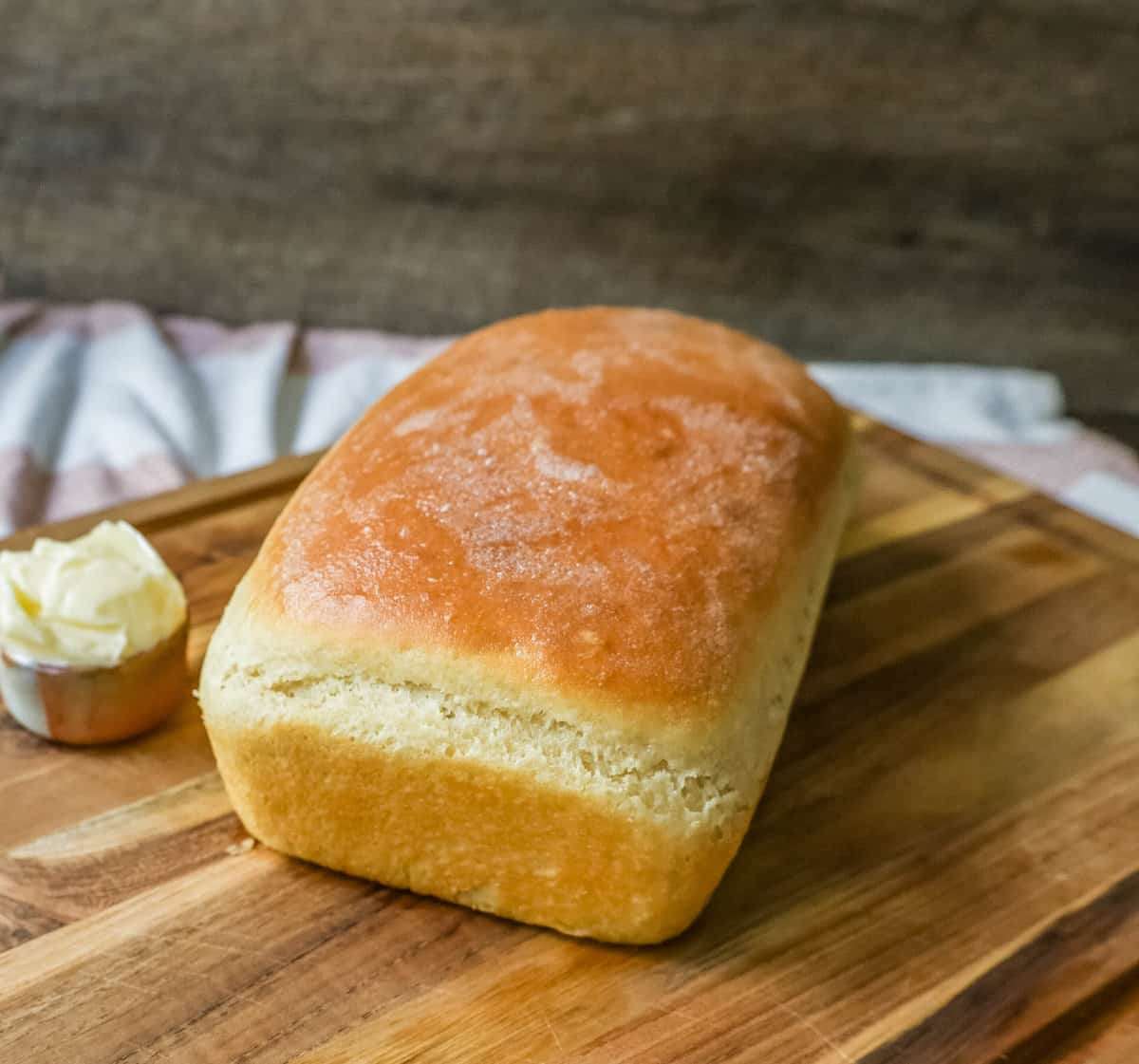
White Sandwich Bread combines bread and all-purpose flours with milk, butter, and active dry yeast to create a soft, tender loaf. The dough requires proper yeast activation and gradual incorporation of butter to achieve a smooth, elastic texture that rises well. This bread yields a tender crumb and mild flavor, suitable for sandwiches or toasting. Attention to fermentation and proofing ensures good volume and a pleasant texture ideal for everyday use.
Prep Time
20 mins
Cook Time
30 mins
Additional Time
2 hrs 30 mins
Servings:
10
Calories:
175 kcal
Course:
Bread
Cuisine:
French
Ingredients
- 2 1/4 cups bread flour
- 1/3 cup all-purpose flour
- 1 1/2 teaspoon salt
- 2 1/4 teaspoon active dry yeast
- 3 Tablespoons water warm
- 1 Tablespoon sugar
- 1 cup milk whole
- 3 Tablespoons butter (plus more for the top)
Instructions
- In a bowl of a stand mixer, fitted with a dough attachment, combine bread flour, all-purpose flour, and salt.
- In a small saucepan, heat the milk until lukewarm (105-100 degrees). This can also be done in the microwave.
- In a small bowl, add warm water (105-110 degrees), yeast and sprinkle in the sugar, and stir it together. Let it sit for 5-10 minutes, watching to see if the yeast mixture foams up and bubbles. If it is foamy, the yeast has activated. If not, start again with a new batch of yeast and lukewarm water.
- Add the yeast mixture to the flour mixture. Mix on low speed. Add lukewarm milk. Scrape the sides of the bowl often to incorporate all of the ingredients.
- Add the slightly softened butter, one small cube at a time. You don't want to add the butter all at once but only a small amount at a time. The dough should start pulling away from the sides of the bowl and look like a round ball.
- Remove the dough from the mixing bowl and place in a greased glass bowl (I suggest spreading butter all over the bowl using a pasty brush or paper towel or spraying it with non-stick cooking spray.
- Cover the bowl with a kitchen towel and let the dough rise until it doubles in size, about 2 hours, depending on the warmth of the kitchen.
- While the dough is rising, prepare the 9 x 5 loaf pan. Lightly spray non-stick cooking spray or brush with oil or butter to prevent sticking.
- Place the dough on a lightly oiled or floured workspace and shape into a 8 to 8 1/2 inch loaf. Place the log in a lightly greased 8 1/2" x 4 1/2" or 9" x 5" loaf pan, cover the pan loosely with lightly greased plastic wrap. Allow the bread to rise for about 30-60 minutes or until it's domed about 1" above the edge of the pan. Towards the end of the rise, preheat your oven to 350°F.
- Bake the bread for 25 to 33 minutes, until it is a light golden brown color. Test it for doneness by measuring its interior temperature with a digital thermometer (it should register 190°F at the center of the loaf).
- Remove the bread from the oven, and brush butter all over the warm loaf. Cool it on a rack before slicing. Store the bread in a plastic bag at room temperature for several days or freeze for longer storage. This bread freezes beautifully!
Cup of Yum
Notes
- Activate yeast with warm water (105-110°F) and a bit of sugar to ensure it foams before mixing with other ingredients.
- Avoid contact between salt and yeast during activation, as salt can inhibit yeast activity.
- Check that the dough has doubled in size by poking it; a proper rise will hold the finger indentation.
- Use lukewarm milk to add softness without killing the yeast.
- Gradually add softened butter to the dough while mixing to create a smooth, elastic texture.
Nutrition Information
Calories
175kcal
(9%)
Carbohydrates
27g
(9%)
Protein
6g
(12%)
Fat
5g
(8%)
Saturated Fat
3g
(15%)
Polyunsaturated Fat
1g
(6%)
Monounsaturated Fat
1g
(5%)
Trans Fat
1g
(50%)
Cholesterol
12mg
(4%)
Sodium
387mg
(16%)
Potassium
96mg
(2%)
Fiber
2g
(8%)
Sugar
2g
(4%)
Vitamin A
145IU
(3%)
Vitamin C
1mg
(1%)
Calcium
37mg
(4%)
Iron
1mg
(6%)
Nutrition Facts
Serving: 10 Serving
Amount Per Serving
Calories 175
% Daily Value*
| Calories | 175kcal | 9% |
| Carbohydrates | 27g | 9% |
| Protein | 6g | 12% |
| Fat | 5g | 8% |
| Saturated Fat | 3g | 15% |
| Polyunsaturated Fat | 1g | 6% |
| Monounsaturated Fat | 1g | 5% |
| Trans Fat | 1g | 50% |
| Cholesterol | 12mg | 4% |
| Sodium | 387mg | 16% |
| Potassium | 96mg | 2% |
| Fiber | 2g | 8% |
| Sugar | 2g | 4% |
| Vitamin A | 145IU | 3% |
| Vitamin C | 1mg | 1% |
| Calcium | 37mg | 4% |
| Iron | 1mg | 6% |
* Percent Daily Values are based on a 2,000 calorie diet.