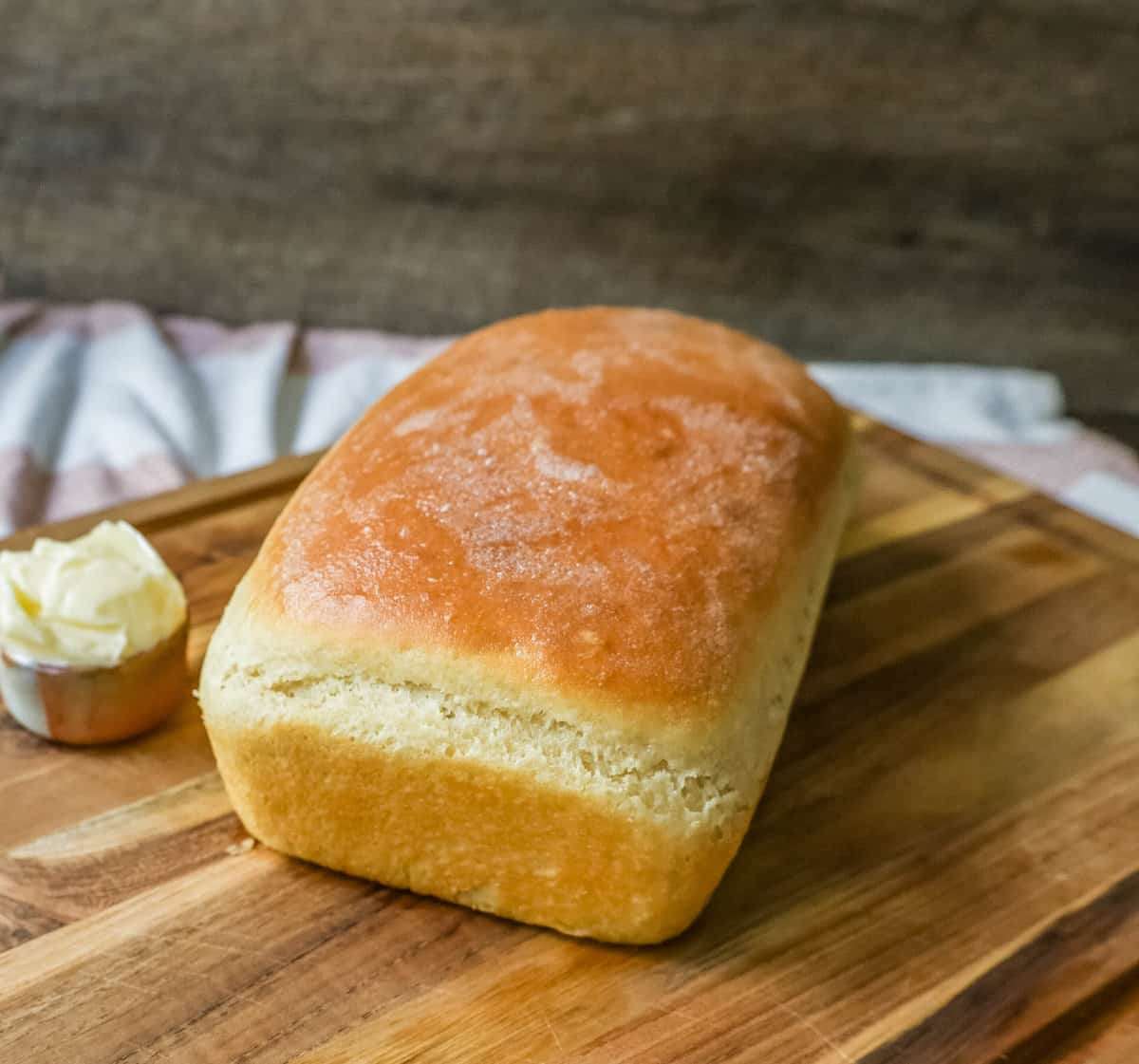
White Sandwich Bread
User Reviews
5
White Sandwich Bread
Description
White Sandwich Bread uses a blend of bread flour and all-purpose flour enriched with milk and butter for softness. The dough is prepared by first activating yeast in warm water with sugar, then combining it with the flours and milk. Butter is added slowly to develop a pliable dough that pulls away from the bowl. The dough is left to rise in a greased bowl until doubled in size, which is a key step for structure and crumb texture.
The resulting bread has a tender crumb and mild taste enhanced by the butter and milk. Proper yeast activation and dough handling are important to get a good rise and avoid dense bread. The loaf is versatile and works well sliced for sandwiches or toasted for breakfast. Leftover bread stores well wrapped to maintain softness.
Making sure the yeast is fresh, the liquids are warm but not too hot, and the dough has fully risen are crucial points. Checking the dough with a finger poke confirms it has proofed properly when the indentation remains. This bread suits bakers who want a soft, classic sandwich loaf by following careful yeast and dough handling.
Ingredients
- 2 1/4 cups bread flour
- 1/3 cup all-purpose flour
- 1 1/2 teaspoon salt
- 2 1/4 teaspoon active dry yeast
- 3 Tablespoons water warm
- 1 Tablespoon sugar
- 1 cup milk whole
- 3 Tablespoons butter (plus more for the top)
Instructions
- In a bowl of a stand mixer, fitted with a dough attachment, combine bread flour, all-purpose flour, and salt.
- In a small saucepan, heat the milk until lukewarm (105-100 degrees). This can also be done in the microwave.
- In a small bowl, add warm water (105-110 degrees), yeast and sprinkle in the sugar, and stir it together. Let it sit for 5-10 minutes, watching to see if the yeast mixture foams up and bubbles. If it is foamy, the yeast has activated. If not, start again with a new batch of yeast and lukewarm water.
- Add the yeast mixture to the flour mixture. Mix on low speed. Add lukewarm milk. Scrape the sides of the bowl often to incorporate all of the ingredients.
- Add the slightly softened butter, one small cube at a time. You don't want to add the butter all at once but only a small amount at a time. The dough should start pulling away from the sides of the bowl and look like a round ball.
- Remove the dough from the mixing bowl and place in a greased glass bowl (I suggest spreading butter all over the bowl using a pasty brush or paper towel or spraying it with non-stick cooking spray.
- Cover the bowl with a kitchen towel and let the dough rise until it doubles in size, about 2 hours, depending on the warmth of the kitchen.
- While the dough is rising, prepare the 9 x 5 loaf pan. Lightly spray non-stick cooking spray or brush with oil or butter to prevent sticking.
- Place the dough on a lightly oiled or floured workspace and shape into a 8 to 8 1/2 inch loaf. Place the log in a lightly greased 8 1/2" x 4 1/2" or 9" x 5" loaf pan, cover the pan loosely with lightly greased plastic wrap. Allow the bread to rise for about 30-60 minutes or until it's domed about 1" above the edge of the pan. Towards the end of the rise, preheat your oven to 350°F.
- Bake the bread for 25 to 33 minutes, until it is a light golden brown color. Test it for doneness by measuring its interior temperature with a digital thermometer (it should register 190°F at the center of the loaf).
- Remove the bread from the oven, and brush butter all over the warm loaf. Cool it on a rack before slicing. Store the bread in a plastic bag at room temperature for several days or freeze for longer storage. This bread freezes beautifully!
Notes
- Activate yeast with warm water (105-110°F) and a bit of sugar to ensure it foams before mixing with other ingredients.
- Avoid contact between salt and yeast during activation, as salt can inhibit yeast activity.
- Check that the dough has doubled in size by poking it; a proper rise will hold the finger indentation.
- Use lukewarm milk to add softness without killing the yeast.
- Gradually add softened butter to the dough while mixing to create a smooth, elastic texture.
Nutrition Information
Show DetailsNutrition Facts
Serving: 10Serving
Amount Per Serving
Calories 175 kcal
% Daily Value*
| Calories | 175kcal | 9% |
| Carbohydrates | 27g | 9% |
| Protein | 6g | 12% |
| Fat | 5g | 8% |
| Saturated Fat | 3g | 15% |
| Polyunsaturated Fat | 1g | 6% |
| Monounsaturated Fat | 1g | 5% |
| Trans Fat | 1g | 50% |
| Cholesterol | 12mg | 4% |
| Sodium | 387mg | 16% |
| Potassium | 96mg | 2% |
| Fiber | 2g | 8% |
| Sugar | 2g | 4% |
| Vitamin A | 145IU | 3% |
| Vitamin C | 1mg | 1% |
| Calcium | 37mg | 4% |
| Iron | 1mg | 6% |
* Percent Daily Values are based on a 2,000 calorie diet.
User Reviews
Overall Rating
5
You'll Also Love