Homemade Irish Soda Bread
User Reviews
5
Homemade Irish Soda Bread
Description
This Homemade Irish Soda Bread combines all-purpose flour, sugar, baking powder, baking soda, salt, and optional currants or raisins and caraway seeds for flavor. The wet ingredients include eggs, buttermilk, and melted salted butter, which together create a moist dough that is lightly kneaded until combined but remains shaggy. This minimal handling helps preserve the tender crumb and prevents toughness.
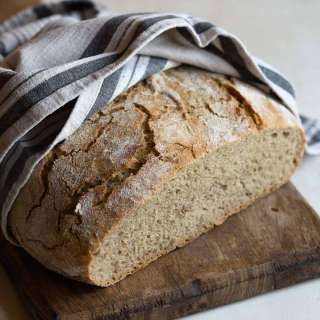
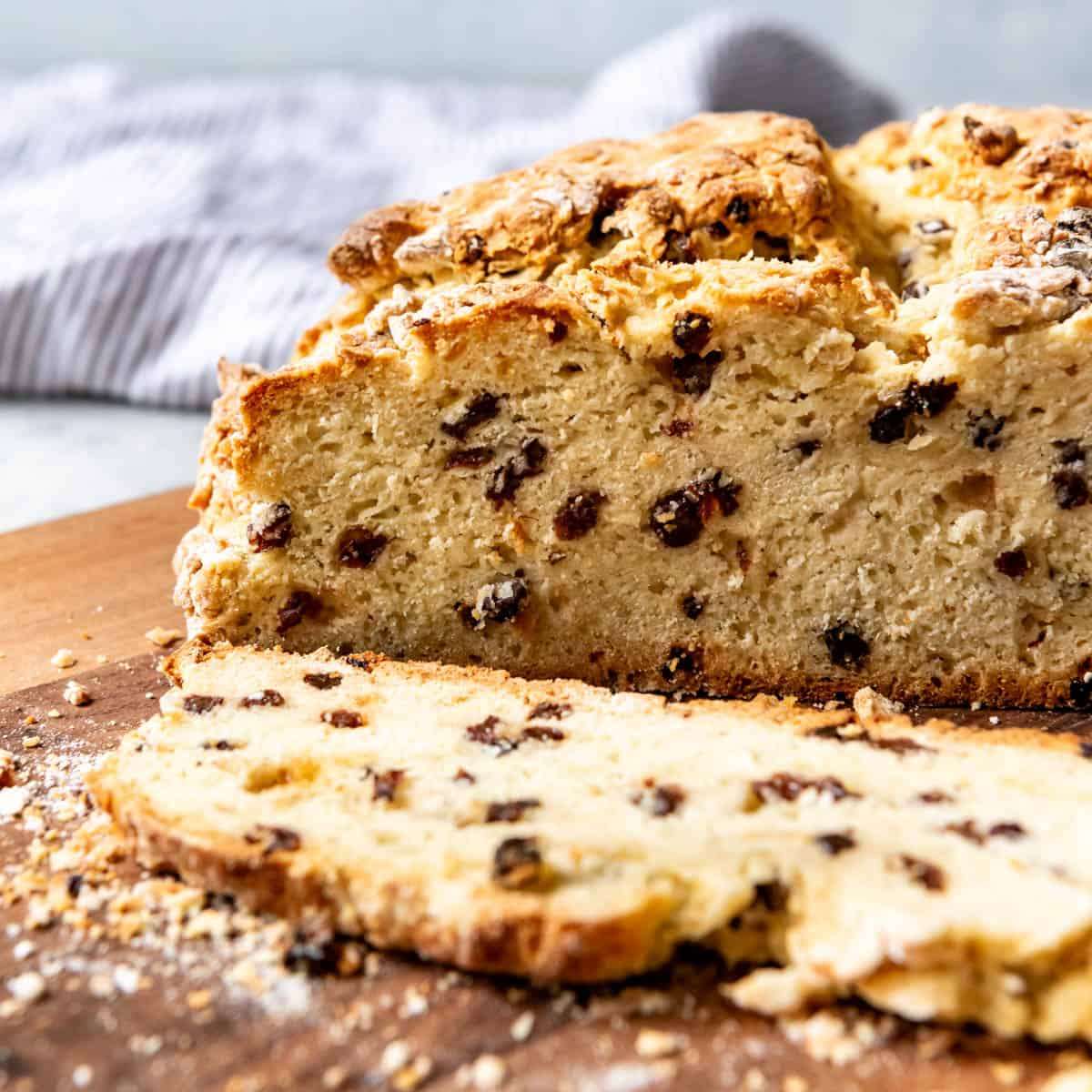
The dough is shaped into a round and baked in a buttered skillet or lined pan at 350°F, developing a golden crust with a moist interior. The bread has a rustic appearance with a slightly dense texture ideal for slicing and serving with butter or preserves.
This soda bread suits a variety of meals or as a standalone snack, bringing a comforting bread option without requiring yeast or long proofing. Variations using dried fruit and caraway seeds add subtle sweetness and aromatic notes.
To avoid over-browning, tent the bread loosely with aluminum foil during baking if the crust darkens too quickly before the loaf is fully baked through.
Ingredients
- 3 3/4 cups all-purpose flour 529 grams
- 1/2 cup granulated sugar 100g
- 2 teaspoons baking powder
- 1 teaspoon baking soda
- 1 teaspoon salt
- 1 1/2 cups currants optional, or raisins
- 1 teaspoon caraway seeds (optional)
- 2 egg beaten, large
- 1 3/4 cups buttermilk 420 ml
- 1/2 cup butter melted, salted
Instructions
- Preheat oven to 350°F. Butter an oven safe 9-inch skillet with cooking spray or line a baking sheet, pie plate, or cake pan with parchment paper.
- In a large bowl, combine the flour, sugar, baking powder, baking soda, salt, and currants or raisins and caraway seeds (if using). Stir together to evenly disperse the ingredients.
- In a separate bowl, whisk the eggs, buttermilk, and butter. Add to the flour mixture and stir together with a spoon or fork just until combined but still very shaggy. It might not seem like enough liquid but resist the temptation to overwork the dough by stirring until completely combined. Knead 10-12 times in the bowl with a spatula or by hand to combine. The dough will be sticky.
- Turn dough onto a lightly floured surface and knead lightly a few times with floured hands until it comes together, but again, try not to overwork the dough. The flour should be just moistened but the dough should still be quite shaggy.
- Pat dough into a round shape and place in prepared cast iron pan or on a parchment-lined baking sheet. Cut an "X" about an inch deep into the top of the loaf using a sharp knife.
- Bake for 65-75 minutes until browned on top and baked through. Check for doneness by inserting a wooden skewer into the middle of the bread to test it. If it comes out clean, the bread is done.
- Let the loaf of bread cool a few minutes, then remove to a cooling rack. Serve bread warm or at room temperature. It's easier to slice once it has completely cooled, but I can never resist just tearing off a big chunk to eat while still warm with lots of butter on it.
Notes
- If the loaf browns too fast during baking, cover it loosely with aluminum foil to prevent burning while allowing the interior to finish baking.
Nutrition Information
Show DetailsNutrition Facts
Serving: 16slices
Amount Per Serving
Calories 175 kcal
% Daily Value*
| Calories | 175kcal | 9% |
| Carbohydrates | 28g | 9% |
| Protein | 5g | 10% |
| Fat | 5g | 8% |
| Saturated Fat | 3g | 15% |
| Polyunsaturated Fat | 0.4g | 2% |
| Monounsaturated Fat | 1g | 5% |
| Trans Fat | 0.1g | 5% |
| Cholesterol | 31mg | 10% |
| Sodium | 326mg | 14% |
| Potassium | 106mg | 2% |
| Fiber | 1g | 4% |
| Sugar | 5g | 10% |
| Vitamin A | 167IU | 3% |
| Vitamin C | 4mg | 4% |
| Calcium | 72mg | 7% |
| Iron | 2mg | 11% |
* Percent Daily Values are based on a 2,000 calorie diet.
User Reviews
Overall Rating
5
You'll Also Love