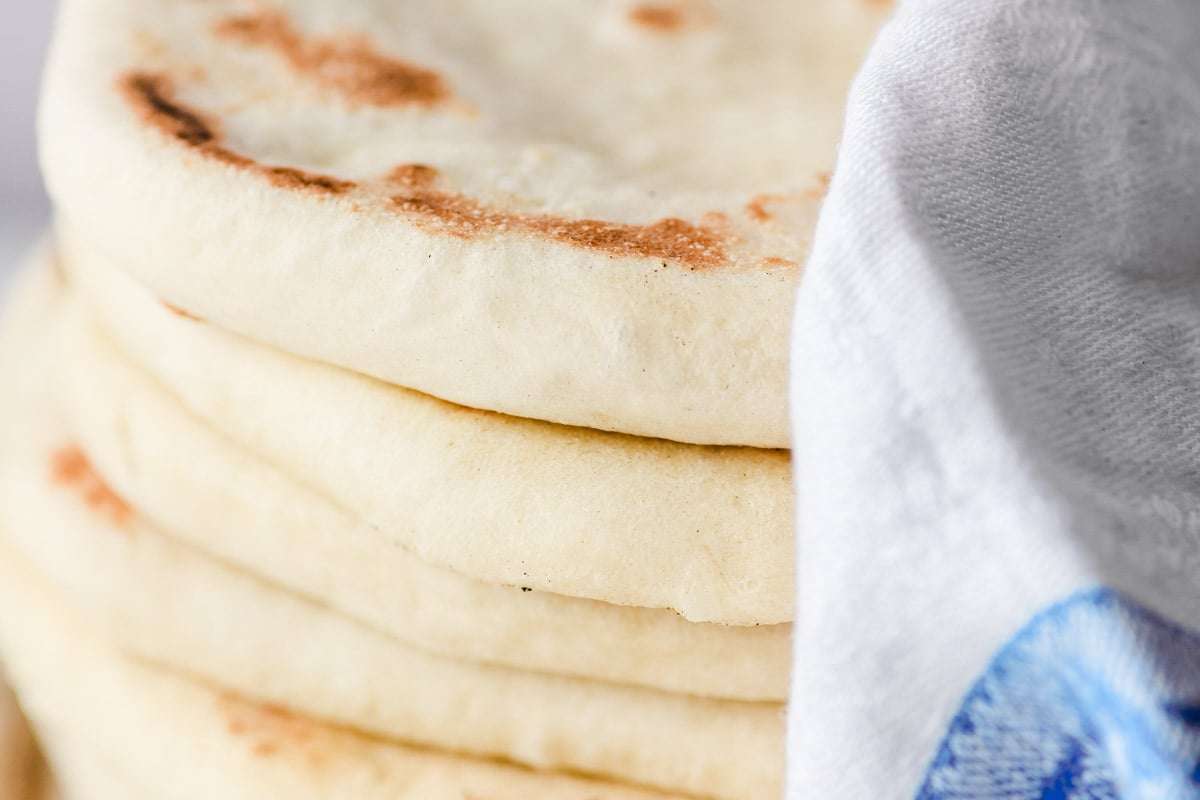
How to Make Pita Bread
User Reviews
3.9
-
Prep Time
15 mins
-
Cook Time
10 mins
-
rising
1 hr
-
Total Time
1 hr 25 mins
-
Servings
8 pitas
-
Calories
186 kcal
-
Course
Bread
-
Cuisine
Middle Eastern
How to Make Pita Bread
Description
In "How to Make Pita Bread," you start by activating yeast in warm water, then combine this with olive oil, salt, and flour to form a soft dough. Kneading develops elasticity, allowing the dough to rise and double in size. After rising, the dough is portioned and rolled into small rounds about 6 inches in diameter. Cooking is done on a hot skillet over medium-high heat, which encourages the dough to puff and form an inner pocket, characteristic of pita bread.
The texture is slightly chewy with a soft crumb and a light, slightly charred exterior from the skillet. The puffing of the bread is somewhat variable and depends heavily on rolling the pieces thinly and ensuring the pan is preheated well. Unlike oven baking, pan cooking allows more control over heat and results.
This homemade pita bread pairs well with dips, sandwiches, or can be cut to use like flatbread for meals. The recipe produces about eight pita rounds, enough for multiple meals or sharing.
As noted in the original guidance, the bread's puffing can be unpredictable; rolling thinner and a well-preheated pan improve this. Avoid baking in the oven if you want the classic pocket, as pan cooking is preferred for control and results.
Ingredients
- 1 cup water warm at about 100F or warm but not hot to the touch
- 2 tsp active dry yeast
- 1 Tbsp olive oil plus more for coating the dough and oiling the pan
- 2 tsp salt
- 3 cups all-purpose flour
Instructions
- Put the warm water in the bowl of a stand mixer (or a regular bowl if doing by hand) and sprinkle in the yeast. Let it sit for 5 minutes.
- Blend in the oil and salt, and then mix in the flour. Once the flour is incorporated, knead for 5 minutes until the dough is soft and elastic.
- Coat the dough lightly with oil and place in a clean bowl. Cover with plastic and then a clean kitchen towel. Let rise in a warm spot for an hour, it will double in bulk.
- Turn the dough out onto a floured surface. Cut it in half, and then cut each half in half, and then cut each one in half a final time, so you have 8 total.
- I like to take each piece and form a round ball, that way it is easier to roll out evenly. Keep the rest of the dough covered as you work with each piece.
- Roll out one of the pieces of the dough into approximately a 6 inch round.
- Heat a skillet or cast iron pan on medium high until it is hot. My gas range goes from 1 (low) to 7 (high) and I kept the heat at mark 5. Lightly oil the pan for the first piece of dough, but after that you should be fine without adding anything additional.
- Lay the round of dough on the hot pan and cook for about 30 seconds, until you start to see bubbles, or lumps, appear. Flip it over and cook for one minute. Then flip it again, and cook for a final minute.
- Remove the bread and immediately wrap it in a clean kitchen towel. The steam will keep it soft. While one pita is cooking you can be rolling out the next piece of dough.
- Repeat with the rest of the dough, and keep all the pitas stacked inside the towel until they have cooled. Then you can store them in plastic baggies.
- Your pitas will last several days, or you can freeze them for longer storage.
Notes
- Roll dough pieces on the thinner side to encourage the pita to puff up and form pockets.
- Preheat your skillet thoroughly before cooking to aid rising and puffing of the bread.
- Pan cooking allows better control over temperature compared to oven baking for pita bread.
- Keep unworked dough covered to prevent it from drying out while handling each piece.
Nutrition Information
Show DetailsNutrition Facts
Serving: 8pitas
Amount Per Serving
Calories 186 kcal
% Daily Value*
| Calories | 186kcal | 9% |
| Carbohydrates | 36g | 12% |
| Protein | 5g | 10% |
| Fat | 2g | 3% |
| Saturated Fat | 1g | 5% |
| Polyunsaturated Fat | 1g | 6% |
| Monounsaturated Fat | 1g | 5% |
| Sodium | 582mg | 24% |
| Potassium | 50mg | 1% |
| Fiber | 1g | 4% |
| Sugar | 1g | 2% |
| Calcium | 7mg | 1% |
| Iron | 2mg | 11% |
* Percent Daily Values are based on a 2,000 calorie diet.
User Reviews
Overall Rating
3.9
You'll Also Love