Makgeolli (Korean Rice Wine)
User Reviews
5
Makgeolli (Korean Rice Wine)
Description
Makgeolli is brewed by preparing sweet rice through washing, soaking, draining, and steaming it until tender but not overly wet. This steamed rice is then cooled before mixing with nuruk, a fermentation starter that contains natural yeast and enzymes, in a sanitized container to begin fermentation. Baker's yeast can be optionally added to promote fermentation.
The fermentation progresses over several days, developing alcohol and shifting flavors from sweet to slightly sour with a mild zing. A notable stage features the formation of three distinct layers in the brew. During fermentation, it is important to monitor bubbling activity and taste regularly to determine readiness rather than solely relying on time.
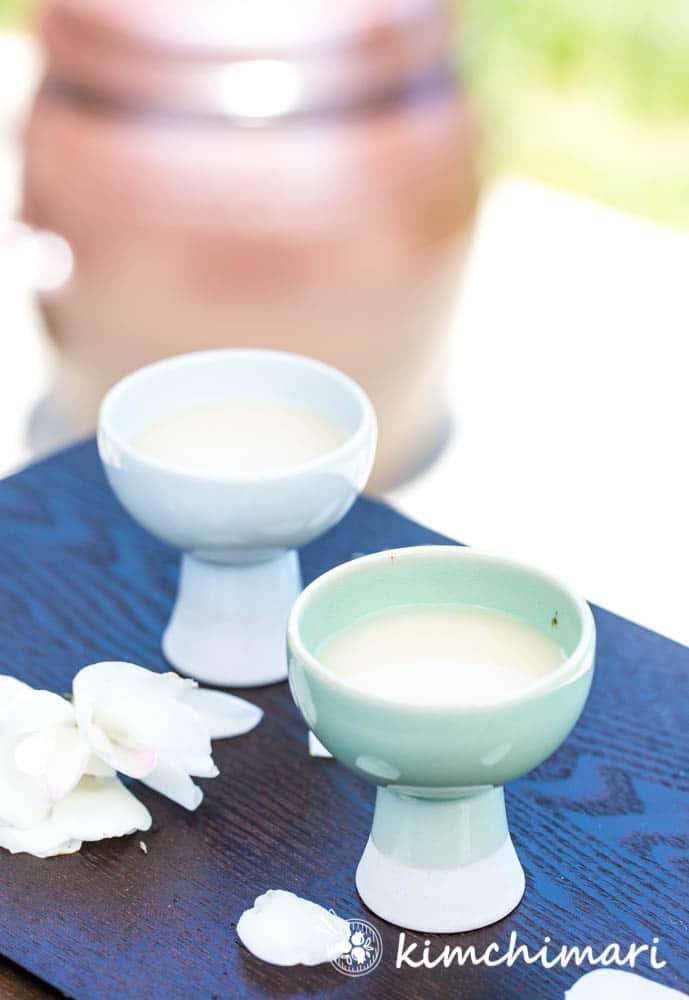
Makgeolli typically yields about 1.3 to 1.4 liters per batch. It is consumed fresh with its naturally cloudy appearance and mild sparkling character. Home brewers should release gas from bottles regularly if bottling before fermentation completely stops to avoid bursting.
The notes emphasize variability in fermentation speed and the importance of sensory testing to find the ideal balance of sweetness and acidity in the final brew.
Ingredients
- 1 kg sweet rice (glutinous rice)
- 3/4 cup nuruk 3/4 cup is about 95 g, starter
- 1 liter water
- 1 tsp baker's yeast (optional)
Optionally needed to dilute finished Makgeolli
- 650 ml water
- 2 Tbsp sugar
Instructions
Prepare Rice (5 hrs before)
- Make Dry Rice (Godubap 고두밥) - Wash rice a few times in cool water until the water runs pretty clear. In the old classic Korean cookbooks, it says to wash 100 times but I'm sure the rice was also not as clean as now. 😂 I think I wash about 5 times or so.
- Soak rice in water for 2 hours for sweet rice, 3 hrs for short-grain rice and overnight for brown rice. You can soak longer (even up to 3 days) but change water after 8 hrs.
- Drain rice in a colander for 30 - 45 min. Just completely remove any excess water.
- Steaming - I use a bamboo steamer and line it with a non-stick silicone mesh and lay the rice then steam for 40 minutes or until the amount of steam coming up through the steamer is no longer really visible.
- Spread out steamed rice on a tray so it can cool. Cool for 2 hrs or so until it's not warm to touch.
Prepare Container
- Sanitize your container by using soap and water then rinse if it's a non-porous container like glass or plastic. If you are using porous clay hangari jar or want to be extra safe, pour some strong alcohol like Vodka or Everclear and give it a swirl then discard. Let it dry completely.
Prepare Nuruk (starter) and water
- 1 hr BEFORE - measure the amount of water you are going to use for Makgeolli. I use filtered water. Bottled water is also good. Add water to your container that you will be brewing in. Use warm water if you want to give it an extra boost. Add nuruk to water and let it soak for 1 hr. Break it up with your hands if you see big chunks of it. NOT a MUST but it helps to get a good start by activating the culture. Pretty similar to putting yeast in warm water first.
Make Makgeolli
- When rice is cooled, add RICE to your Nuruk water mix in your container. Rice should be dry enough that individual grains separate easily from each other.
- With your hands, gently mix everything so that they are evenly mixed and there are no big chunks of nuruk left. Try not to smush or break the rice grains. It's best to leave each rice grain as whole as possible but do try to mix it all well. Because the longer you mix, things get warmed up allowing the yeast and enzymes to get activated. Giving your mash a great start!
- Cover the container loosely with the lid and put it in a cool dry dark place for 10-14 days. Initially, you should not see any extra liquid.
DAY 1 of Brewing
- DAY 1 - 3: keep the lid loose (as it needs oxygen), mix 2 times a day with a wooden spoon or plastic spatula. On the 1st day, it won't be easy to mix as there's very little liquid. But that's how it should be. You will see more liquid appear in the mix each day.
Day 4+
- DAY 4+, up to 10 to 14 days, don't mix and keep the lid completely closed. But check on the change. In low temps (65℉), it can take up to close to 2 weeks but on the average it should take about 10 days. At higher temps close to 75℉, it may be ready even before 10 days. Rather than just depend simply on the the time, you should closely watch for signs that it is ready and also do a taste test to see when you want to bottle it. Read my tips below on how to check if it's done.
Filter
- Once the brewing is complete (or when you want to bottle), we need to filter the Makgeolli. Use a fine linen cloth or mesh filter bag to filter the liquid. The brew is ready to drink immediately but I like to store in the refrigerator for a few days so it can age a little and mellow out even further.
How to dilute (OPTIONAL)
- Optionally, you can dilute the finished Makgeolli by mixing with water (1/2 amount of total wine) and added sugar (about 2 Tbs for 1 batch using 1 kg rice). This will produce a drink similar to ones sold at stores. Less thick and with similar alcohol content of 6% and sweeter flavor. I personally don't like to do it but you can try a little first and see if you want to do it.
How to serve Makgeolli
- Makgeolli is best when served cold. Normally, you will see sediments at the bottom of the bottle and you can mix it before serving for a milky texture or you can just choose to drink the clearer Cheongju on top (which we kind of like to do - also less calories).
Notes
- Check for signs of readiness such as reduced bubbling and taste regularly from day 7 onward to determine preferred flavor balance.
- If bottling while actively fermenting, release gas daily or use a fermentation-cap to prevent bottle bursts.
- Batch yields approximately 1.3 to 1.4 liters of Makgeolli.
- Sanitize containers prior to fermentation to avoid contamination.
Nutrition Information
Show DetailsNutrition Facts
Serving: 15servings
Amount Per Serving
Calories 247 kcal
% Daily Value*
| Calories | 247kcal | 12% |
| Carbohydrates | 54g | 18% |
| Protein | 4g | 8% |
| Fat | 1g | 2% |
| Saturated Fat | 1g | 5% |
| Sodium | 4mg | 0% |
| Potassium | 58mg | 1% |
| Fiber | 2g | 8% |
| Sugar | 1g | 2% |
| Calcium | 9mg | 1% |
| Iron | 1mg | 6% |
* Percent Daily Values are based on a 2,000 calorie diet.
User Reviews
Overall Rating
5
You'll Also Love