Pandesal
User Reviews
4.2
-
Prep Time
30 mins
-
Cook Time
20 mins
-
Rising
3 hrs
-
Total Time
3 hrs 50 mins
-
Servings
24 Servings
-
Calories
138 kcal
-
Course
Baked Goods
-
Cuisine
Filipino
Pandesal
Description
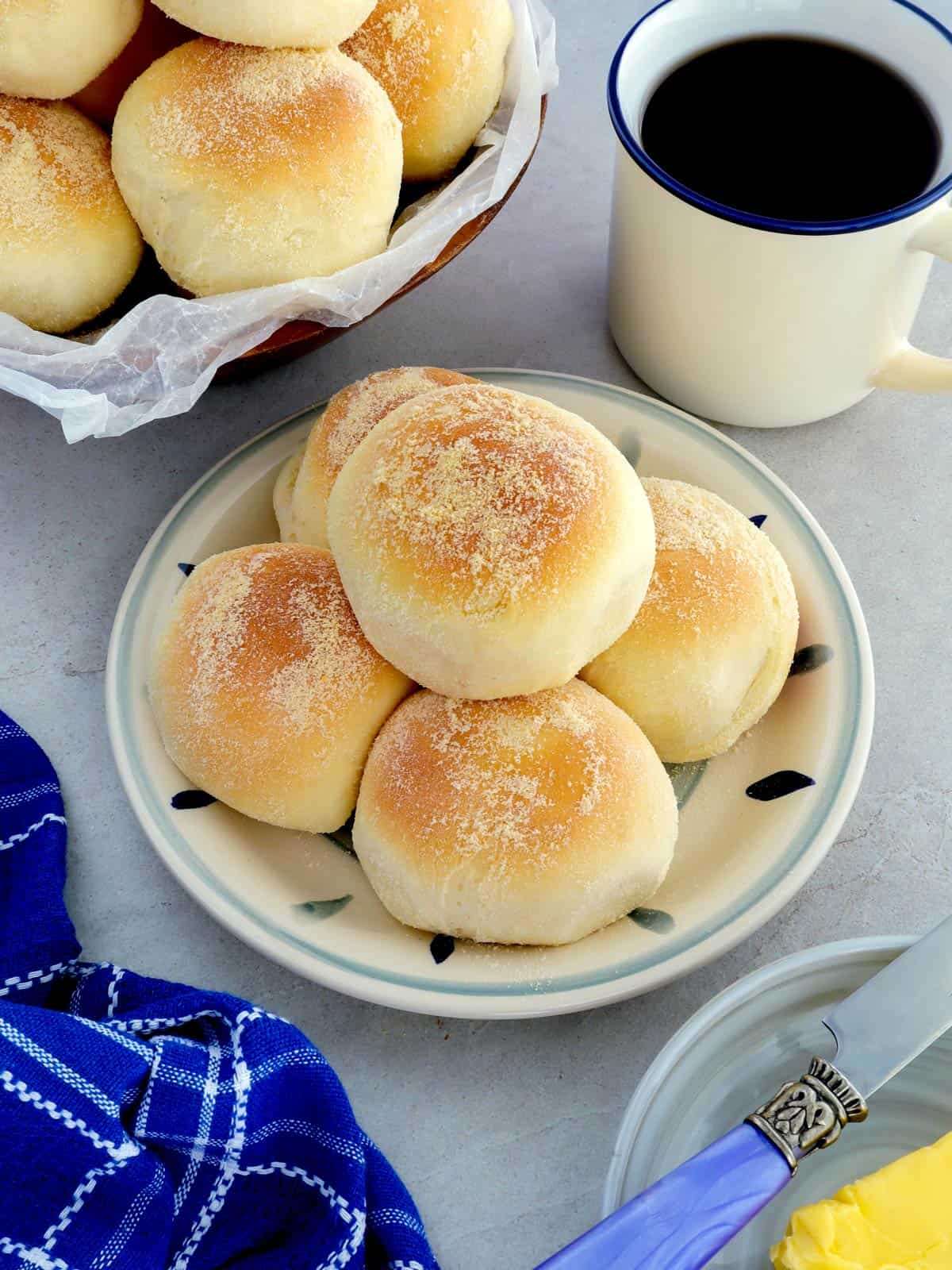
This Pandesal recipe starts by proofing active dry yeast in warm water, ensuring the yeast is active for proper dough rising. Milk, butter, eggs, sugar, and salt are combined to enrich the dough, which is gradually mixed with flour until elastic and smooth. After kneading, the dough undergoes its first rise until doubled in size, then is divided into 24 pieces shaped into balls. Each piece is rolled in fine breadcrumbs, which form a characteristic coating that adds a light crispiness after baking.
Once arranged with spacing on the baking sheet, the dough balls rise a second time, creating soft, airy rolls with a tender crumb. The combination of a slightly sweet dough and breadcrumb coating provides a pleasant contrast in texture. Pandesal is commonly enjoyed fresh and warm, ideal for breakfast or as a snack, often paired with butter, cheese, or fillings.
Practical tips include maintaining water temperature between 105°F and 115°F for yeast activation, conducting a windowpane test for proper gluten development, and rising the dough in a warm environment such as inside a turned-off oven for optimal results. The dough quantity can be shaped traditionally into a baton and portioned for a cylindrical roll shape if preferred.
Ingredients
- ¼ cup water warm
- 1 package active dry yeast about 1/4 ounce
- 1 cup milk lukewarm
- 2 ounces butter room temperature
- 2 egg beaten
- ½ cup sugar
- 1 ½ teaspoons salt
- 4 ¼ cups flour plus ¼ to ½ cup more for kneading
- ½ cup breadcrumbs fine
Instructions
- In a stand mixer bowl, combine water and yeast. Allow to sit for 10 minutes or until the mixture becomes bubbly. Stir well.
- In a small bowl, combine milk, butter, eggs, sugar, and salt. Stir together until incorporated.
- Add milk mixture and 2 cups flour to yeast mixture. Using a dough hook, beat to combine.
- Gradually add the remaining 2 ¼ cups flour in ½ cup increments and continue to combine all ingredients.
- On a lightly floured surface, turn over dough and knead, sparingly adding the remaining ¼ cup flour as necessary, for about 10 minutes or until smooth, supple and elastic.
- In a lightly oiled large bowl, place dough. Cover with film and allow to rise for about 1 to 1 ½ hours or until double in size.
- On a lightly floured surface, transfer dough and divide into 24 pieces. Shape each piece into a ball and roll on breadcrumbs to coat.
- Arrange balls about 1-inch apart on a lightly greased baking sheet. Cover with a cloth and allow to rise for about 1 to 1 ½ hours or until double in size.
- Meanwhile, preheat oven to 350 F.
- Bake in the preheated oven for about 15 to 20 minutes or until golden brown. Serve hot.
Notes
- Use water for yeast proofing between 105°F and 115°F to activate yeast without killing it.
- The windowpane test helps confirm proper kneading and gluten development.
- Rise the dough in a warm spot, such as a turned-off oven briefly heated, to promote good yeast activity.
- Add flour sparingly during kneading to avoid a tough dough; dough should be smooth, elastic, and no longer sticky.
- For a traditional cylindrical shape, form two batons and cut each into 12 portions before shaping.
Nutrition Information
Show DetailsNutrition Facts
Serving: 24Servings
Amount Per Serving
Calories 138 kcal
% Daily Value*
| Calories | 138kcal | 7% |
| Carbohydrates | 24g | 8% |
| Protein | 3g | 6% |
| Fat | 2g | 3% |
| Saturated Fat | 1g | 5% |
| Cholesterol | 19mg | 6% |
| Sodium | 91mg | 4% |
| Potassium | 47mg | 1% |
| Sugar | 4g | 8% |
| Vitamin A | 95IU | 2% |
| Calcium | 22mg | 2% |
| Iron | 1.3mg | 7% |
* Percent Daily Values are based on a 2,000 calorie diet.
User Reviews
Overall Rating
4.2
You'll Also Love