Red Cabbage Sauerkraut
User Reviews
5
-
Prep Time
20 mins
-
Additional Time
8 d
-
Total Time
8 d 20 mins
-
Servings
2 1 qt Mason Jars
-
Calories
102 kcal
-
Course
Side Dish, Condiments
Red Cabbage Sauerkraut
Description
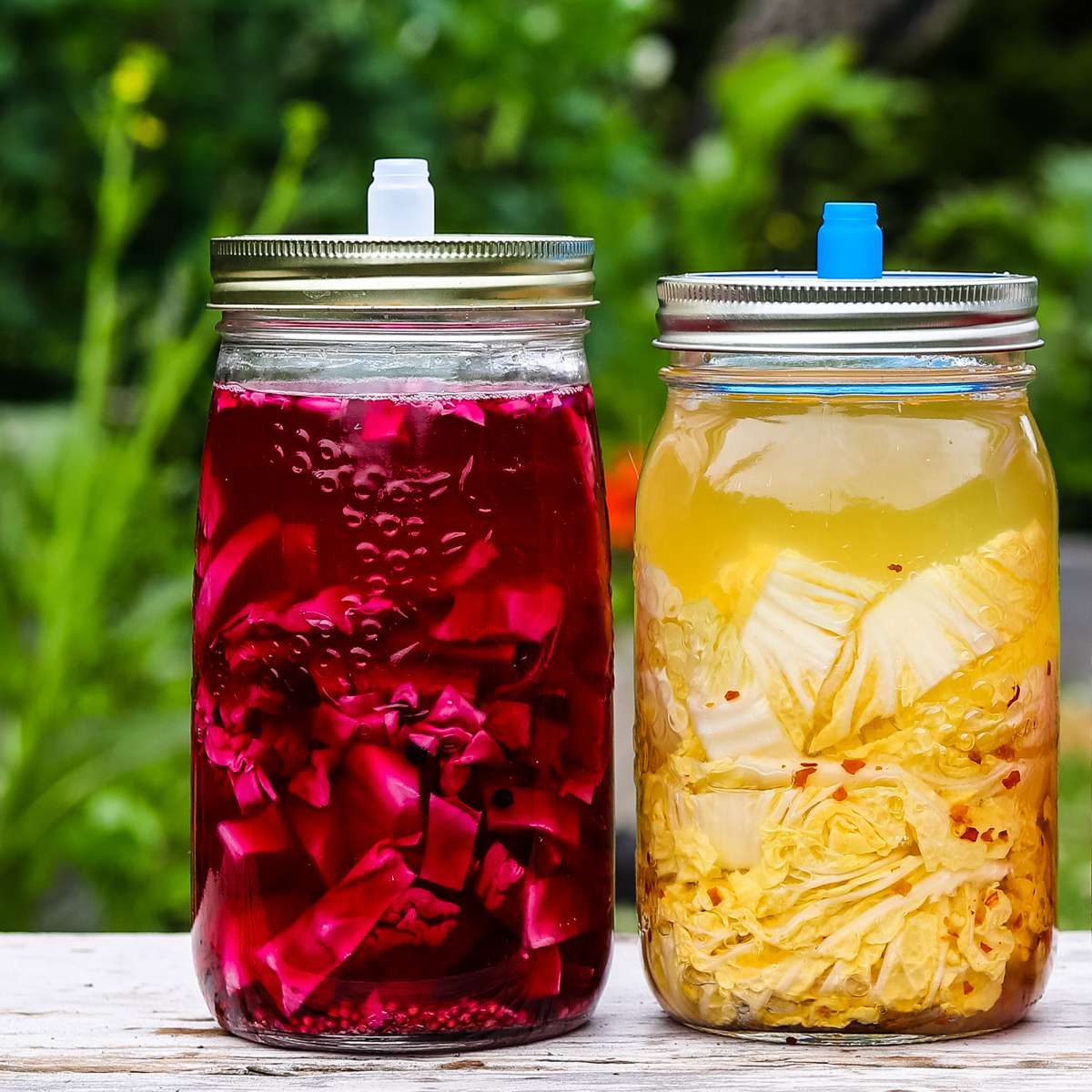
Red Cabbage Sauerkraut is prepared by shredding fresh red cabbage and layering it in jars over whole peppercorns and caraway seeds for aromatics. The recipe creates a salted brine using kosher salt dissolved in water filtered or boiled to remove chlorine. This brine is poured over the cabbage to fully submerge it, which is crucial to avoid mold development during fermentation.
The cabbage ferments at room temperature for 5 to 10 days until it develops a cloudy appearance and tangy flavor. Using fermenting weights or a sealed plastic bag filled with water keeps the cabbage submerged under the brine. The fermenting jar is covered with an airlock or loosely tightened lid that can be vented daily to release gases generated by fermentation.
This method allows making multiple jars at once by scaling salt and water ratios. The combination of salt, cabbage, and spices results in a crunchy, sour condiment that can accompany meals or be eaten as a probiotic food.
Ingredients
- 6 cups red cabbage
- 1 tablespoon peppercorns
- 2 teaspoon caraway seeds optional
- 3 tablespoon kosher salt
- 6 cups water or boiled 20 minutes and cooled to remove chlorine if on city water, filtered
Instructions
- Make a brine of 6 cups water to 3 tablespoon sea salt and stir to dissolve.
- Peel off outer leaves of cabbage, cut in half, remove core and thinly slice or shred. You can use a food processor to shred if you like.
- Place ½ tablespoon peppercorns and 1 teaspoon caraway seeds in the bottom of each quart jar. Add shredded cabbage on top of spices and pack it in as evenly as possible, leaving slightly more than an inch of headspace at top of jar.
- Pour brine over red cabbage, leaving 1 inch of headspace (you may have some brine leftover). Top with fermenting weight to keep shredded veggies submerged. It is important to keep your cabbage submerged.
- Close jar with airlock or pickle pipe and fasten gently with jar ring. If you don’t have the special lids, put regular canning jar lids on and undo it once or twice a day to release gases (burping the jar) or use a coffee filter secured on top. Leave to ferment at room temperature 5-10 days. These will likely turn cloudy as it starts fermenting and small bubbles will occasionally be rising. This is normal.
- Once the initial fermentation period is over (it is over when you decide you like how it tastes), it is ready to enjoy. Typically this will take 7-10 days. Once finished to your taste, top with a regular canning lid and move jar to cold storage or refrigerator.
- Kept in the fridge, this will keep easily for 3 months or longer. In cold storage, you should plan to use within 3 months. Usually this won't actually go "bad" but will lose the crispness and bright color if left longer. ***If you end up with mold or a horrible smell that is not like vinegar and cabbage, toss it out and start again with fresh sterilized jars.
Notes
- Keep all equipment clean and sterile to prevent unwanted mold and improve fermentation success.
- Maintain cabbage submerged under the brine using a fermenting weight or a sealed water-filled plastic bag to avoid exposure to air.
- Use lids with airlocks or vent regular lids daily by loosening them slightly to release fermentation gases.
- You can scale the recipe to make as many jars as needed by maintaining the ratio of 2 tablespoons kosher salt per liter of filtered water.
Nutrition Information
Show DetailsNutrition Facts
Serving: 21 qt Mason Jars
Amount Per Serving
Calories 102 kcal
% Daily Value*
| Calories | 102kcal | 5% |
| Carbohydrates | 24g | 8% |
| Protein | 5g | 10% |
| Fat | 1g | 2% |
| Saturated Fat | 1g | 5% |
| Polyunsaturated Fat | 1g | 6% |
| Monounsaturated Fat | 1g | 5% |
| Sodium | 10574mg | 441% |
| Potassium | 744mg | 16% |
| Fiber | 8g | 32% |
| Sugar | 10g | 20% |
| Vitamin A | 3014IU | 60% |
| Vitamin C | 153mg | 170% |
| Calcium | 184mg | 18% |
| Iron | 3mg | 17% |
* Percent Daily Values are based on a 2,000 calorie diet.
User Reviews
Overall Rating
5
You'll Also Love