Homemade Alkaline Noodles/Ramen Noodles (碱水面)
User Reviews
5
Homemade Alkaline Noodles/Ramen Noodles (碱水面)
Description
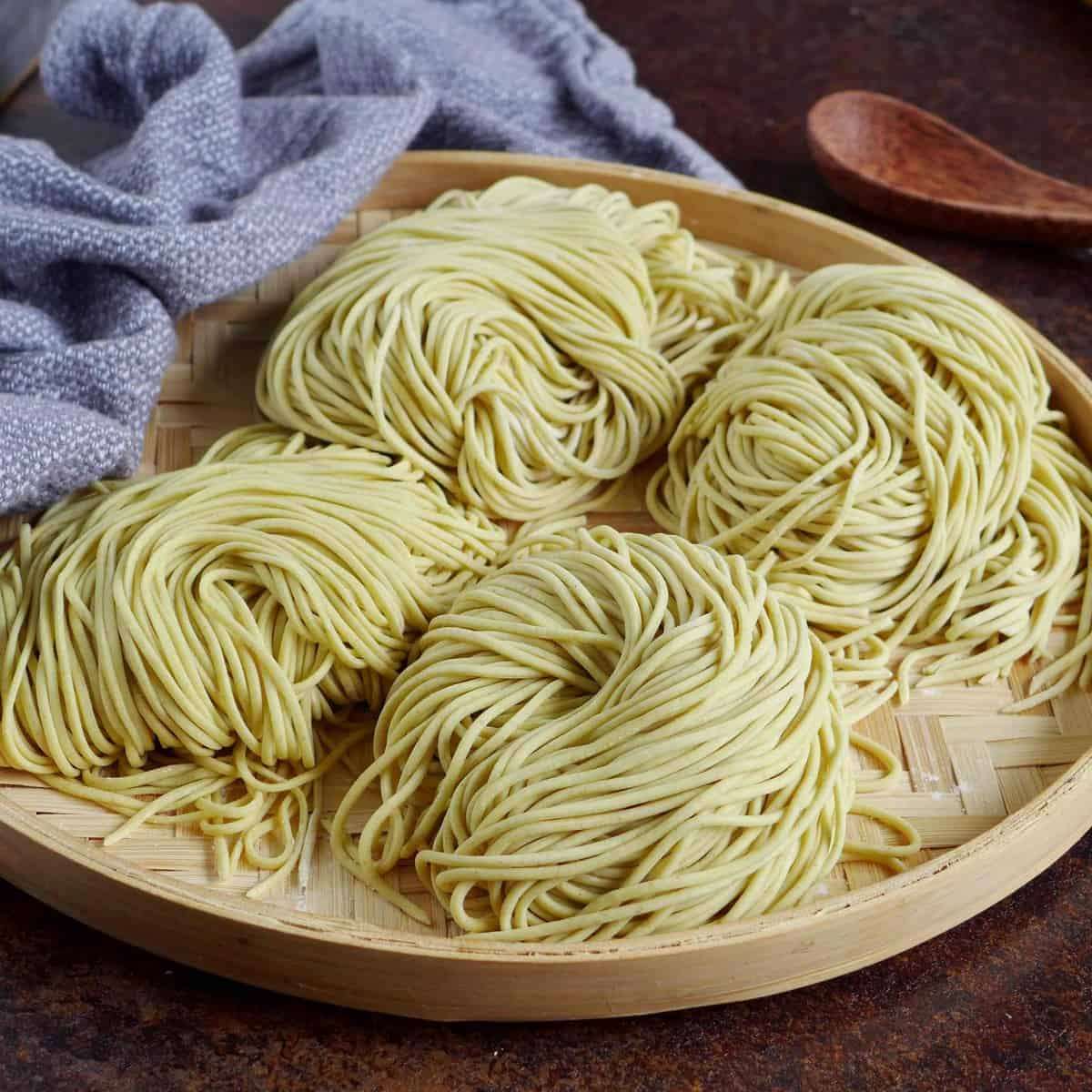
Homemade Alkaline Noodles, also known as ramen noodles, are made with a simple mixture of flour, salt, water, and lye water—an alkaline solution that gives the noodles a chewy texture and yellowish hue. The recipe calls for mixing the flour and salt, then gradually adding water mixed with lye water to form a dry dough. After resting the dough covered for about an hour, it is kneaded, divided, and rolled into sheets. These sheets are repeatedly fed through a pasta machine, folding to develop elasticity and thinness before being cut into noodles. Cornstarch is used to dust the noodles to prevent sticking.
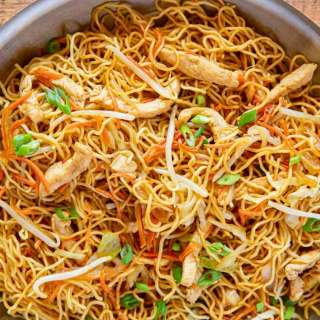
The alkaline agent is key to developing the characteristic bite and color of these noodles, differentiating them from regular wheat pasta. The resting step allows hydration and gluten formation, essential for chewiness. The noodles are versatile for various ramen broths or stir-fry dishes.
Be careful with the amount of lye water, as too much can impart bitterness. If bottled lye water isn't available, a baking soda substitute can be made following detailed instructions. Adjust the lye water volume slightly to suit your taste but do not increase beyond the recommended amount.
Ingredients
- 500 g all-purpose flour
- ½ teaspoon salt
- 210 g water at room temperature
- 1½ teaspoon lye water see note 1 for substitute, aka Kansui
- cornstarch for dusting
Instructions
Make the dough
- Add flour and salt to a mixing bowl. Mix water with lye water then pour into the flour gradually. Stir the flour constantly with chopsticks to evenly distribute the liquid.
- Use your hand to bring the lumps together to form a rough-looking dough. As this dough is on the dry side, this process may take some time to finish. You don’t need to make it smooth. It’s fine as long as everything is combined into one piece.
Rest the dough
- Cover the dough with plastic wrap/cling film or a damp cloth. Leave to rest at room temperature for 1 hour.
- Knead the dough for 1-2 mins to make it smoother (Don’t worry if it’s not perfectly smooth). Then divide into four portions.
Roll the dough sheet
- Use your hands or a rolling pin to flatten one piece of dough (cover the rest to prevent drying) until it’s thin enough to go through your pasta maker on the widest setting.
- Feed it through the machine. Then fold the dough lengthway and repeat the procedure another couple of times.
- Reduce the thickness setting. Pass the dough through twice. Then repeat the process while reducing the setting one number up at a time until the dough reaches the desired thickness. My pasta maker has settings from 0 to 9, I usually stop at No. 3 (2.4mm) or No. 4 (1.8mm).
Cut the noodles
- Dust the dough sheet with a thin layer of corn starch (or other types of starch) to prevent the noodle strands from sticking.
- Pass the dough sheet through a cutting attachment (I use a spaghetti cutter) to produce noodles. At about halfway through the process, use your hand to catch the noodles.
Cook the noodles
- Bring a large pot of water to a full boil. Add the noodles. Once the water comes back to boil, cook for a further 1-2 mins. Taste one strand to check the doneness (Do not overcook).
- Rinse the noodles under running water for a few seconds then drain well. Serve with a sauce, toppings or in a soup (if serving as a cold dish, rinse until cooled).
Store the noodles
- Place uncooked noodles in sealed bags/containers. Store in the fridge for up to 5 days, or in the freezer for 3 months.
- Cook the usual way. No need to defrost if frozen.
Notes
- Use baked soda substitute if you cannot find bottled lye water (Kansui); details are in the linked post on "Lye water and its homemade substitute."
- You can slightly reduce lye water quantity according to taste, but avoid increasing it to prevent bitter flavor.
Nutrition Information
Show DetailsNutrition Facts
Serving: 4Serving
Amount Per Serving
Calories 455 kcal
% Daily Value*
| Serving | 1g | |
| Calories | 455kcal | 23% |
* Percent Daily Values are based on a 2,000 calorie diet.
User Reviews
Overall Rating
5
You'll Also Love