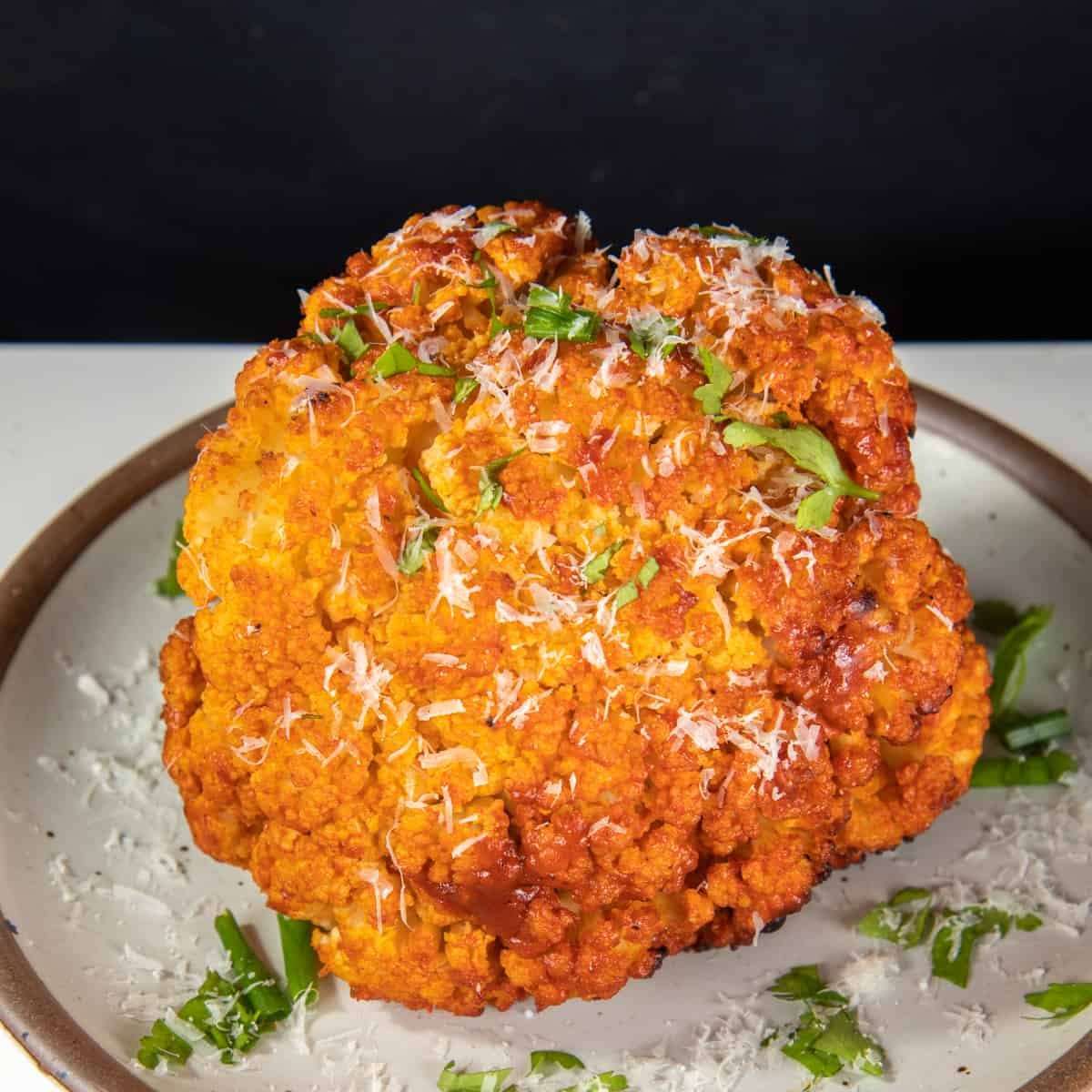
Spicy Korean Gochujang Whole Roasted Cauliflower
User Reviews
5
-
Prep Time
10 mins
-
Cook Time
45 mins
-
Total Time
55 mins
-
Servings
4 servings
-
Calories
162 kcal
-
Cuisine
Korean
Spicy Korean Gochujang Whole Roasted Cauliflower
Description
The Spicy Korean Gochujang Whole Roasted Cauliflower starts by boiling the whole cauliflower with salted water to soften it while maintaining its shape. Removing excess moisture by wrapping it in a clean kitchen towel ensures a better roasting result. The glaze combines gochujang paste, soy sauce, tahini, lemon juice, olive oil, garlic powder, salt, and pepper, creating a thick, complex sauce that coats the cauliflower evenly without overpowering it.
The cauliflower is tossed gently by hand with the sauce to avoid overcoating and potential burning during roasting at high temperature. The roasting develops a crisp outer layer while the inside stays tender. Optional breadcrumbs or chickpea flour can add crunch.
This cauliflower can be served as a spicy vegetarian main or side dish, offering a flavorful alternative to traditional roasted vegetables. Adjust the amount of gochujang to control heat level, and balance spicy with creamy tahini to suit taste.
Checking tenderness during boiling and tasting the sauce before coating are key steps to achieving the desired texture and flavor balance.
Ingredients
- 1 cauliflower medium size, kept whole, washed, head
- 1 tablespoon gochujang sauce available at most Asian supermarkets - you can add as much as 2 tablespoons based on size of cauliflower!, Korean
- 1 tablespoon soy sauce
- 1 tablespoon tahini sauce
- 1 tablespoon lemon juice or lime juice, fresh
- 3 tablespoons olive oil
- 1 teaspoon garlic powder
- ½ teaspoon salt
- ½ teaspoon black pepper
Instructions
Whole Roasted Gochujang Cauliflower
- Preheat the oven to 425°F
- Boil water with salt in a pot large enough to submerge the full cauliflower. Chop off the excess leaves at the bottom, and place the cauliflower with the floret-side down in the water and boil for 5 to 10 minutes until the cauliflower is tender. Wrap in a clean, dry kitchen towel and set aside while you prepare the sauce - this will help absorb excess moisture from the cauliflower and ensure it's crispy!
- In a small mixing bowl, mix 1 tablespoon each of the gochujang, soy sauce, tahini, and lemon juice, along with 3 tablespoons of olive oil, 1 teaspoon of garlic powder, and half a teaspoon each of salt and pepper to make a sauce / glaze with a thick consistency.
- Either transfer the cauliflower to the mixing bowl, toss with the sauce evenly (make sure not to overcoat) or coat it evenly with your hand on a baking sheet. You could also sprinkle some breadcrumbs to make it extra crispy.
- Line a baking sheet with parchment paper and place the cauliflower on the sheet. Bake for about 25 minutes. Switch to broiler and broil for exactly 30 seconds (otherwise the top will burn!)
Gochujang Cauliflower Wings
- Toss the florets with 1 tablespoon of olive oil, and half a teaspoon each of salt and pepper. Bake for 15 minutes at 425°F. This releases excess water, which in turn makes it less likely to become soggy.
- In a small mixing bowl, mix 1 tablespoon each of the gochujang, soy sauce, tahini, and lemon juice, along with 2 tablespoons of olive oil, 1 teaspoon of garlic powder, and half a teaspoon each of salt and pepper to make a sauce / glaze with a thick consistency.
- Blot excess water from florets and toss them in sauce. If you want it ultra crispy, you can add breadcrumbs and/or chickpea flour to this mixture!
- Pop it back in the oven for another 20 minutes, tossing them halfway through to make sure they're cooked evenly. Serve as wings or in your favorite taco or rice bowl for maximum deliciousness!
Notes
- Check cauliflower tenderness after 5 minutes of boiling; cooking times vary by size and stove strength.
- Taste the sauce before coating and adjust spiciness with more tahini or olive oil if needed.
- Coat the cauliflower lightly with sauce to prevent burning; reserve extra sauce to add after roasting.
- Toss the cauliflower with the sauce using your hands for even coverage, allowing some sauce to absorb.
- For extra crispness, sprinkle breadcrumbs or add chickpea flour to the sauce before roasting.
Nutrition Information
Show DetailsNutrition Facts
Serving: 4servings
Amount Per Serving
Calories 162 kcal
% Daily Value*
| Calories | 162kcal | 8% |
| Carbohydrates | 10g | 3% |
| Protein | 4g | 8% |
| Fat | 13g | 20% |
| Saturated Fat | 2g | 10% |
| Polyunsaturated Fat | 2g | 12% |
| Monounsaturated Fat | 8g | 40% |
| Sodium | 588mg | 25% |
| Potassium | 488mg | 10% |
| Fiber | 3g | 12% |
| Sugar | 3g | 6% |
| Vitamin A | 12IU | 0% |
| Vitamin C | 72mg | 80% |
| Calcium | 41mg | 4% |
| Iron | 1mg | 6% |
* Percent Daily Values are based on a 2,000 calorie diet.
User Reviews
Overall Rating
5
You'll Also Love