Barbari Bread (Persian Flatbread)
User Reviews
5
Barbari Bread (Persian Flatbread)
Description
This recipe begins by creating a poolish—a mixture of water, yeast, and flour that ferments for 16 to 24 hours to develop flavor and gluten strength. The poolish is mixed with additional yeast, bread flour, all-purpose flour, water, and salt, then kneaded into a sticky dough. The dough’s tacky nature requires flouring during handling and kneading to achieve smooth elasticity.
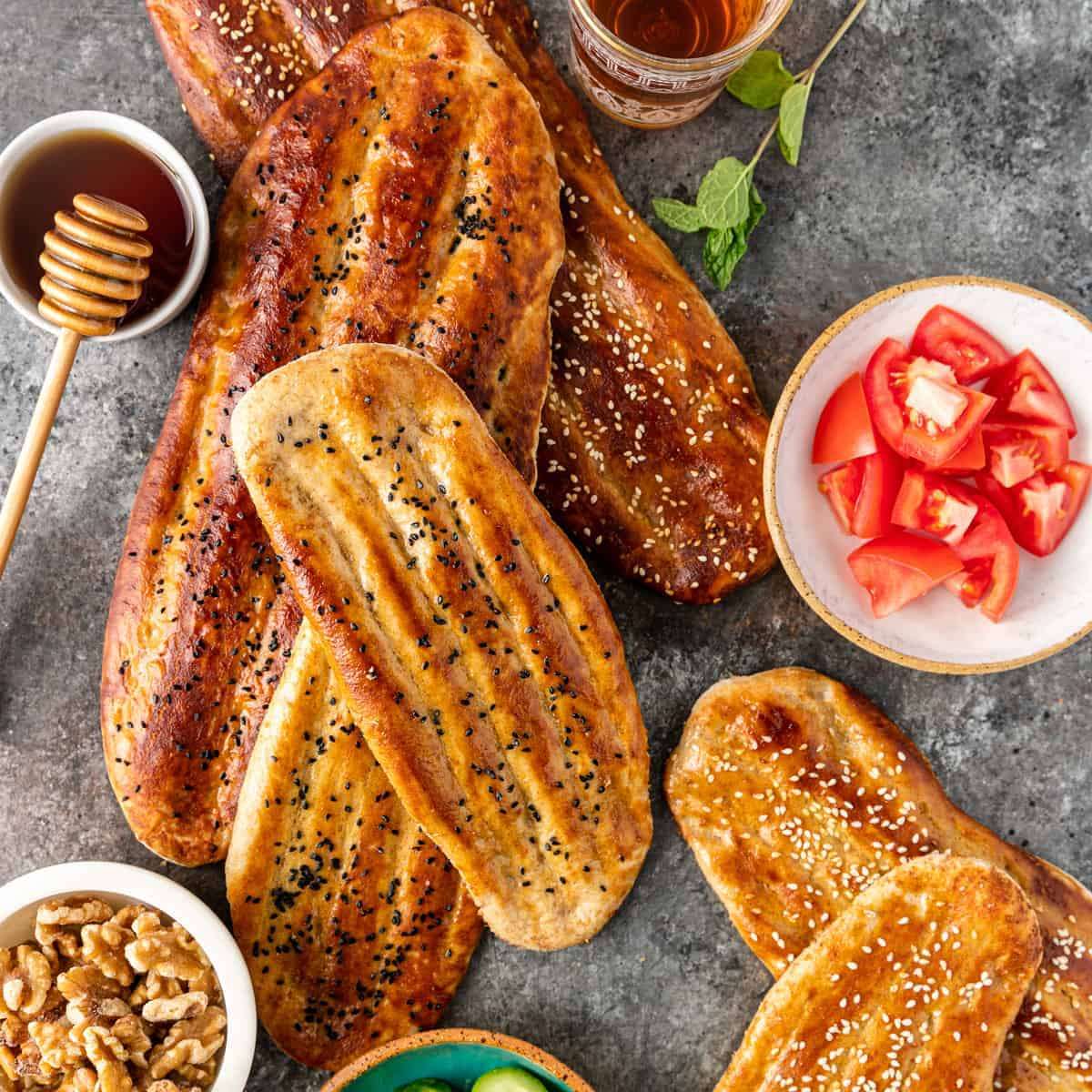
After shaping, the dough is typically baked into large, long flatbreads. The topping of sesame and nigella seeds adds a nutty aroma and subtle onion-like flavor. The final bread is known for its contrast between a crisp exterior and tender, airy interior crumb.
Barbari bread serves well as an accompaniment for meals or with dips and spreads. The dough’s fermentation and handling technique create a texture unique among flatbreads, reflecting traditional Persian baking methods.
Leftover bread can be stored wrapped at room temperature for a few days or frozen for longer preservation.
Ingredients
Dough
- 3 cups water divided, lukewarm
- 2¼ tsp active dry yeast divided
- 2 cups bread flour
- 4 cups all-purpose flour divided
- 4 tsp salt
- 1 cup wheat bran or AP flour for work station
Glaze
- 2 tsp all-purpose flour
- 1/2 teaspoon baking soda
- 1/2 tsp sugar
- 1/2 tsp vegetable oil
- 1/3 cup water cool
Topping
- 1 teaspoon sesame seeds
- 1 teaspoon nigella seeds black onion seeds
Instructions
- Place 1 cup of lukewarm water in a large bowl. Add 1/4 tsp of yeast and stir. Add 1 cup of all purpose flour and stir to make a batter. Cover with plastic wrap and set aside on a counter for 16-24 hours. This is called a "poolish". It will ferment and then be added to the remaining ingredients.
Make the dough:
- Stir the poolish into bowl of a stand mixer and add 2 cups of lukewarm water, 2 teaspoons yeast, 2 cups bread flour, 2 cups all purpose flour, and salt. Mix using dough hook. A smooth batter will form, then add remaining 1 cup all purpose flour and knead in stand mixer for 10 minutes.
- This is a sticky dough and it will stick to bottom of bowl. Use a scraper to transfer dough to a lightly floured work surface and use your floured hands to knead dough, adding more bread flour as needed to prevent sticking, until dough is smooth and elastic, about 4 minutes (See note 1). Transfer the dough to a large, lightly greased bowl, cover the bowl with plastic wrap, and let the dough rise until it's nearly doubled in size, about 1 hour.
- On a work surface sprinkled with flour, turn the dough out. This is a very wet, sticky dough. Fold the dough over a couple of times, using enough flour to keep hands dry and form dough into a round. Next, cut the dough in half, then each half into 4 or 8 equal pieces, depending on how large you want your barbari bread loaves to be (See Note 2).
- Shape each piece of dough into a ball by rolling on surface under your palm, or use both hands. Transfer dough balls to a baking sheet, keeping them 2 inches apart. Tent the balls with lightly greased plastic wrap, and allow them to rest for 30 minutes.
- Preheat the oven to 500°F. If you have a pizza stone, set it on the lowest rack or oven floor. If you'll be using an upside down sheet pan, position on rack in the center of the oven.
Prepare the bread glaze:
- Combine the flour, baking soda, sugar, oil, and water in a small saucepan over medium heat, whisking constantly, until slightly thickened, about 3 minutes. Let cool.
Form the dough:
- Sprinkle wheat bran over your work surface (or use all purpose flour). Working with one piece at a time, gently press and stretch each dough ball into 9x4 inch oval pillow shapes. Do not use a rolling pin, it will deflate the dough. Press and pull using your fingers. Let flatbreads rest uncovered for 10 minutes.
- Brush half the glaze on top of the dough. Dip your fingers into a small bowl of water. Using your fingers (excluding thumbs) press continuous, lengthwise grooves into the dough. Press firmly, but don't break through the bottom of the dough. Repeat making several parallel indentations on top. Sprinkle with half the sesame or poppy seeds.
Bake the dough:
- Carefully lift and stretch each loaf of dough lengthwise before placing it onto the baking stone, keeping them 4 inches apart. Repeat with as much dough as you can fit on baking sheet. Bake for 8 minutes, or until golden brown. If you're not using a stone, place the bread on the upside down baking sheet and bake it on your oven's middle rack. Remove the bread, and cool it on a wire rack.
- Repeat the shaping and baking process for remaining dough.
- Serve warm or at room temperature. Traditional accompaniments are olives, tomatoes, cucumbers, and feta cheese or honey served with hot mint tea.
Notes
- The poolish ferments for 16 to 24 hours to develop flavor before mixing the final dough.
- Use additional bread flour during kneading to manage the sticky dough and achieve elasticity.
- This recipe yields 4 large, long flatbreads or can be divided into smaller portions as desired.
- Store the bread wrapped for several days at room temperature or freeze to extend shelf life.
- Adapted from "A Taste of Persia" by Naomi Duguid to preserve traditional methods.
Nutrition Information
Show DetailsNutrition Facts
Serving: 16Serving
Amount Per Serving
Calories 212 kcal
% Daily Value*
| Calories | 212kcal | 11% |
| Carbohydrates | 46g | 15% |
| Protein | 8g | 16% |
| Fat | 2g | 3% |
| Saturated Fat | 1g | 5% |
| Sodium | 586mg | 24% |
| Potassium | 240mg | 5% |
| Fiber | 8g | 32% |
| Sugar | 1g | 2% |
| Calcium | 23mg | 2% |
| Iron | 3mg | 17% |
* Percent Daily Values are based on a 2,000 calorie diet.
User Reviews
Overall Rating
5
You'll Also Love