Best Challah Bread Recipe
User Reviews
4.8
Best Challah Bread Recipe
Description
The recipe begins by proofing active dry yeast in warm water with sugar until foamy, ensuring proper yeast activation. Mixing in oil, eggs, sugar, and salt followed by gradual addition of flour creates a smooth dough that is partially kneaded by hand. The dough is oil-coated and covered to rise in a warm spot until nearly doubled, then punched down and allowed to rise again for better texture.
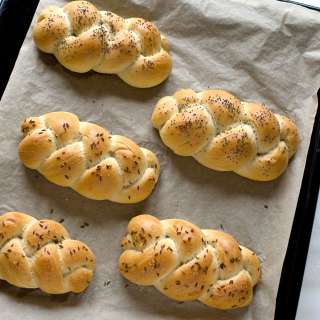
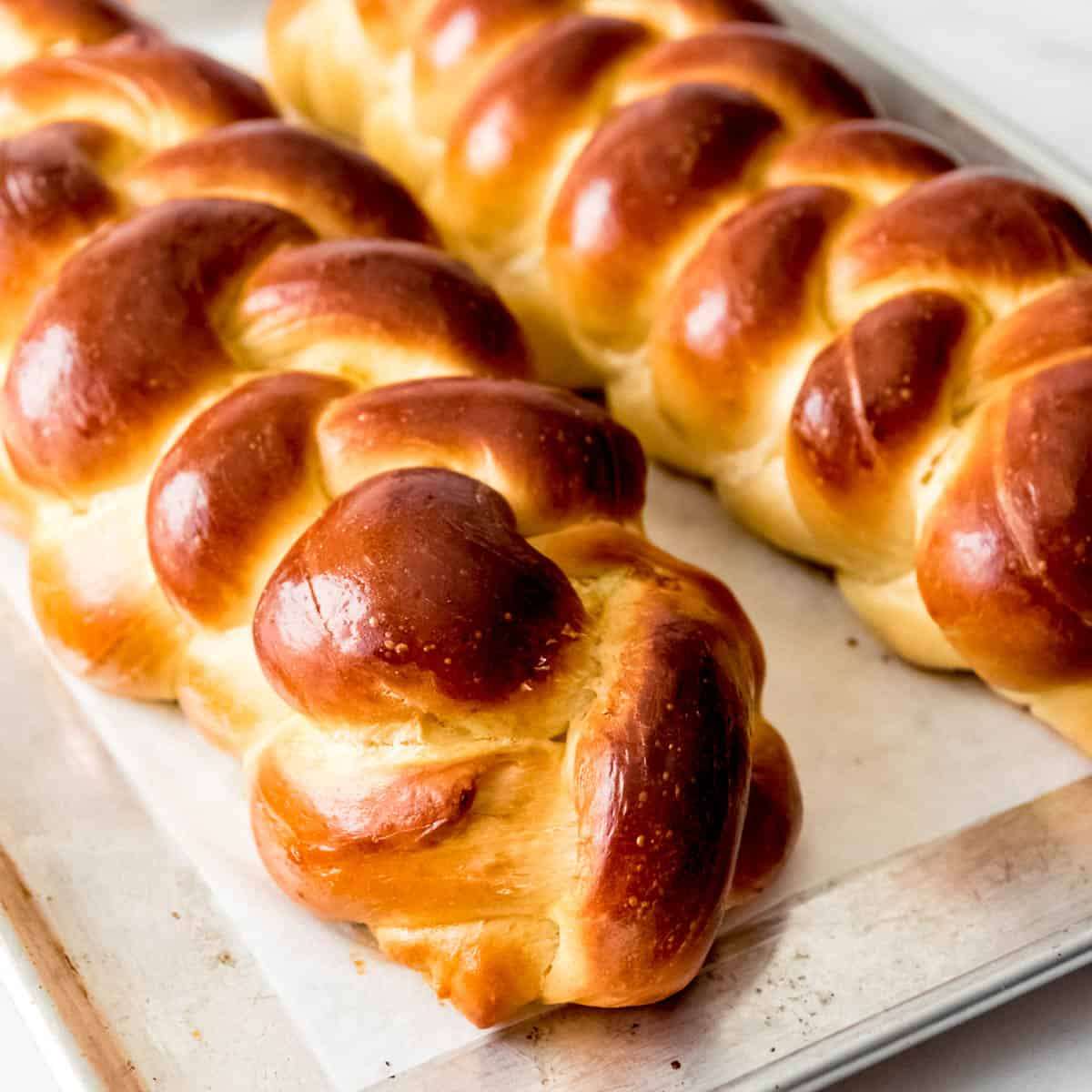
After the second rise, the dough is divided and braided into six strands to form the traditional challah shape. The loaf is brushed with an egg wash to develop a deep golden sheen and optionally sprinkled with sesame seeds before baking. The result is a soft yet resilient crumb with a slightly sweet flavor balanced by the shiny crust.
Challah bread is commonly served fresh and can be enjoyed as a table bread or used for traditional dishes. The recipe notes suggest storing the bread wrapped at room temperature for best freshness and freezing well for up to a month, allowing thawing before slicing.
Ingredients
- 1 ¾ cups water warm
- 1 ½ tablespoons active dry yeast
- ½ cup sugar plus 1 tablespoon extra for proofing the yeast
- ½ cup vegetable oil
- 4 egg lightly beaten + 1 additional egg for an egg wash, large
- 1 tablespoon salt
- 8 to 8½ cups all-purpose flour plus extra for kneading/dusting
- sesame seeds for dusting (optional)
Instructions
- Proof the yeast by dissolving it in lukewarm water with a tablespoon of sugar in a large mixing bowl until foamy, about 5 minutes. Stir in the oil and 4 of the eggs (reserve 1 egg for an egg wash after braiding), with the remaining sugar and salt. Gradually add the flour, 1 cup at a time, to make a soft dough. My standard-size KitchenAid mixer can't quite handle this much dough so I pretty much always finish kneading by hand by turning the dough out onto a lightly floured surface and kneading until smooth.
- Clean out and lightly oil the bowl before returning the dough to it. Cover the bowl with plastic wrap and let the challah dough rise in a warm, draft-free spot for about an hour, until almost doubled in size. Punch the dough down (literally, just stick your fist right into the center of the dough and push it down), then cover it with plastic wrap and let it rise again for another half hour.
- To form the 6-strand challah braid, first divide the dough on a clean surface. Divide it in half to make two loaves. Then divide each half into 6 equally sized portions and roll the balls of dough into 6 equally sized strands, each about 16 inches long. Place the strands side by side and pinch the tops together.
- Starting with the outside right strand, move it over 2 strands to the left. Then take the second strand from the left and move it all the way across to the far right. Next, take the outside left strand and move it over 2 strands to the right. Then move the second strand from the right over to the far left. Repeat the pattern by starting again with the outside right strand being moved over 2 strands to the left, and so on until you have a long, braided loaf.
- Tuck the end of the braid underneath the loaf to secure it. Your braid is likely to be fairly long and skinny at this point, and that's completely normal. To finish shaping the loaf, you need to plump it a bit into more of a loaf shape by sort of lifting and smooshing the braid in on itself a bit and wiggling it a bit to make the loaf a bit shorter, wider, and even from top to bottom. The braid shouldn't come undone - you are just evening out the shape here to make your loaf look nice. This step can be done as you are transferring the braid from the surface where you formed it onto a parchment-lined baking sheet.
- Repeat steps 4 & 5 with the remaining half of the dough for the second loaf. Place the braided loaves on a parchment-lined baking sheet pan, with at least 2 inches in between the braids so they don't meld together as they rise. Beat the remaining egg and brush half of it on loaves using a pastry brush. Be sure to get in the crevices of the braid and down the sides of the loaves. Allow the loaves to rise another hour in a warm place, then brush again with the remainder of the egg wash. Sprinkle with sesame seeds, if using them (I almost always skip them, but it would make the loaf even more traditional).
- Preheat the oven to 375°F then bake the challah for 30-35 minutes until golden brown (or when the internal temperature of the bread reaches 190°F on an instant-read thermometer). Eat one loaf warm with butter for dinner and save the other loaf for the most delicious french toast ever!
Notes
- Store challah wrapped at room temperature; it is best when freshly baked within the first two days.
- Challah can be frozen for up to one month wrapped tightly; thaw at room temperature before slicing.
Nutrition Information
Show DetailsNutrition Facts
Serving: 20slices
Amount Per Serving
Calories 279 kcal
% Daily Value*
| Calories | 279kcal | 14% |
| Carbohydrates | 46g | 15% |
| Protein | 7g | 14% |
| Fat | 7g | 11% |
| Saturated Fat | 5g | 25% |
| Polyunsaturated Fat | 1g | 6% |
| Monounsaturated Fat | 1g | 5% |
| Trans Fat | 1g | 50% |
| Cholesterol | 47mg | 16% |
| Sodium | 369mg | 15% |
| Potassium | 77mg | 2% |
| Fiber | 2g | 8% |
| Sugar | 5g | 10% |
| Vitamin A | 68IU | 1% |
| Vitamin C | 1mg | 1% |
| Calcium | 16mg | 2% |
| Iron | 3mg | 17% |
* Percent Daily Values are based on a 2,000 calorie diet.
User Reviews
Overall Rating
4.8
You'll Also Love