Dahi ke Kabab (Yogurt Kebab)
User Reviews
5
Dahi ke Kabab (Yogurt Kebab)
Description
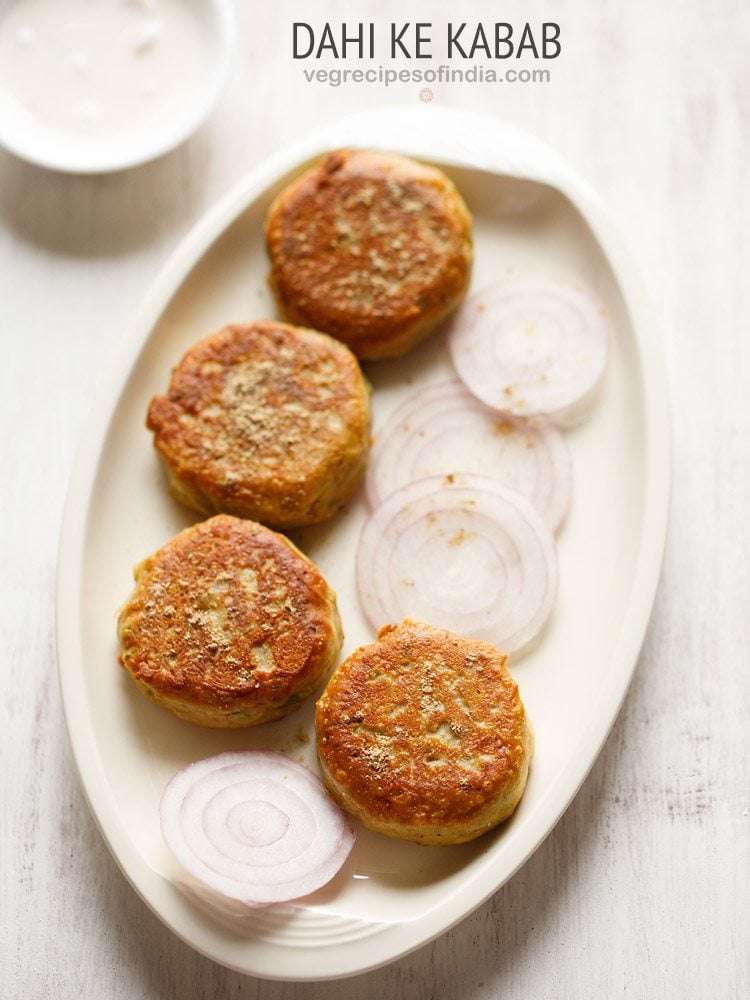
Dahi ke Kabab (Yogurt Kebab) start with hung curd, which is made by straining thick curd or Greek yogurt to remove whey, resulting in a dense base. The hung curd is gently mixed with roasted gram flour (besan) that is cooked until fragrant, finely chopped onions, ginger, green chili, coriander leaves, and an assortment of spices including cumin, garam masala, black or white pepper, and salt. This mixture is then shaped into kababs and pan-fried in a neutral oil until golden and cooked through.
The roasting of gram flour adds a nutty aroma balancing the tanginess of the yogurt. The texture of the kabab is soft, moist, and creamy inside with a flavorful crust on the outside. The green chili provides a mild heat adjustable to taste.
These kababs are a light snack or appetizer and can be enjoyed fresh from the pan. They can also be baked as an alternative to pan-frying. The dish highlights the use of hung curd or Greek yogurt for best consistency.
The leftover whey from making hung curd can be reused in other dishes such as chapati dough or pulao, adding nutrition and reducing waste.
Ingredients
- 1.5 cups curd - 375 grams curd or 200 grams hung curd, about 8 to 9 tablespoons hung curd or greek yogurt - fresh and cold
- 5 tablespoons gram flour (besan)
- 2 tablespoons onion finely chopped
- ½ teaspoon ginger finely chopped
- ½ teaspoon green chili finely chopped
- 1 tablespoon Coriander leaves finely chopped
- ½ teaspoon cumin powder (ground cumin)
- ½ teaspoon garam masala
- ¼ teaspoon black pepper ground black pepper) or white pepper powder, powder
- ½ teaspoon salt or add as required
- 2 tablespoons neutral cooking oil for pan frying or add as needed, generic cooking oil
Instructions
Preparing hung curd
- First keep a strainer on top of a deep bowl. Line a muslin or a cotton napkin on the strainer.
- Add the fresh cold curd. The curd has to be thick and creamy and not watery or thin.
- Bring the edges of the muslin together and tie one edge tightly around the rest. Place a heavy weight or heavy bowl or lid on the tied muslin.
- Next day, the whey will be drained and there will be thick and creamy hung curd. With the nutrient rich whey, you can add it to chapati dough or make pulao or curries with it.
- Now remove the hung curd in a mixing bowl. Use silicon spatula as scraping the curd is easier with it. Set aside or you can keep covered in the fridge till you proceed further.
Preparing kabab mixture
- Heat a heavy pan or kadai. Add 5 tablespoons besan in it. You can also add 6 tablespoons besan if you are making these kababs for the first time and for easier shaping.
- Begin to stir and roast the gram flour on a low heat till it becomes fragrant and changes color. It is important to roast the gram flour well, so that you do not get the raw taste of gram flour after frying the kababs. However, do not make the gram flour too browned.
- Roast for 4 to 5 minutes on a low heat stirring non-stop till the gram flour becomes fragrant and turns golden. Set aside.
- Take the hung curd in a bowl. Then add finely chopped onions, finely chopped ginger, finely chopped green chillies and finely chopped coriander leaves.
- Add cumin powder and garam masala powder. You can even use roasted cumin powder.
- Add the roasted besan and black pepper powder (or white pepper powder).
- Instead of black pepper powder you can even use ¼ teaspoon red chilli powder. Crushed black pepper can also be added.
- With a small wired whisk, begin to stir and mix. Do mix very well so that there are no tiny lumps of the besan. When mixing I suggest to use a wired whisk as the lumps break easily. If you use a spoon or spatula, then its takes time to break them.
- With a silicon spatula, scrape the sides and bring the entire kabab mixture in the center. Cover the bowl and refrigerate for 1 to 2 hours. Refrigerating makes the kabab mixture firm and thus shaping them is easier.
Making dahi kabab
- Before frying heat 2 tablespoons oil on a skillet or frying pan. Keep the flame to low or medium-low.
- Now spread a bit of water on both palms and take a portion of the kabab mixture and give it a round shape.
- Then flatten it. Do not make thick kababs. If you are unable to make kababs, then keep in the fridge for some more time.
- Place the dahi kabab in the hot oil. Keep the flame to low or medium-low. Make kababs from the entire mixture and place them in the oil.
- Let the dahi kabab become golden from the bottom and then only flip them. These kabab get browned faster, so do keep an eye while pan frying.
- When the base is golden, then turn over the dahi kabab. Fry the second side also till golden.
- Turn over a couple of times and fry till you get a nice golden even crust on both sides. A slight more browning of the kabab is also fine.
- Remove the pan fried dahi ke kabab and place them on kitchen paper towels to remove excess oil.
- Serve dahi kabab hot with sprinkled with some chaat masala. Accompany onion slices by the side and a chutney or raita.
Notes
- Use thick curd or Greek yogurt to make hung curd for the right consistency in kababs.
- Increase green chilies or substitute red chili powder for more heat.
- You can bake the kababs as an alternative to pan frying for a different texture.
- Save whey drained from hung curd to add flavor and nutrition to other dishes like chapati dough or pulao.
Nutrition Information
Show DetailsNutrition Facts
Serving: 6Dahi Kabab
Amount Per Serving
Calories 106 kcal
% Daily Value*
| Calories | 106kcal | 5% |
| Carbohydrates | 7g | 2% |
| Protein | 4g | 8% |
| Fat | 7g | 11% |
| Saturated Fat | 2g | 10% |
| Polyunsaturated Fat | 1g | 6% |
| Monounsaturated Fat | 5g | 25% |
| Cholesterol | 8mg | 3% |
| Sodium | 229mg | 10% |
| Potassium | 158mg | 3% |
| Fiber | 1g | 4% |
| Sugar | 4g | 8% |
| Vitamin A | 70IU | 1% |
| Vitamin B1 (Thiamine) | 1mg | |
| Vitamin B2 (Riboflavin) | 1mg | |
| Vitamin B3 (Niacin) | 1mg | |
| Vitamin B6 | 1mg | |
| Vitamin B12 | 1µg | 42% |
| Vitamin C | 1mg | 1% |
| Vitamin D | 1µg | 5% |
| Vitamin E | 2mg | |
| Vitamin K | 1µg | |
| Calcium | 80mg | 8% |
| Vitamin B9 (Folate) | 32µg | |
| Iron | 1mg | 6% |
| Magnesium | 19mg | 5% |
| Phosphorus | 80mg | |
| Zinc | 1mg |
* Percent Daily Values are based on a 2,000 calorie diet.
User Reviews
Overall Rating
5
You'll Also Love
Puff Pastry Tartlets with Roasted Pear, Caramelized Red Onions, Goat Cheese and Spicy Honey Drizzle