Dutch Baby
User Reviews
5
Dutch Baby
Description
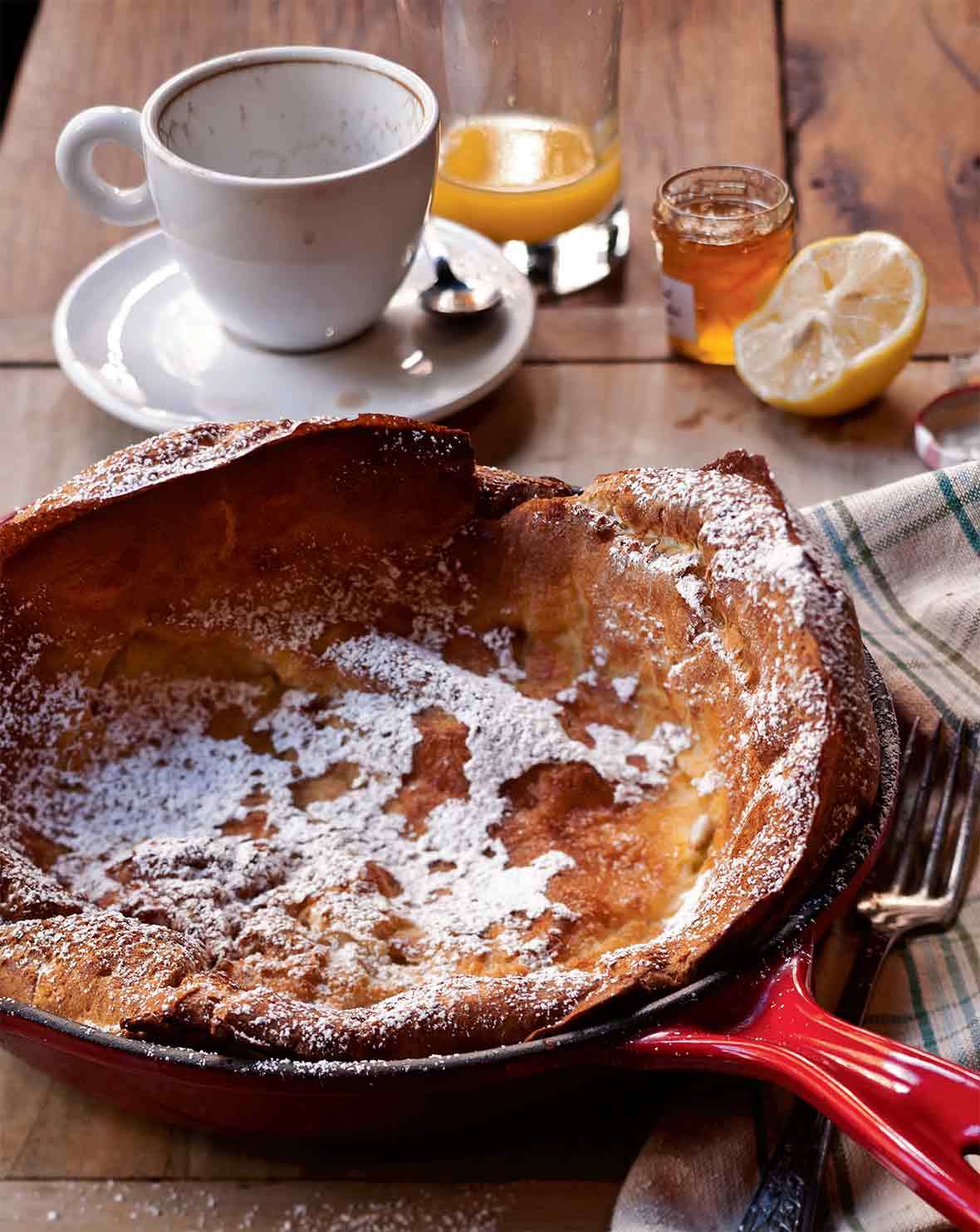
The Dutch Baby batter combines eggs, milk, flour, sugar, and vanilla to create a smooth mixture that must rest in the refrigerator for at least six hours or overnight. This resting period is essential to balance the flavors and improve the texture, preventing a strong eggy taste. The batter is poured into a preheated, buttered cast-iron skillet and baked at a high temperature to achieve a dramatic puff and crisp edges.
This pancake is characterized by a light, airy interior and crunchy, browned perimeter. Serving it dusted with confectioners' sugar and accompanied by maple syrup, lemon wedges, or fruit compote adds brightness and sweetness that complement the mildly sweet batter.
The cooking method requires a very hot skillet to obtain the signature puff, so preheating the pan is important. Leftover Dutch Baby can be reheated but enjoyed best fresh from the oven.
Ingredients
- 2/3 cup milk
- 1/4 teaspoon vanilla extract
- 4 large egg
- 2/3 cup all-purpose flour
- 2 teaspoons granulated sugar
- 1/4 teaspoon kosher salt
- 1 1/2 tablespoons (3/4 oz) butter melted, plus more for the baking dish
- butter for the skillet
- confectioners’ sugar for dusting
- maple syrup lemon wedges
- butter
- lemon
- fruit compote
Instructions
- In a blender, combine the milk, vanilla extract, and eggs, and blend on medium-high until everything is combined, about 15 seconds. Leave the mixture in the blender.
- In a large bowl, whisk together the flour, sugar, and salt. Add the dry ingredients to the blender and blend again, just until combined. Add the melted butter and keep blending until everything is pretty darn smooth, maybe 30 seconds.
- Pour the batter into a bowl, cover it tightly with plastic wrap, and refrigerate for at least 6 hours. (The key to a good Dutch Baby is making the batter the night before. It needs to rest in the fridge for at least 6 hours; otherwise, it will be too eggy. That’s good news for your Sunday morning, as you can simply bake your Dutch Baby while you’re making coffee.)
- Preheat the oven to 400°F (204°C). Adjust oven rack to middle position.
- Butter a 10-inch ovenproof skillet, preferably cast-iron, and slide it in the preheating oven for about 5 minutes, until it gets pretty hot.
- When the skillet is properly heated, pull it out of the oven, pour in the batter, and slide it back in the oven. Bake for 15 minutes, then turn the skillet and bake for another 10 minutes or so, until the batter has risen high on the sides and a little bit in the center, and has turned golden brown right in the middle. You may want to watch it carefully, as the edges can get a little dark—that’s OK as far as we're concerned, but if you prefer your pancake pale, you can always crimp a strip of aluminum foil around the edges.
- Pull the Dutch baby out of the oven and slide it right out of the skillet onto a plate. The pancake won’t stick to the skillet, although it will deflate as it cools down—there's just no avoiding that.
- Fill a small sieve or strainer with confectioners’ sugar and shake it over the Dutch baby until the surface is thickly covered. Place the Dutch baby in the middle of the table with some little bowls of toppings: lemon wedges, fruit compote, pats of soft butter, maple syrup. You don’t need a knife and a cake lifter for this: just let everybody pull pieces off with their fingers. It will disappear FAST.
Nutrition Information
Show DetailsNutrition Facts
Serving: 2servings
Amount Per Serving
Calories 424 kcal
% Daily Value*
| Serving | 1portion | |
| Calories | 424kcal | 21% |
| Carbohydrates | 41g | 14% |
| Protein | 20g | 40% |
| Fat | 20g | 31% |
| Saturated Fat | 9g | 45% |
| Monounsaturated Fat | 6g | 30% |
| Trans Fat | 1g | 50% |
| Cholesterol | 400mg | 133% |
| Sodium | 469mg | 20% |
| Fiber | 1g | 4% |
| Sugar | 9g | 18% |
* Percent Daily Values are based on a 2,000 calorie diet.
User Reviews
Overall Rating
5
You'll Also Love