German Rabbit Stew
User Reviews
5
German Rabbit Stew
Description
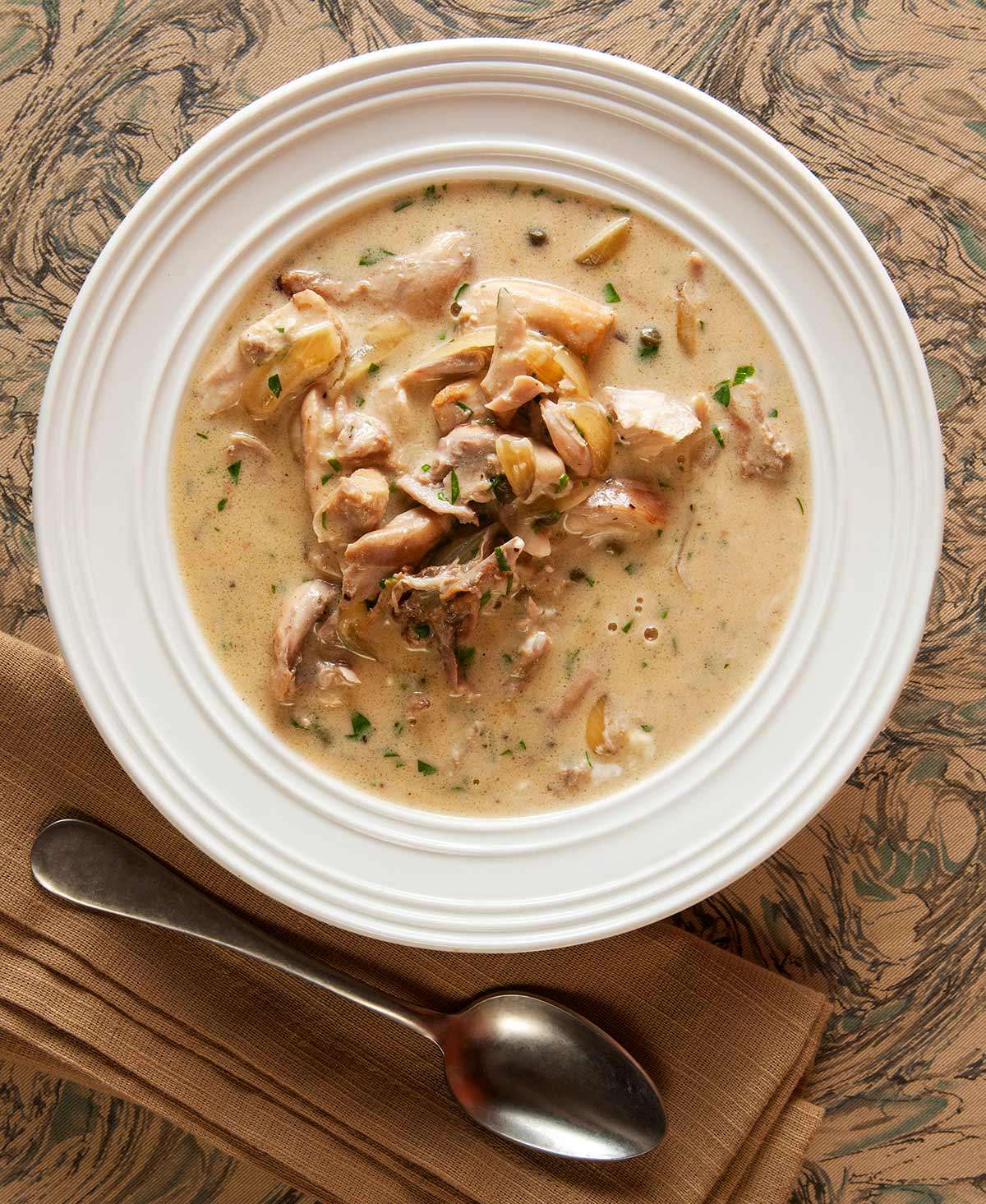
German Rabbit Stew starts by seasoning and browning rabbit pieces in butter, creating a rich base for the dish. Sliced onions are cooked until lightly browned, then coated with flour to form a thickening roux. After returning the rabbit to the pot, chicken stock covers the ingredients while a combination of lemon zest, bay leaves, and lemon juice infuses brightness and subtle herbal notes during a long, slow simmer. The stew is completed with sour cream stirred in near the end for softness and tang, while capers add bursts of briny contrast.
The texture balances between the tender, falling-off-the-bone rabbit and the silky, creamy sauce that envelops it. The cooking method requires patience to develop depth and allows the flavors to meld thoroughly. The creaminess from the sour cream blends with the gentle acidity of lemon and saltiness of capers for complexity.
This stew pairs well with crusty bread or boiled potatoes to soak up the sauce, offering a satisfying meal especially suited for cooler weather. A dry German white wine or a good lager complements the dish nicely, enhancing the citrus and herb elements without overwhelming the delicate meat.
The notes suggest serving immediately with fresh bread or potatoes, highlighting that the recipe calls for a crisp German white or lager beer to accompany the meal. The long cooking ensures very tender results that integrate the various aromatic and acidic components.
Ingredients
- 2 cottontail rabbit or 1 domestic rabbit, cut into serving pieces
- salt
- 2 tablespoons butter unsalted
- 2 tablespoons flour
- 1 chicken stock up to 2 cups
- 1 onion sliced root to tip
- lemon zest white pith removed, cut into wide strips
- 2 bay leaves up to 3 leaves
- 1/4 cup lemon juice
- 2 tablespoons capers
- 1/2 cup sour cream
- white wine at least 2 tablespoons, to taste
- black pepper
- parsley for garnish
Instructions
- Salt the rabbit pieces well and set aside for 10 minutes or so. Set a Dutch oven or other heavy, lidded pot over medium-high heat. Add a tablespoon of butter. Pat the rabbit pieces dry and brown well on all sides. You may need to do this in batches, so don't crowd the pot and don't rush things. Remove the rabbit pieces once they're browned. This may take 15 minutes or so.
- Add the remaining tablespoon of butter, then the sliced onion and cook until the edges just begin to brown, about 6 minutes. Sprinkle with flour and stir well. Cook, stirring often, until the flour turns golden, about 5 minutes.
- Return the rabbit to the pot and add enough chicken stock to cover. Use a wooden spoon to scrape any browned bits off the bottom of the pot. Add the lemon zest, bay leaves and lemon juice and bring to a simmer. Cover and cook gently until the rabbit wants to fall off the bone, which will take anywhere from 90 minutes to 3 hours, depending on how old your rabbit was.
- This is an optional step, but I prefer it: Turn off the heat, fish out the rabbit pieces and let the cool on a baking sheet. Pull all the meat off the bones and return the meat to the stew. I don't like fiddly stews with bones in them, so I do this. You can leave everything on the bone if you want.
- You can now store the stew for several days. Or you can serve it at once. Turn the heat to low just to make sure the stew is nice and hot. Do not let it simmer. Add the sour cream, capers and as much white wine as you want -- you want the stew to be a bit zingy. Stir in a healthy amount of black pepper and garnish with parsley.
Notes
- Serve German Rabbit Stew with crusty bread or boiled potatoes to enjoy the rich sauce fully.
- Pair the dish with a crisp German white wine or a lager beer to complement the lemon and caper flavors.
Nutrition Information
Show DetailsNutrition Facts
Serving: 4people
Amount Per Serving
Calories 705 kcal
% Daily Value*
| Calories | 705kcal | 35% |
| Carbohydrates | 8g | 3% |
| Protein | 110g | 220% |
| Fat | 23g | 35% |
| Saturated Fat | 10g | 50% |
| Cholesterol | 435mg | 145% |
| Sodium | 386mg | 16% |
| Potassium | 1986mg | 42% |
| Fiber | 1g | 4% |
| Sugar | 2g | 4% |
| Vitamin A | 354IU | 7% |
| Vitamin C | 8mg | 9% |
| Calcium | 98mg | 10% |
| Iron | 16mg | 89% |
* Percent Daily Values are based on a 2,000 calorie diet.
User Reviews
Overall Rating
5
You'll Also Love