How To Make Milk Kefir (Easy Tutorial!)
User Reviews
4.9
How To Make Milk Kefir (Easy Tutorial!)
Description
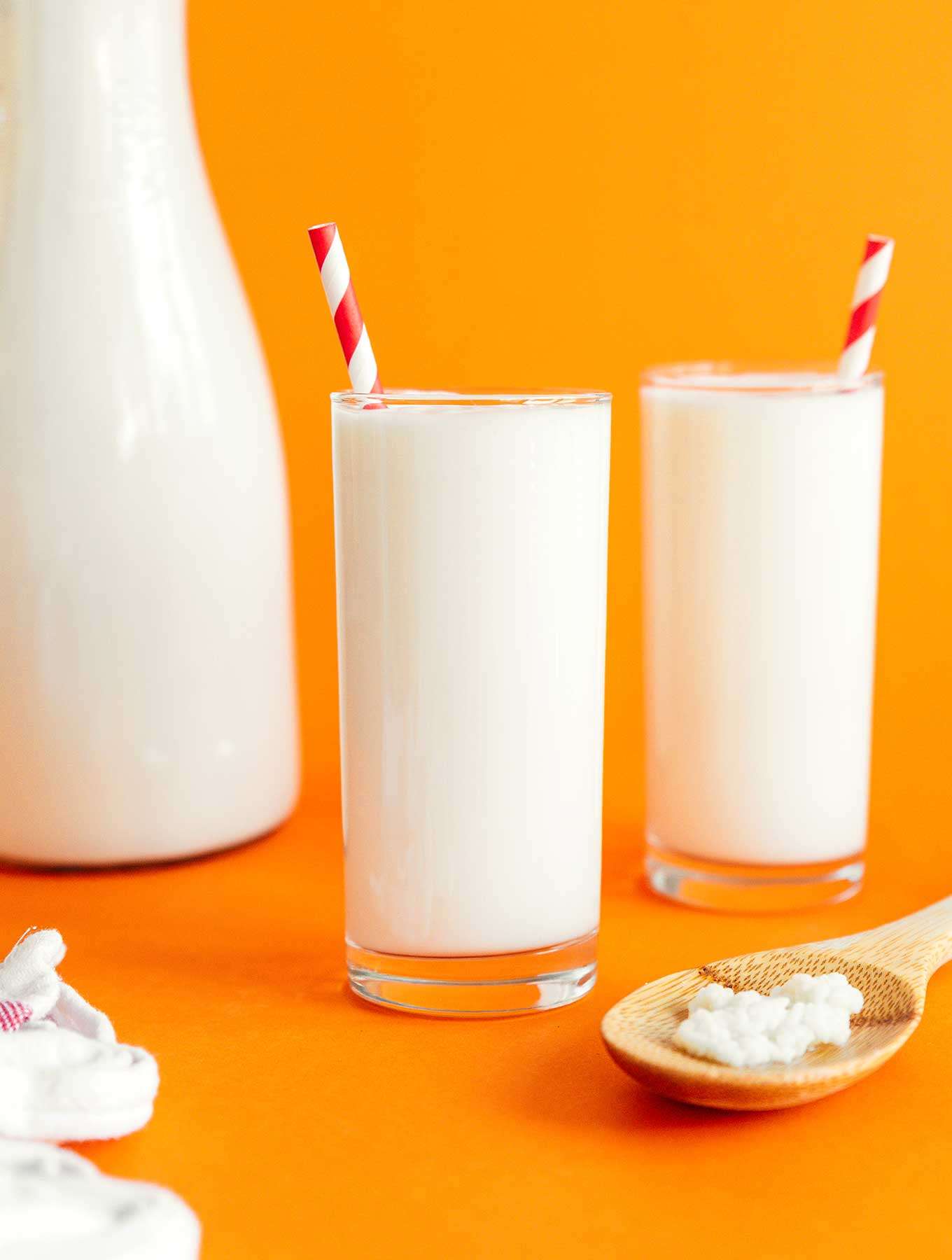
How To Make Milk Kefir (Easy Tutorial!) guides you through producing traditional milk kefir by fermenting whole milk with kefir grains. After carefully cleaning all equipment, the kefir grains are combined with 4 cups of whole cow's milk in a glass container, covered with breathable layers to allow fermentation while preventing contaminants. The mixture is left at a warm, dark spot between 65 to 85°F (18 to 29°C) for about 24 hours until it thickens and develops a fermented aroma.
Once fermentation is complete, the kefir is strained through a fine mesh sieve to separate the grains from the liquid kefir. The grains can then be reused for subsequent batches. The result is a cultured milk beverage with a slightly tangy flavor and creamy texture, a natural probiotic drink that can be consumed plain or flavored.
This process requires minimal equipment and simple ingredients, making milk kefir accessible to home cooks interested in fermented foods. Proper cleaning and temperature control ensure consistent fermentation results.
Ingredients
- 1 Tbsp kefir grains
- 4 cups milk 960 mL, whole cow's milk
Instructions
- Clean: Clean everything well with regular soap (avoid antimicrobial soaps). I’m talking the hands, glass jugs, spoons - everything!
- Assemble: Add 1 Tbsp (ish) of the kefir grains and 4 cups of whole milk to a large glass jug. Cover the jug with either a few layers of paper towels or a few paper coffee filters. Secure with a rubber band to prevent any bugs or dust from getting in.
- Ferment: Set in a warm, dark spot (65 to 85°F / 18 to 29°C) for about 24 hours. You’ll know your kefir is done when it has slightly thickened and smells fermented. If you kefir has separated into yellowish watery-looking whey, that’s fine! It’s just a sign that you can either reduce the length of fermentation next time or use more milk next time.
- Strain: Place a wide non-metal* bowl under a fine-mesh non-metal colander. Pour your finished kefir into the colander, stirring with a plastic or wooden spoon to gently force kefir through. The grains will be left.
- Start new batch: Rinse out the large jar that you fermented the grains in, then add the grains back into it. Add 4 cups of fresh milk to start the process over.
- Store fresh kefir: Transfer the finished kefir that collected in the wide bowl and transfer it to a sealable jar. Store in the fridge for around 2 weeks.
Notes
- Using only brief contact with metal is acceptable; extended exposure may leach metals due to kefir's acidity.
- To flavor kefir, blend in fresh fruit, cocoa powder, vanilla extract, or dates after fermentation.
- Kefir grains are best sourced online if not available from friends.
Nutrition Information
Show DetailsNutrition Facts
Serving: 4cups
Amount Per Serving
Calories 162 kcal
% Daily Value*
| Serving | 1cup (depends on fermentation length) | |
| Calories | 162kcal | 8% |
| Carbohydrates | 15g | 5% |
| Protein | 8g | 16% |
| Fat | 8g | 12% |
| Saturated Fat | 5g | 25% |
| Cholesterol | 30mg | 10% |
| Sodium | 125mg | 5% |
| Potassium | 0mg | 0% |
| Fiber | 3g | 12% |
| Sugar | 12g | 24% |
| Vitamin A | 0IU | 0% |
| Vitamin C | 0mg | 0% |
| Calcium | 220mg | 22% |
| Iron | 0mg | 0% |
* Percent Daily Values are based on a 2,000 calorie diet.
User Reviews
Overall Rating
4.9
You'll Also Love