Korean Radish Soup (Muguk)
User Reviews
4.7
Korean Radish Soup (Muguk)
Description
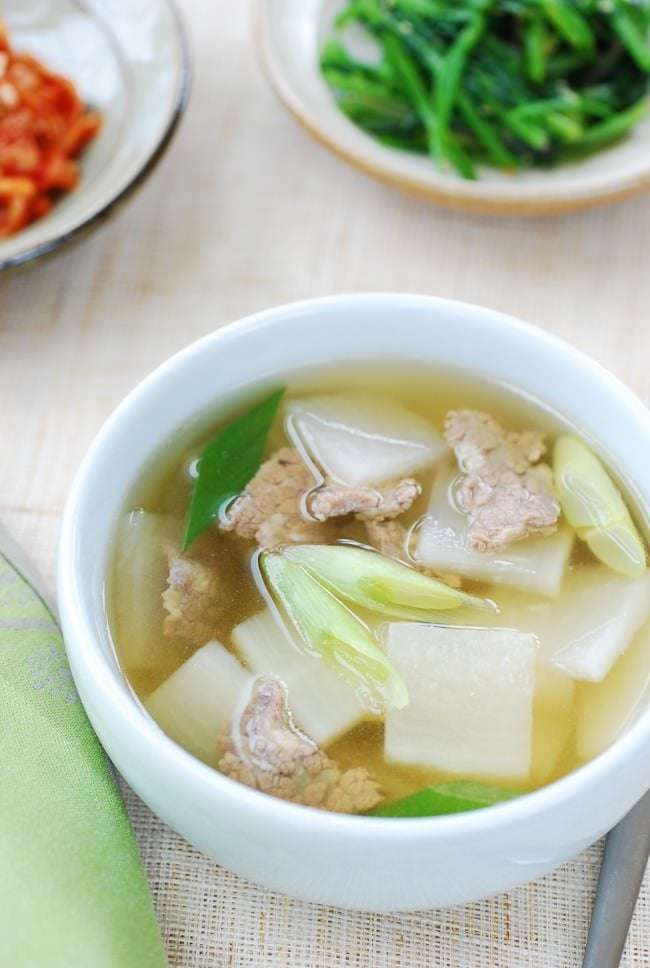
This Muguk recipe begins by marinating thinly cut beef pieces with Korean soup soy sauce, minced garlic, pepper, and sesame oil. Separately, Korean radish is cut into thick bite-sized chunks and scallions into pieces. The beef is sautéed until browned, then simmered in water to extract a rich broth.
After skimming foam, the radish is added to the pot and cooked until translucent and tender. Near the end, remaining garlic, scallions, and soy sauce finish the soup gently, preserving a clear light-colored broth that is savory yet mild. Salt and pepper are adjusted to taste without darkening the soup.
This soup is best served as a simple side or light meal, highlighting the crisp yet tender radish texture paired with tender beef. It is distinct from soups made with regular soy sauce, ensuring a less sweet, more balanced flavor profile.
A key tip is to avoid substituting regular soy sauce, as it alters color and sweetness. Fish sauce can be used as an alternative seasoning in Korean soups if needed.
Ingredients
- 12 ounces Korean radish aka mu, 무
- 2 scallions
- 6 ounces beef brisket or chuck or loin
- 2 teaspoons garlic minced, divided
- 1 teaspoon sesame oil
- 2 tablespoons Korean soup soy sauce See note, guk ganjang, 국간장
- salt to taste
- black pepper to taste
Instructions
- Cut the beef into thin bite size pieces. Marinate with 1 tablespoon of soup soy sauce, 1 teaspoon of garlic, a pinch of pepper, and 1 teaspoon of sesame oil. Set aside.
- Cut the radish into bite size pieces (1 to 1.5-inch square, about 1/4-inch thick). Cut the scallions into 1 to 1.5-inch pieces.
- In a medium pot, sauté the beef until all the pieces turn brown. Pour in 8 cups of water and bring it to a boil. Skim off the foam. Reduce the heat to medium high and continue to boil, covered, for 10 minutes.
- Add the radish pieces and boil, covered, until the radish turns translucent and soft, 10 to 15 minutes. Stir in the remaining teaspoon of the garlic, scallions, and the remaining tablespoon of the soup soy sauce. The soup should not look too dark. Taste for salt and pepper. Boil for an additional 5 minutes.
Notes
- Do not substitute Korean soup soy sauce with regular soy sauce, as it results in an overly sweet and dark broth.
- If Korean soup soy sauce is unavailable, fish sauce can serve as a closer alternative for seasoning.
User Reviews
Overall Rating
4.7
You'll Also Love