No Knead Artisan Bread
User Reviews
5
-
Prep Time
10 mins
-
Cook Time
42 mins
-
Rising:
2 hrs
-
Total Time
2 hrs 52 mins
-
Servings
12 slices
-
Calories
129 kcal
-
Course
Bread
No Knead Artisan Bread
Description
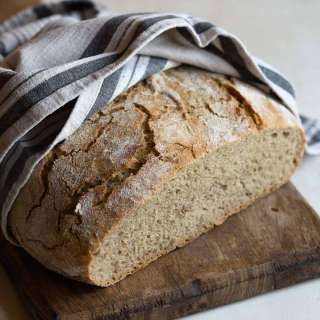
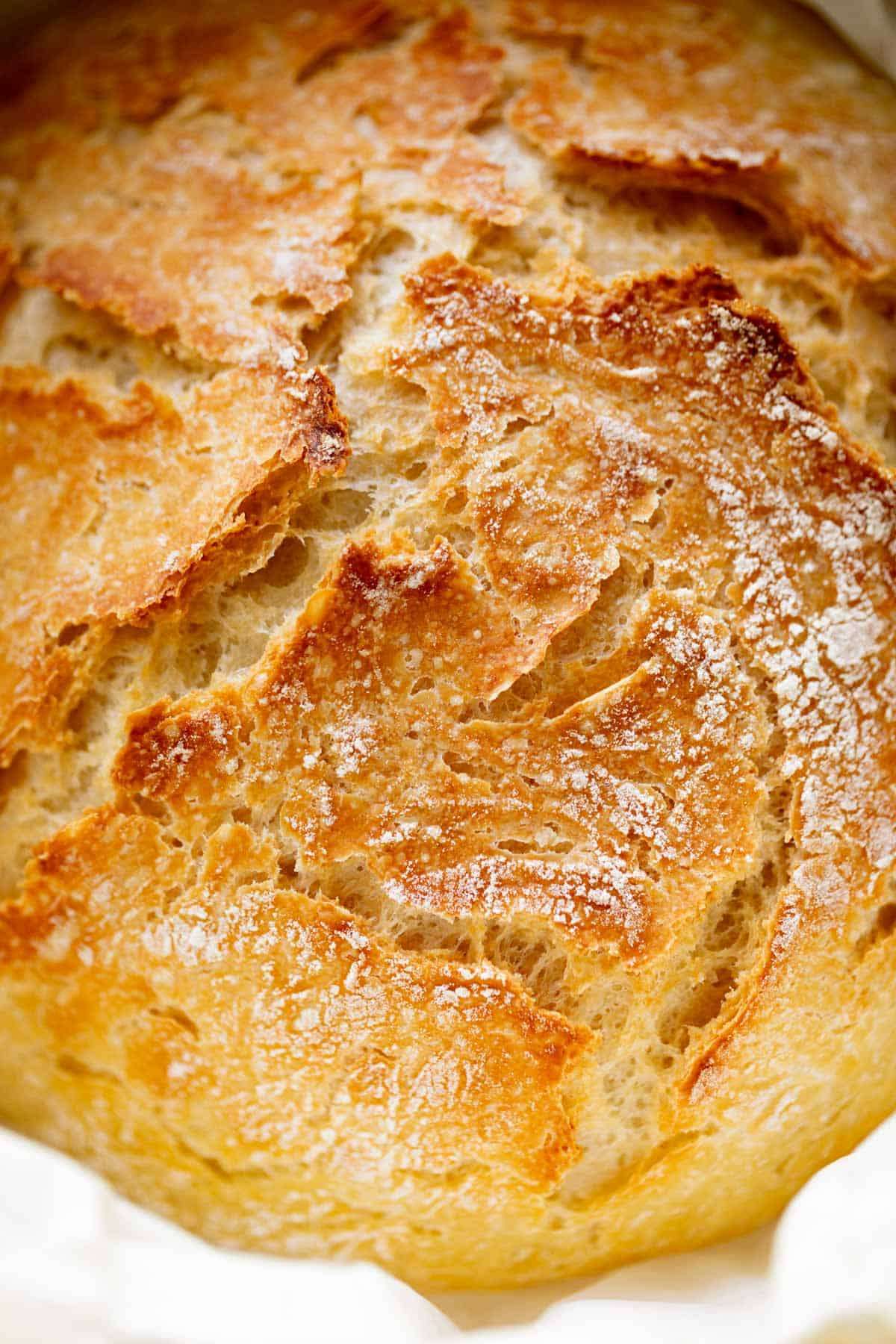
This No Knead Artisan Bread combines bread flour, sugar, instant yeast, salt, water, and olive oil into a sticky, shaggy dough. After mixing, the dough is left to rise covered for 2-3 hours at a warm temperature until doubled and bubbly, with a jelly-like wobble indicating proper fermentation.
The dough is then shaped loosely, placed on parchment paper, and baked inside a preheated Dutch oven to trap steam, producing a thin, crisp crust. Olive oil in the dough helps to soften the crumb, creating a tender texture.
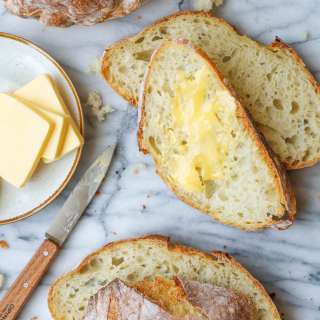
The bread makes an everyday artisan loaf with minimal effort and attention to kneading. It pairs well with a variety of meals or as sandwich bread. Its method relies on time and gentle handling, making it accessible for home bakers.
Using bread flour improves softness, but all-purpose works too. Warm water around 130°F is crucial to activate yeast without killing it. Rising times vary with environment, so watching the dough’s expansion and bubbles is best.
Ingredients
- 3 cups bread flour or plain/all purpose
- 1 tablespoon granulated sugar white
- 2 teaspoons dried yeast instant or rapid rise
- 1 ½ teaspoons salt
- 1 ½ cups water warm
- 1 tablespoon olive oil
Instructions
- Combine flour, sugar, yeast and salt in a large bowl. Add water and oil, mixing to incorporate all of the ingredients together. Dough will be wet, sticky and shaggy.
- Lightly spray the top with cooking oil spray. Cover with plastic wrap and place a dry tea towel over the top.
- Leave in a warm, draft-free place for 2-3 hours, until doubled in size. Dough will have a lot of little holes or bubbles and be wobbly like jelly.
- Place a large (10-inch or 26cm) dutch oven or heavy based pot in the oven with a lid. Preheat oven to 450°F (230°C) 30 minutes before baking.
- Lightly flour work surface and plastic spatula with up to 1 tablespoon flour. Scrape dough out of bowl onto work surface with spatula. Sprinkle the top of dough with a large pinch of flour and fold it over on itself with the spatula (about 5-6 folds). Roughly form a round shape.
- Measure out a large piece of parchment paper, large enough to transfer the dough into the pot. Place paper next to the dough and roll dough onto the paper, smooth side up. Carefully move it to the centre of the paper and reshape if needed, or shake pan a couple of times to evenly distribute dough. (It will even out while baking.)
- Loosely cover with plastic wrap and let rest while oven is preheating.
- Use oven mitts to carefully remove hot dutch oven from oven. Grab the parchment paper from each end to pick up the dough and transfer it into the pot.
- Cover with lid and bake for 30 minutes, then remove lid and bake for an additional 12-15 minutes, until loaf is beautifully golden browned.
- Transfer to a wire rack to cool for 10 minutes before slicing.
Notes
- Bread flour produces a softer loaf due to higher protein; all-purpose can be used with slightly different texture.
- Yeast feeds on sugar and starch to create gas bubbles that make the dough rise and texture soft.
- Instant yeast works without prior activation; activate in warm water if preferred for certainty.
- Olive oil in dough contributes to a silky, soft crumb and improves bread softness.
- Maintain warm water at about 130°F (55°C) to support yeast activity without killing it.
- Rising times vary by humidity, temperature, flour type, and yeast; dough should double and be bubbly before baking.
- Always preheat the oven and Dutch oven for best crust development during baking.
Nutrition Information
Show DetailsNutrition Facts
Serving: 12slices
Amount Per Serving
Calories 129 kcal
% Daily Value*
| Calories | 129kcal | 6% |
| Carbohydrates | 24g | 8% |
| Protein | 4g | 8% |
| Fat | 2g | 3% |
| Saturated Fat | 0.2g | 1% |
| Polyunsaturated Fat | 0.4g | 2% |
| Monounsaturated Fat | 1g | 5% |
| Sodium | 293mg | 12% |
| Potassium | 36mg | 1% |
| Fiber | 1g | 4% |
| Sugar | 1g | 2% |
| Vitamin A | 1IU | 0% |
| Vitamin C | 0.002mg | 0% |
| Calcium | 6mg | 1% |
| Iron | 0.3mg | 2% |
* Percent Daily Values are based on a 2,000 calorie diet.
User Reviews
Overall Rating
5
You'll Also Love