Overnight Sourdough Bread
User Reviews
4.7
Overnight Sourdough Bread
Description
Starting with a mature sourdough starter fed with equal parts flour and water, the dough combines active starter, bread flour, salt, and water to form a shaggy and slightly sticky mass. After mixing, it rests in a covered container at room temperature (or refrigerated if warm) for 8-12 hours to ferment and nearly double in volume.
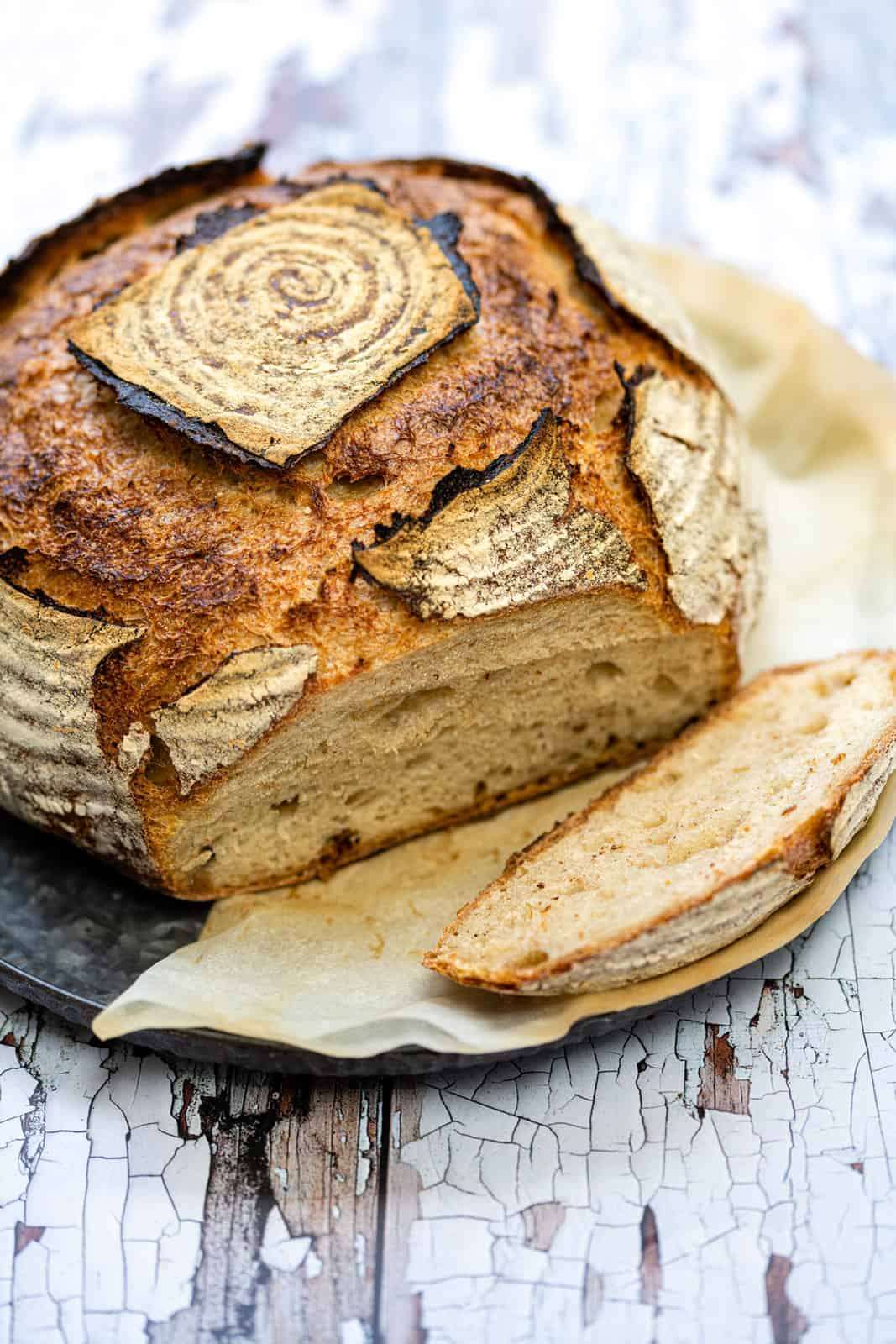
The following day, the dough is gently turned out on a misted surface, shaped and placed seam-side up into a floured banneton basket, which supports the dough during its final rise and contributes to a patterned crust. Before baking, the dough is inverted onto baking paper and baked in a Dutch oven or similar vessel to maintain steam and promote crust development.
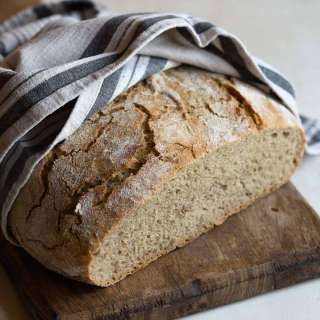
The bread’s final texture features a soft crumb with characteristic sour notes derived from natural fermentation. Stored wrapped in a tea towel at room temperature, it keeps fresh for a few days, while slicing and freezing preserved portions allows easy, toasted servings later.
Ingredients
For your starter
- 60 g (¼ cup) mature starter room temperature
- 60 g all-purpose flour
- 60 g water filtered, bottled or boiled and cooled tap water, tepid, quantity ¼ cup
For the overnight sourdough
- 150 g active starter (most of the starter you prepared earlier)
- 300 g water filtered, bottled or boiled and cooled tap water, quantity 1 ¼ cups
- 500 g bread flour preferably organic, white
- 12 g sea salt 2 scant teaspoons, quantity 2 tsp
- rice flour for the bowl or banetton, as needed, or gluten free flour
Instructions
Feed Your Sourdough Starter
- Feed 60g of active starter with 60g flour and 60g lukewarm water. Leave for 4-6 hours until doubled in size, bubbly and floating in water (float test).
Prepare The Bread Dough
- Add 150g of bubbly starter in a large mixing bowl. Pour in 300g of water* and mix well - I use my dough whisk. *remember to use filtered, bottled or boiled and cooled tap water.
- Add the bread flour, saltand mix well with the dough whisk or your hands. It’s easier to have a feel for the dough if you use your hands. You will have a shaggy, slightly sticky dough.
- Transfer the dough into a rectangular container (I like a glass pyrex dish), cover and leave to rise at room temperature overnight (8-10 hours). If it is a hot night then place the dough in the fridge where it will need 10-12 hours.
Shape The Sourdough
- The following day take a look at your dough - it should have almost doubled. Mist your worktop with water and scrape the dough onto it – do not punch the dough down. If the dough is really sticky then you can dust the worktop with a little flour – I prefer to use water with this recipe.
- Gently stretch the dough to form a rectangle.
- Fold into three sections, like a letter.
- Roll the dough into a tight ball.
- Flip over, seam side down, and shape into a round loaf (known as a “boule”). Use your hands and a bench scraper to roll the loaf in your hands, slightly tucking the edges under as you go (please check the video for a demo).
Second Rise
- Line a bowl or basket with baking paper and lightly dust the paper and your loaf with gluten free flour or rice flour to prevent the bread from sticking to the paper.
- Gently cup the loaf in your hands and place into the prepared bowl seam side down. Cover loosely with a plastic bag and leave to rise again for 30 minutes to a couple of hours at room temperature (again, this will be temperature dependent).
- Preheat your oven to 450F (230C) half an hour before the end of proving. Place a lidded pot (Dutch Oven) in the oven to preheat.
- Score the top of your loaf using a sharp knife, razor or lame.
Bake your Sourdough
- Remove the pot from the oven using pot holders (please be very careful as it can easily give you very bad burns, as I can testify). Carefully place the dough into the pot, lifting it by the baking paper.
- Cover and bake for 20 minutes.
- Reduce the temperature to 425F (220C). Take the lid off the pot and cook for another 20-25 minutes. You can lift the bread out of the pot and cook directly on the oven shelf for the final 5 minutes.
- Cool the bread on a wire rack for at least an hour before slicing.
Notes
- Dust the banneton basket with rice or gluten-free flour before use and shake out excess to prevent sticking.
- Transfer shaped dough carefully with seam side up for the final rise in the basket.
- After baking and cooling, store the loaf wrapped in a clean tea towel at room temperature for up to 3 days.
- Slice the entire loaf before freezing; frozen slices toast well directly from the freezer.
Nutrition Information
Show DetailsNutrition Facts
Serving: 12slices
Amount Per Serving
Calories 173 kcal
% Daily Value*
| Calories | 173kcal | 9% |
| Carbohydrates | 35g | 12% |
| Protein | 6g | 12% |
| Fat | 1g | 2% |
| Saturated Fat | 1g | 5% |
| Sodium | 390mg | 16% |
| Potassium | 47mg | 1% |
| Fiber | 1g | 4% |
| Sugar | 1g | 2% |
| Calcium | 6mg | 1% |
| Iron | 1mg | 6% |
* Percent Daily Values are based on a 2,000 calorie diet.
User Reviews
Overall Rating
4.7
You'll Also Love