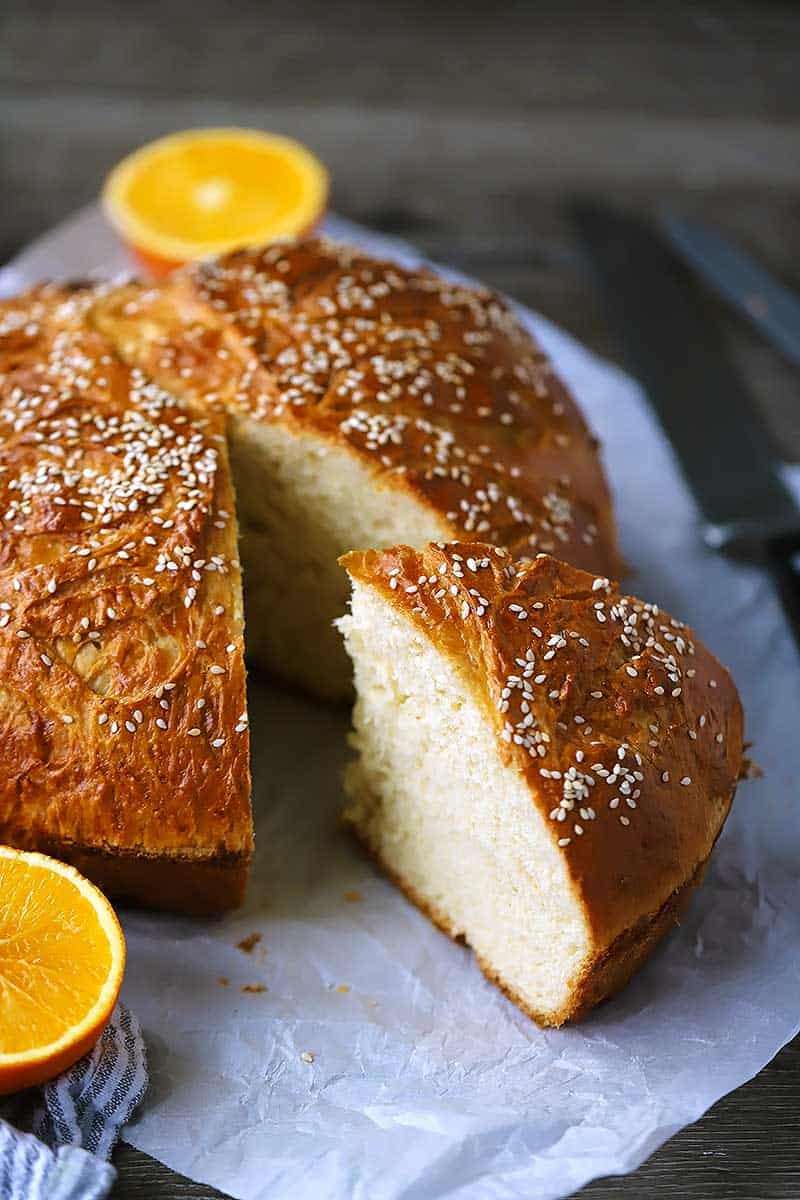
Vasilopita (Greek New Year's Bread)
User Reviews
5
Vasilopita (Greek New Year's Bread)
Description
This recipe begins by activating yeast in warmed milk with sugar, then combining with flour, kosher salt, olive oil, beaten eggs, and orange zest to form a dough. After kneading the dough until smooth and elastic, it undergoes a first rise until doubled. The dough is then divided, shaped into two rounds, placed into oiled pans, and allowed a final rise.
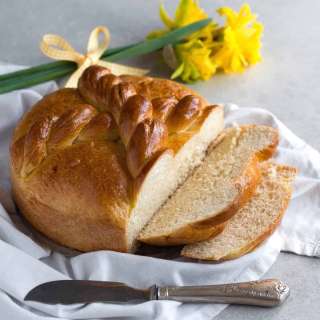
Before baking, decorative carvings are made on the dough surface, and sesame seeds are sprinkled for a traditional finish. Baking produces a bread with a soft crumb, golden crust, and a hint of citrus brightness from the orange zest, embodying a festive spirit for the New Year’s celebration.
The recipe yields two loaves, which can be halved if desired. Prepare for a few hours of rising time, separate from active work, to ensure proper fermentation and texture development. The bread is steeped in tradition and is often served ceremonially.
Ingredients
- 4 ½ teaspoons active dry yeast (two standard packets)
- 2 cups milk warmed
- 3/4 cup sugar
- 7 to 7 ½ cups all-purpose flour
- 2 tablespoons extra-virgin olive oil plus more for the bowl and pan
- 1 teaspoon kosher salt
- 4 egg beaten, plus 1
- orange zest
- sesame seeds
Instructions
- Dissolve yeast in one cup of warmed milk with one teaspoon sugar. Allow to double in volume for 10-20 minutes.
- Meanwhile, stir together 7 cups of flour, the salt, and the 3/4 cups sugar in a large mixing bowl. Make a well in the center. When the yeast has finished doubling, add to the well in flour mixture, as well as olive oil, 4 beaten eggs, the rest of the milk, and the orange zest.
- Mix with a wooden spoon until dough is smooth.
- Turn dough out on a well floured surface and knead for about 10 minutes, adding more flour as needed if the dough is too sticky.
- Place in an oiled bowl, turning once to coat the top. Cover and allow to rise in a warm place for 1-2 hours, or until doubled in size.
- Punch dough down and divide into two portions. Knead each for a few minutes and place in two well-oiled 9-inch circular pans. Allow to rise until doubled in size for about one hour in a warm place.
- Using a very sharp knife or clean razor blade, carve decorative patterns into the top of each loaf, such as with lines radiating out from the center.
- Using a pastry brush, brush the top of each loaf with the remaining beaten egg and sprinkle with sesame seeds.
- Bake at 375 degrees F for 10 minutes, then turn the temperature down to 350 degrees F and bake for another 30 minutes or until the tops of each loaf turn a deep chestnut brown.
- Allow to cool for at least 10 minutes before removing from the pan. Allow to cool completely on a cooling rack after removing it. At this point, you can insert a clean coin into the bottom of the loaf using a toothpick or skinny knife to push it in.
- Cut into wedges and serve.
Notes
- This recipe yields two loaves; halve the ingredients to make one loaf if desired.
- The total time excludes rising; allocate 3 to 4 hours for dough fermentation and proofing.
- Use a warm place to encourage proper yeast activation and dough rising.
- Orange zest adds a distinct aromatic note traditional to this bread.
- Decoratively score the dough before baking and sprinkle sesame seeds for authenticity.
Nutrition Information
Show DetailsNutrition Facts
Serving: 16servings
Amount Per Serving
Calories 307 kcal
% Daily Value*
| Calories | 307kcal | 15% |
| Carbohydrates | 56g | 19% |
| Protein | 9g | 18% |
| Fat | 5g | 8% |
| Saturated Fat | 1g | 5% |
| Cholesterol | 54mg | 18% |
| Sodium | 180mg | 8% |
| Potassium | 130mg | 3% |
| Fiber | 2g | 8% |
| Sugar | 11g | 22% |
| Vitamin A | 124IU | 2% |
| Vitamin C | 1mg | 1% |
| Calcium | 51mg | 5% |
| Iron | 3mg | 17% |
* Percent Daily Values are based on a 2,000 calorie diet.
User Reviews
Overall Rating
5
You'll Also Love