English Muffins
User Reviews
4.9
English Muffins
Description
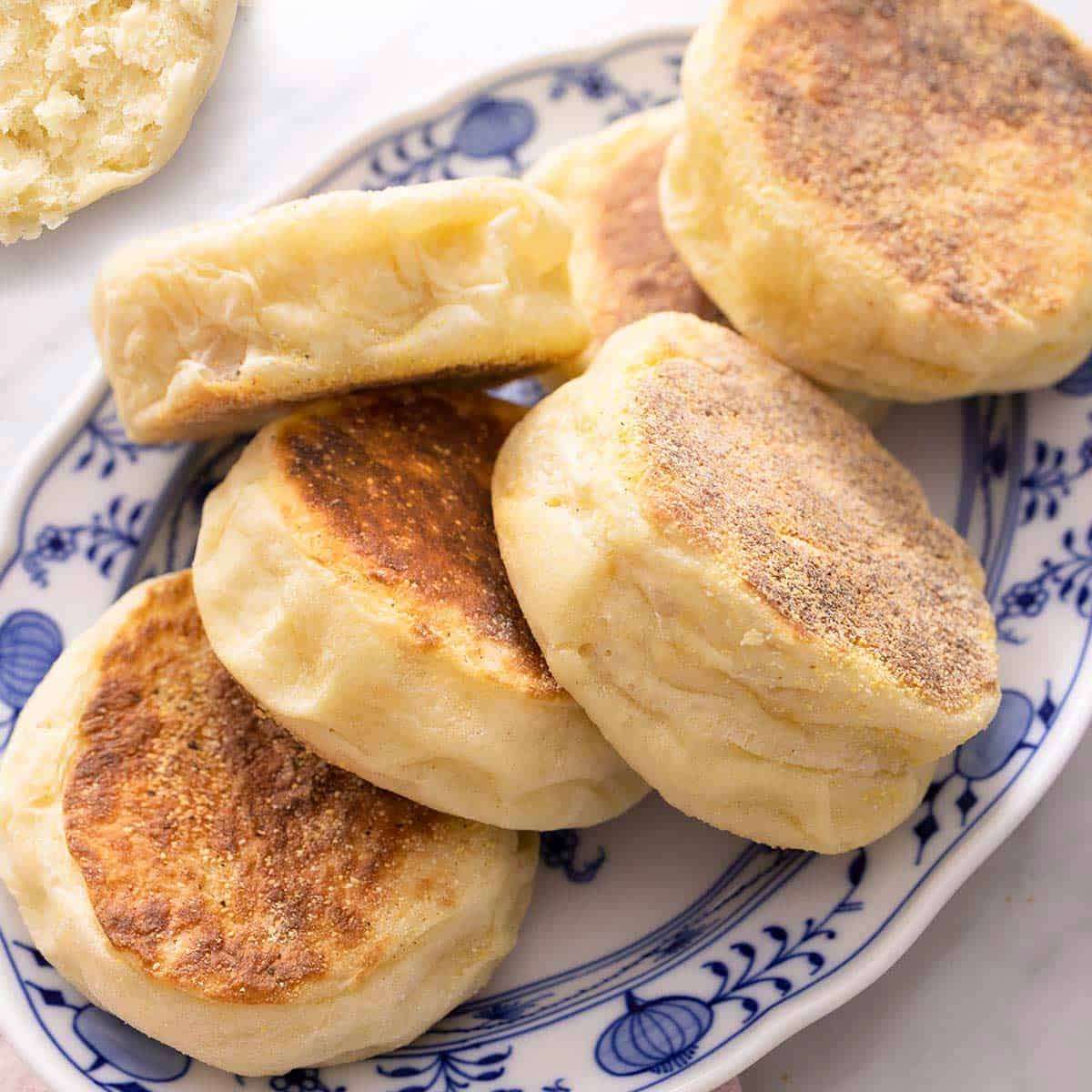
This English Muffins recipe combines all-purpose flour, yeast, salt, sugar, milk, water, butter, and egg into a smooth and elastic dough. After proving the dough until doubled in size, it is rolled to just under an inch thickness and cut into rounds dusted with cornmeal or semolina. Instead of baking, the muffins are pan-cooked on a griddle or skillet, developing a golden crust with textured surfaces from the cornmeal. The interior remains soft with a slightly chewy texture, ideal for splitting with a serrated knife. The dough's enrichment from butter and egg contributes to a tender crumb and slight richness.
English muffins are traditionally served toasted with butter or toppings like jam. They can also be used for breakfast sandwiches. The recipe highlights the importance of proofing time for flavor development and the use of a stand mixer to handle sticky dough efficiently. When undercooked in the center, a brief additional bake can finish the cooking. Cooking in batches is necessary, and a cast-iron or heavy skillet helps achieve consistent cooking. These muffins store well, keeping fresh for several days refrigerated or longer when frozen.
Ingredients
- 2 3/4 cups all-purpose flour (330g)
- 2 1/4 tsp instant yeast one package, or fast acting
- 1 teaspoon salt
- 2 tbsp sugar
- 3/4 cup milk (180ml)
- 1/2 cup water (120ml)
- 3 tablespoons butter (42g)
- 1 egg large, room temperature
- cornmeal for dusting or semolina
Instructions
- Combine the milk, water, and sugar in a bowl or glass measuring cup then stir together and warm in the microwave to 110F add the yeast and stir once more. Set aside for 5-7 minutes or until a foamy head develops.
- While the yeast wakes up combine the flour and salt in the bowl of your mixer and whisk together then fit with a paddle attachment.
- Mix the egg and melted butter into the milk mixture then slowly pour the liquid into your flour mixture while mixing on low. Increase the speed to medium high and mix for about 7 minutes or until the dough is elastic and smooth.
- Transfer to a large oiled bowl and cover with plastic. Allow to double in size in a warm spot (about an hour). You can also refrigerate the dough overnight, in which case you’ll let it warm for an hour when ready to use.
- Transfer the dough to a floured counter then gently spread out and pat down until it’s just under an inch thick. Line two baking sheets with parchment paper and sprinkle with cornmeal or semolina.
- Use a 3 inch round cutter to cut your muffins then gently transfer them to the prepared baking sheets using a spatula or your hands. Re-roll the scraps and continue cutting until the dough is used up. Cover loosely with plastic and place in a warm spot to rise for about 30 minutes.
- Place a large skillet over very low heat. Once you can feel the heat when placing your hand a few inches over the surface sprinkle the surface with cornmeal or semolina then carefully place 3-4 muffins on the pan. Cover and cook for 5-6 minutes. Then carefully flip and cook for another 5-6 minutes.
- Clear the old cornmeal off the pan then add a fresh sprinkle and cook the remaining muffins. Enjoy warm! If you haven’t made these before it’s best to cook a test muffin to get the feel of it.
Notes
- Longer proofing times (4-8 hours) improve flavor beyond the minimum 1 hour.
- A stand mixer helps handle the sticky dough more easily.
- Using bread flour instead of all-purpose flour will yield a chewier texture.
- Proof the dough in a warm but not hot spot to encourage proper rising.
- If muffins stick during cooking, add a small amount of butter to the pan.
- Cook in batches and brush away excess semolina or cornmeal to avoid burning.
- Use a serrated knife to split muffins after cooking for clean edges.
- Store cooked muffins in an airtight container for 3-5 days or freeze for up to 3 months.
Nutrition Information
Show DetailsNutrition Facts
Serving: 14English muffins
Amount Per Serving
Calories 132 kcal
% Daily Value*
| Calories | 132kcal | 7% |
| Carbohydrates | 22g | 7% |
| Protein | 4g | 8% |
| Fat | 3g | 5% |
| Saturated Fat | 2g | 10% |
| Trans Fat | 1g | 50% |
| Cholesterol | 8mg | 3% |
| Sodium | 195mg | 8% |
| Potassium | 63mg | 1% |
| Fiber | 1g | 4% |
| Sugar | 2g | 4% |
| Vitamin A | 96IU | 2% |
| Vitamin C | 1mg | 1% |
| Calcium | 20mg | 2% |
| Iron | 1mg | 6% |
* Percent Daily Values are based on a 2,000 calorie diet.
User Reviews
Overall Rating
4.9
You'll Also Love