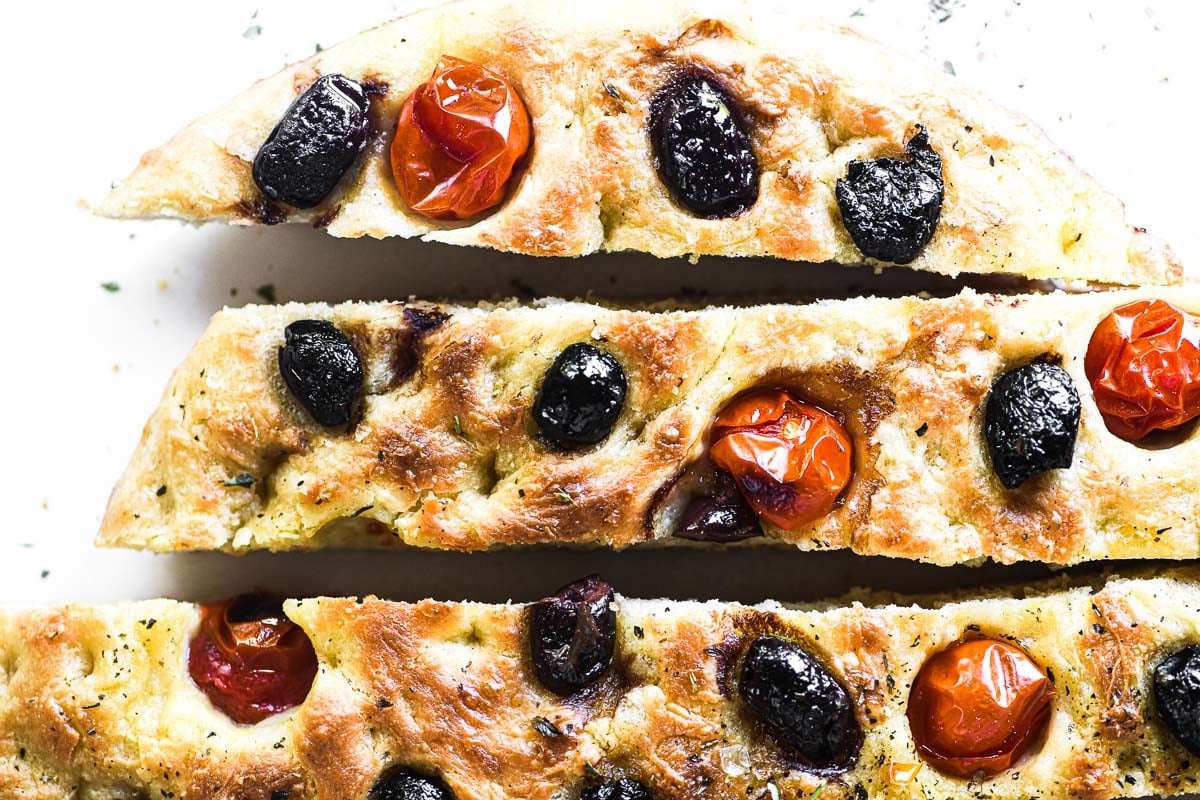
Focaccia Bread Recipe
User Reviews
5
Focaccia Bread Recipe
Description
This Focaccia Bread Recipe uses a well-hydrated dough that results in a tender, pillowy texture with characteristic dimples created by pressing into the dough with oiled fingertips. The addition of cherry tomatoes and oil-cured or Kalamata olives distributed on top contributes savory pops of flavor and a pleasant contrast to the soft bread. The dough is mixed in a stand mixer or by hand, left to rise until puffed, then pressed into an oiled skillet lined with parchment. Dimpling and extra olive oil pools on the surface ensure a flavorful crust that crisps up nicely during baking at 425°F. Baking until the edges turn golden produces a focaccia with a tender crumb and pleasing aroma from the olive oil and toppings.
Focaccia can be served alongside soups, salads, or as a base for sandwiches. The olives and tomatoes add color and bursts of saltiness, while the olive oil-enriched crumb stays moist yet crisp on the outside. It can be warm or at room temperature, making it versatile for meals or snacks.
The recipe's notes mention that modern yeast used directly without dissolving still performs well, simplifying preparation. If the dough is sticky, lightly dusting with flour helps with handling. Use kosher or sea salt and good-quality olive oil to highlight the bread's flavors. The dough benefits from a warm rising spot but should not overproof. This recipe yields a focaccia with a balance of softness inside and a flavorful, dimpled top.
Ingredients
- 4 cups all-purpose flour
- 2 1/4 tsp dry active yeast instant or regular, 1/4 ounce packet
- 2 tsp salt kosher or sea salt, plus more for sprinkling
- 2 Tbsp extra virgin olive oil plus more for topping the dough
- 2 cups water warm, not hot
- 12 cherry tomato approximately
- 24 black olive approximately; oil cured or Kalamata will have most flavor
Instructions
- Put the flour, yeast, and salt in the bowl of a stand mixer (you can also do this by hand) and mix to combine.
- With the mixer on low add the water and 2 tablespoons of the olive oil, mixing until a soft wet dough forms. It will be sticky.
- Cover and let rise for an hour in a warm place. It should be puffed up slightly.
- Meanwhile preheat the oven to 425F. Oil your pan and line with a circle of parchment paper to prevent sticking.
- Turn the dough into your prepared skillet. Note: if your dough seems excessively sticky you can dust it with a little extra flour to make it easier to handle. Use your fingers to press it out to fill the skillet.
- Put some olive oil in a small bowl and dip your fingers into the oil, and then poke little indents all over the bread, leaving little pools of oil. Do this all over the surface. Don’t skimp; this will result in great flavor after the bread is baked.
- Arrange the tomatoes and olives across the top, pressing them into the dough slightly, then scatter a bit of Italian seasoning and sea salt over the surface.
- Bake for 35-40 minutes or until golden and crusty.
- Remove the bread from the pan to cool on a rack. Slice with a sharp knife, and feel free to enjoy while warm!
Notes
- Modern dry yeast can be mixed directly into flour without proofing if it is fresh and reliable.
- If the dough feels too sticky to handle, dust your hands and surface lightly with flour when shaping.
- Use quality extra virgin olive oil both in the dough and on top for best flavor.
- Let the dough rise in a warm place until it has slightly puffed, but avoid overproofing.
- Press the tomatoes and olives slightly into the dough before baking to prevent them from falling off.
Nutrition Information
Show DetailsNutrition Facts
Serving: 12servings
Amount Per Serving
Calories 189 kcal
% Daily Value*
| Calories | 189kcal | 9% |
| Carbohydrates | 33g | 11% |
| Protein | 5g | 10% |
| Fat | 4g | 6% |
| Saturated Fat | 1g | 5% |
| Polyunsaturated Fat | 1g | 6% |
| Monounsaturated Fat | 3g | 15% |
| Sodium | 515mg | 21% |
| Potassium | 91mg | 2% |
| Fiber | 2g | 8% |
| Sugar | 1g | 2% |
| Vitamin A | 115IU | 2% |
| Vitamin C | 4mg | 4% |
| Calcium | 13mg | 1% |
| Iron | 2mg | 11% |
* Percent Daily Values are based on a 2,000 calorie diet.
User Reviews
Overall Rating
5
You'll Also Love