Folar de pascoa (Portuguese Easter Bread)
User Reviews
4.9
-
Prep Time
20 mins
-
Cook Time
50 mins
-
Additional Time
2 hrs
-
Total Time
2 hrs 50 mins
-
Servings
6 servings
-
Course
Breakfast
-
Cuisine
Portuguese
Folar de pascoa (Portuguese Easter Bread)
Description
Folar de Pascoa (Portuguese Easter Bread) is a festive yeast bread combining plain flour, warm milk, butter, eggs, sugar, and fennel powder for a distinctive flavor. The dough is prepared by activating dry yeast in warm sweetened milk, then mixing with the flour and other ingredients to form a smooth texture. It is kneaded well and allowed to rise in a warm place until doubled in size, which develops the bread's soft crumb.
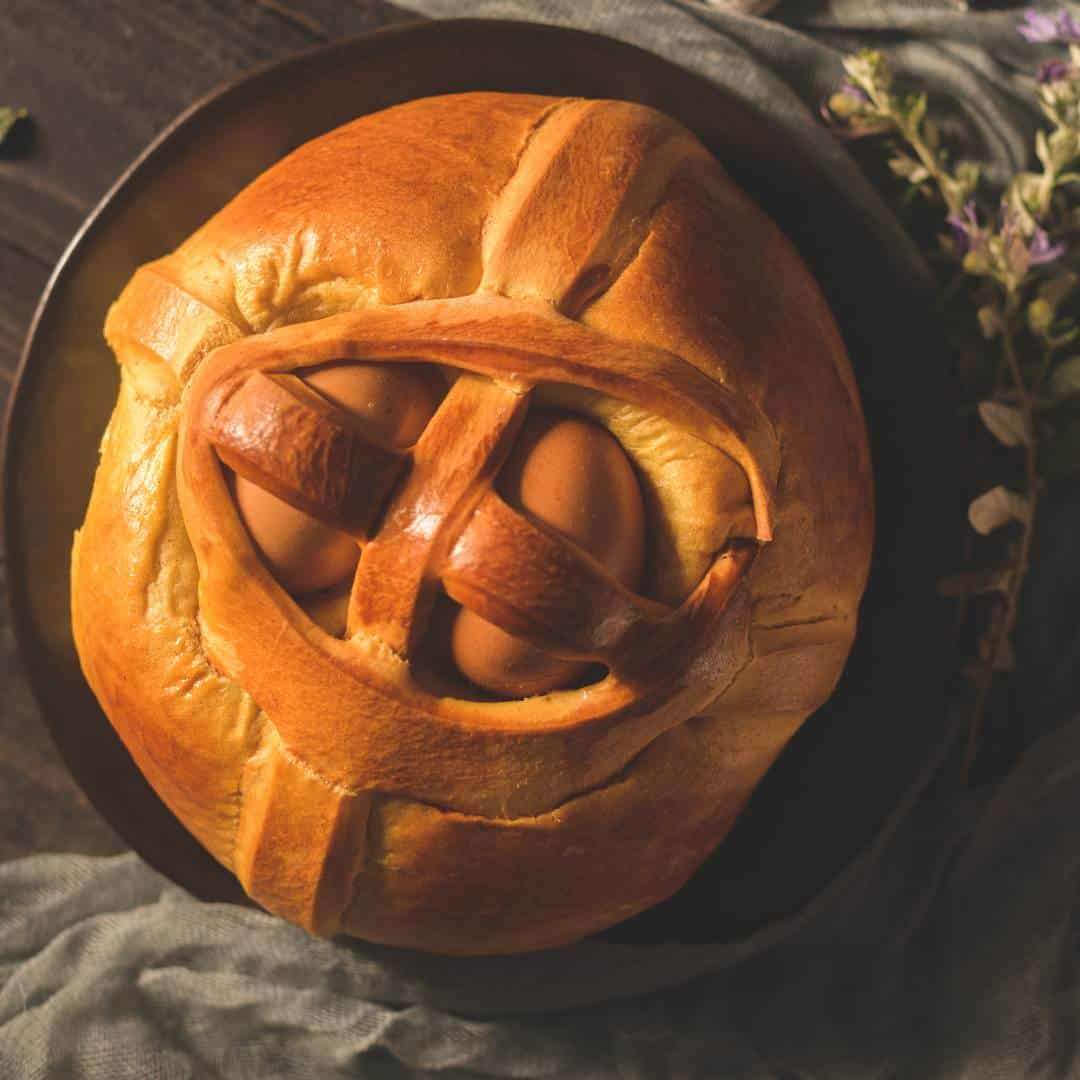
Boiled eggs, often cooked with onion skins to add color, are traditionally embedded or placed atop the dough to symbolize rebirth and Easter. The bread can be brushed with oil and sometimes dusted with cinnamon before baking to enhance aroma and appearance. The result is a tender, slightly sweet bread with a subtle fennel undertone, enjoyed during Easter festivities in Portugal.
This bread is best prepared with room temperature ingredients and allowed sufficient rising time for optimum texture. Although the recipe appears unfinished, the traditional process includes shaping the dough, placing eggs decoratively, and baking until golden brown.
Ingredients
- 700 g plain flour
- 250 ml milk warm
- 60 g butter at room temperature, coarsely chopped
- 3 egg boiled
- 3 egg
- 1 egg yolk
- 100 g sugar
- 1 tsp fennel powder
- 6 egg boiled
- 1 lemon zested
- 1 tbsp yeast dry
- 1 pinch salt
- neutral cooking oil to brush, generic cooking oil
- 1 tbsp cinnamon optional, powder
Instructions
- Combine 1/4 cup of the milk and 1 tablespoon of the sugar in a small bowl. Sprinkle over the yeast. Set aside in a warm, draught-free place for 5-10 minutes or until frothy.
- Combine the flour, fennel seeds, and salt in a large bowl. Make a well in the center. Add the yeast mixture, butter, and remaining milk and sugar.
- Lightly whisk 3 eggs and add to the mixture. Use a wooden spoon to stir until combined. Use your hands to bring the dough together in the bowl.
- Turn the dough onto a lightly floured surface. Knead for 10 minutes or until smooth and elastic. Brush a large bowl with oil. Place the dough in a bowl and turn to coat it with the oil. Cover with plastic wrap and set aside in a warm, draught-free place for 1 hour 45 minutes or until it doubles in size.
- Meanwhile, bring 3 eggs (brown or white), salt, and the peel of 2 yellow onions to a boil in a medium saucepan (the onion skin acts as a natural coloring to make the white eggs brown or enhance the color of brown eggs).
- Once boiling, turn off the heat and allow the eggs to sit for about 10 minutes. Remove from the water and put aside.
- Preheat the oven to 200°C (392°F). Lightly brush a round 22 cm (base measurement) spring-form cake pan with oil. Reserve 1/2 cup of dough. Lightly knead the remaining dough and place in the prepared pan. Gently press the eggs into the dough.
- Divide the reserved dough into 6 pieces. Roll each piece into a thin 12 cm-long rope. Use the ropes to form a cross over each egg. Brush the dough with extra egg. Set aside for 10 minutes to prove slightly.
- Bake for 40 minutes or until golden and the bread sounds hollow when tapped on the base. Set aside to cool slightly.
Notes
User Reviews
Overall Rating
4.9
You'll Also Love