Italian Easter Sweet Bread
User Reviews
5
Italian Easter Sweet Bread
Description
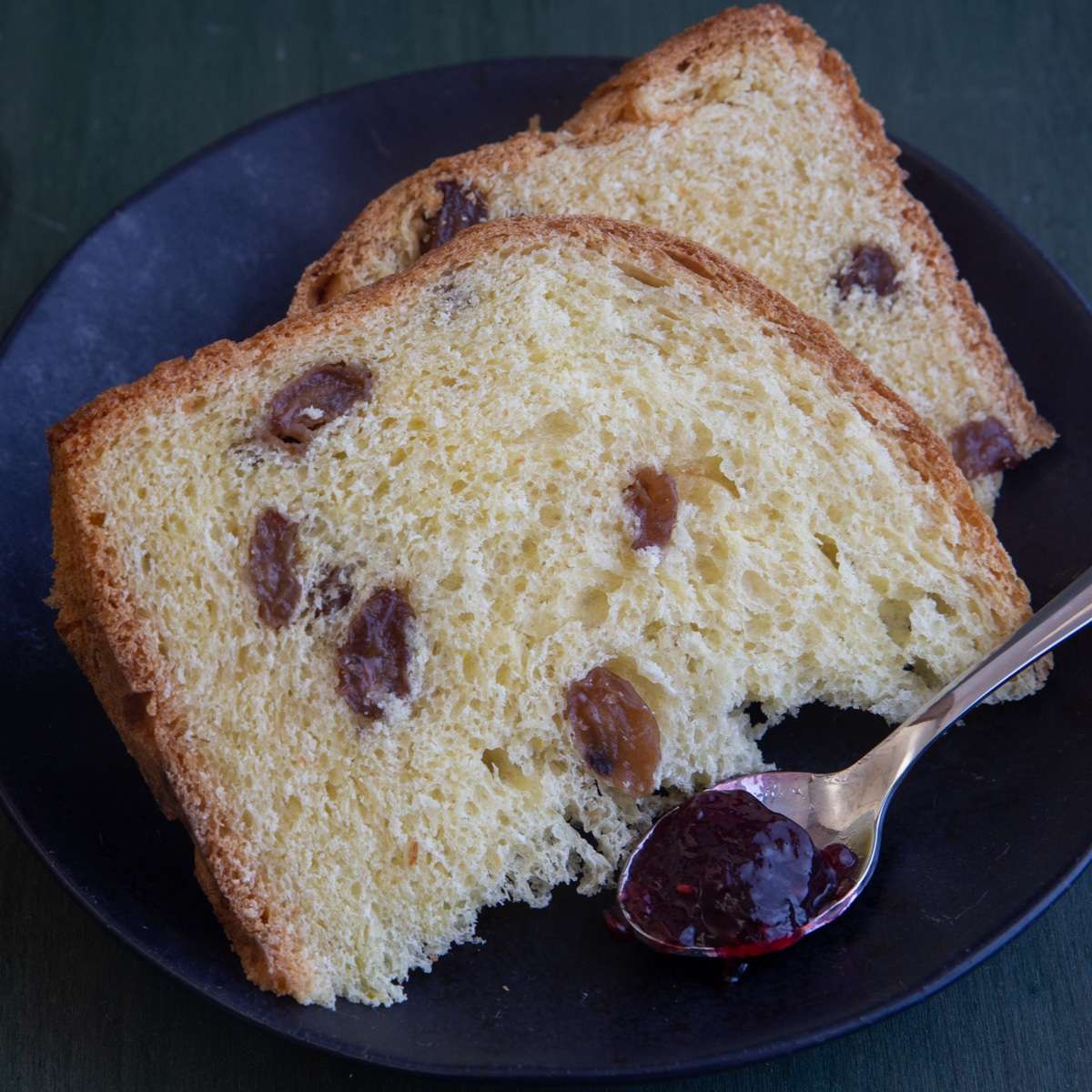
Italian Easter Sweet Bread begins with proofing active dry yeast in warm water with honey. Flour, sugar, cream, eggs, lemon zest, salt, and softened butter are kneaded together to form a smooth dough that is not sticky but elastic. After an initial rise until doubled, raisins are kneaded in, and the dough undergoes a second rise. Once shaped into the desired form in a parchment-lined pan, it is baked until golden.
The bread is finished by brushing a sugar syrup made from water and granulated sugar over the crust, adding a glossy, sweet finish. The final product is a soft, slightly sweet bread with flavorful lemon notes and chewy raisins throughout. This traditional Italian bread pairs well with coffee or tea and complements savory or sweet spreads.
The bread is best stored at room temperature in an airtight container and enjoyed within 2-3 days. It may also be frozen for 3-4 months, wrapped properly to maintain freshness. The dough’s consistency may require additional flour if it is overly sticky during kneading.
Ingredients
- 6½ tablespoons water 100 grams, lukewarm
- 1 teaspoon honey or granulated sugar
- 1¼ teaspoon active dry yeast
- 3¼ cups bread flour (424 grams)
- 4¾ tablespoons granulated sugar (60 grams)
- 1 tablespoon cream
- 2 large egg room temperature
- lemon zest of 1
- 1 teaspoon salt
- ⅓ cup butter 75 grams, soft
- ¾ cup raisins 100 grams
*Place the raisins in a small bowl and cover with boiling water, let sit 15-20 minutes then drain well.
SUGAR SYRUP
- 3 tablespoons water 40g
- 1¾ tablespoons granulated sugar 20g
Instructions
- In the mixing bowl mix the water and honey then sprinkle the yeast on top, let sit 10 minutes then stir to combine.
- With the dough hook attachment start to knead, add the flour, sugar and cream, continue to knead, then add the eggs one at a time, be sure to combine well before adding the 2nd egg, add the zest and salt knead to combine, add the butter a little at a time, continue to knead for 5-6 minutes. The dough should be smooth, elastic and not sticky. (If after 7-8 minutes it is still sticky then add a little more flour, a tablespoon at a time).
- Move the dough to a lightly floured flat surface and form into a ball, place it in a lightly greased bowl turning to cover lightly with oil, cover with plastic wrap and let rise in a warm draft free area for 1-2 hours or until doubled in bulk.
- Move the dough to a flat surface and knead in the drained raisins. Place again in the greased bowl cover and let rise for an hour.
- Form the dough into desired shape, place in a parchment paper lined pan (high cake or loaf pan), cover with a damp cloth or plastic wrap and let rise until doubled approximately 1-2 hours.
- Pre-heat the oven to 350F (180C).
- Brush the top of the loaf with milk, make a cross on top and bake for approximately 55-70 minutes (bread is done when the internal temperature is 190F/88C). Immediately remove from the pan and let cool on a wire rack. While still warm brush with the sugar syrup. Let cool completely and serve. Enjoy!
SUGAR SYRUP
- In a small pot add the water and sugar and heat on medium/low for approximately 2-3 minutes.
Notes
- The recipe was baked in a 7-inch round pan for shape and even baking.
- Store the baked bread at room temperature in an airtight container for 2-3 days to maintain freshness.
- The bread freezes well for 3-4 months if wrapped properly in a freezer-safe bag.
Nutrition Information
Show DetailsNutrition Facts
Serving: 1loaf
Amount Per Serving
Calories 2897 kcal
% Daily Value*
| Calories | 2897kcal | 145% |
| Carbohydrates | 471g | 157% |
| Protein | 71g | 142% |
| Fat | 85g | 131% |
| Saturated Fat | 21g | 105% |
| Polyunsaturated Fat | 21g | 124% |
| Monounsaturated Fat | 36g | 180% |
| Trans Fat | 1g | 50% |
| Cholesterol | 389mg | 130% |
| Sodium | 3235mg | 135% |
| Potassium | 1636mg | 35% |
| Fiber | 21g | 84% |
| Sugar | 86g | 172% |
| Vitamin A | 3475IU | 70% |
| Vitamin C | 6mg | 7% |
| Calcium | 188mg | 19% |
| Iron | 9mg | 50% |
* Percent Daily Values are based on a 2,000 calorie diet.
User Reviews
Overall Rating
5
You'll Also Love