Jaljeera Recipe
User Reviews
5
Jaljeera Recipe
Description
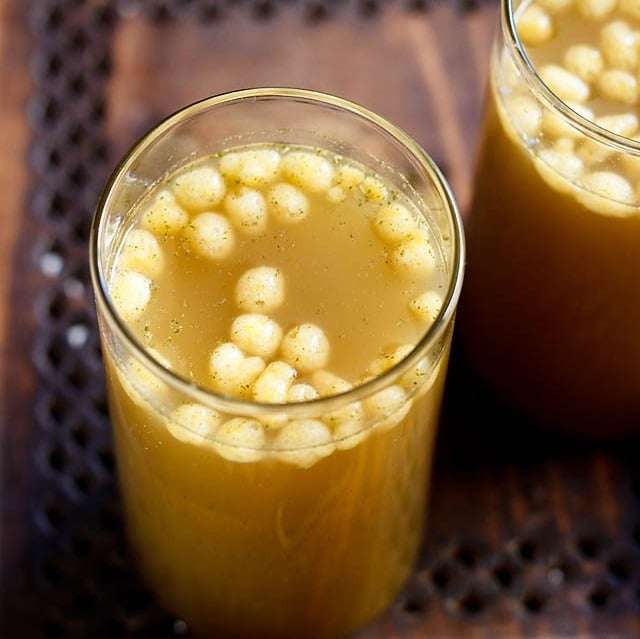
The Jaljeera Recipe involves soaking tamarind in hot water to extract its sourness, then blending it with rinsed mint leaves, cumin seeds, fennel seeds, black peppercorns, asafoetida, black cardamom seeds, mango powder, chaat masala, and black salt to form a fragrant chutney. This chutney can be smoothed and strained if desired. When served, the chutney is mixed with cold water and optionally garnished with crispy boondi and fresh mint leaves.
The drink balances sour, spicy, and herbal flavors with a slightly thick, smooth texture from the blended chutney. The combination of tangy tamarind and cooling mint with the warmth of cumin and pepper contributes to a complex and invigorating taste. Jaljeera is traditionally consumed as a refreshing summer drink or before meals to aid digestion.
For best results, use fresh, green mint leaves without stems to prevent bitterness. If tamarind is unavailable, lemon juice can substitute to adjust sourness. Adding sugar or jaggery after diluting allows a sweeter, tangy drink variation. Rinse and drain mint leaves thoroughly before blending for an optimal chutney texture.
Ingredients
For soaking tamarind
- ¼ cup water hot
- 1 tablespoon tamarind tightly packed, for a more pronounced sourness, you can add ½ tablespoon of more tamarind (imli)
For making jaljeera chutney
- ½ cup mint loosely packed, leaves
- 1.5 teaspoons cumin seeds
- 1 teaspoon fennel seeds
- ½ teaspoon black peppercorns
- 1 pinch asafoetida (hing), optional
- 1 black cardamom - seeds removed and kept, optional
- 1 teaspoon mango powder amchur powder, dried
- 1 teaspoon chaat masala powder - optional
- black salt or edible rock salt or pink salt or regular salt, add as required
For making jaljeera
- 1.5 cups water
- 1 to 2 tablespoons boondi or add as required, optional
- mint leaves optional, few, for garnish
Instructions
Soaking tamarind
- Soak tightly packed tamarind in ¼ cup hot water for about 20 minutes or until the tamarind softens.
Making jaljeera chutney
- Rinse mint leaves well with water. Drain all the water. Add the mint leaves in a small grinder jar. Only use the mint leaves. Do not add the stems as then the Jaljeera can become bitter.
- Add the soaked tamarind along with its water. Make sure there are no seeds in the tamarind.
- Add cumin seeds, fennel seeds, black pepper and black cardamom seeds.
- Next, add amchur, chaat masala, asafoetida and black salt as required.
- If you do not have dried mango powder, then you can add some lemon juice, kachri powder or bael powder also. Instead of black salt, you can use rock salt or sea salt.
- Grind to a smooth chutney. If you want, you can even strain the chutney using a tea strainer.
Making jaljeera
- Take the Jaljeera chutney in a bowl. Also add 1.5 cups water.
- Mix very well. Check the taste of Jaljeera and add more salt and dried mango powder if required. You can also add some lemon juice if you want. If you prefer a more lighter and mild version of Jaljeera, add more water.
- In case the Jaljeera tastes bitter (due to the type and quality of mint leaves), then add some lemon juice to balance the bitterness. Keep Jaljeera in the refrigerator.
- While serving, you can add some boondi, a pinch of chaat masala and a few mint leaves in each glass.
- Boondi can be soaked in water for 20 to 30 minutes. Later squeeze the water and keep them aside. Add boondi while serving Jaljeera.
Notes
- Use only fresh mint leaves without stems to avoid bitterness.
- Substitute tamarind with lemon juice if unavailable, adjusting sourness to taste.
- Add sugar or jaggery after dilution for a sweeter version of jaljeera.
- Rinse and drain mint leaves well before blending for the chutney.
Nutrition Information
Show DetailsNutrition Facts
Serving: 3Serving
Amount Per Serving
Calories 47 kcal
% Daily Value*
| Calories | 47kcal | 2% |
| Carbohydrates | 9g | 3% |
| Protein | 2g | 4% |
| Fat | 1g | 2% |
| Saturated Fat | 0.1g | 1% |
| Polyunsaturated Fat | 0.2g | 1% |
| Monounsaturated Fat | 0.3g | 2% |
| Sodium | 16mg | 1% |
| Potassium | 149mg | 3% |
| Fiber | 2g | 8% |
| Sugar | 3g | 6% |
| Vitamin A | 382IU | 8% |
| Vitamin B1 (Thiamine) | 0.05mg | |
| Vitamin B2 (Riboflavin) | 0.04mg | |
| Vitamin B3 (Niacin) | 0.4mg | |
| Vitamin B6 | 0.04mg | |
| Vitamin C | 3mg | 3% |
| Vitamin E | 0.1mg | |
| Vitamin K | 2µg | |
| Calcium | 55mg | 6% |
| Vitamin B9 (Folate) | 22µg | |
| Iron | 2mg | 11% |
| Magnesium | 26mg | 7% |
| Phosphorus | 31mg | |
| Zinc | 0.3mg |
* Percent Daily Values are based on a 2,000 calorie diet.
User Reviews
Overall Rating
5
You'll Also Love