Maesil Cheong for Beginnners (Korean green plum syrup)
User Reviews
5
Maesil Cheong for Beginnners (Korean green plum syrup)
Description
To prepare Maesil Cheong, clean green plums (maesil) by soaking them in a solution of baking soda and water for 15 minutes, then rinse and dry thoroughly. Meanwhile, sterilize a heatproof glass jar by rinsing with warm water and pouring boiling water inside before drying it completely.
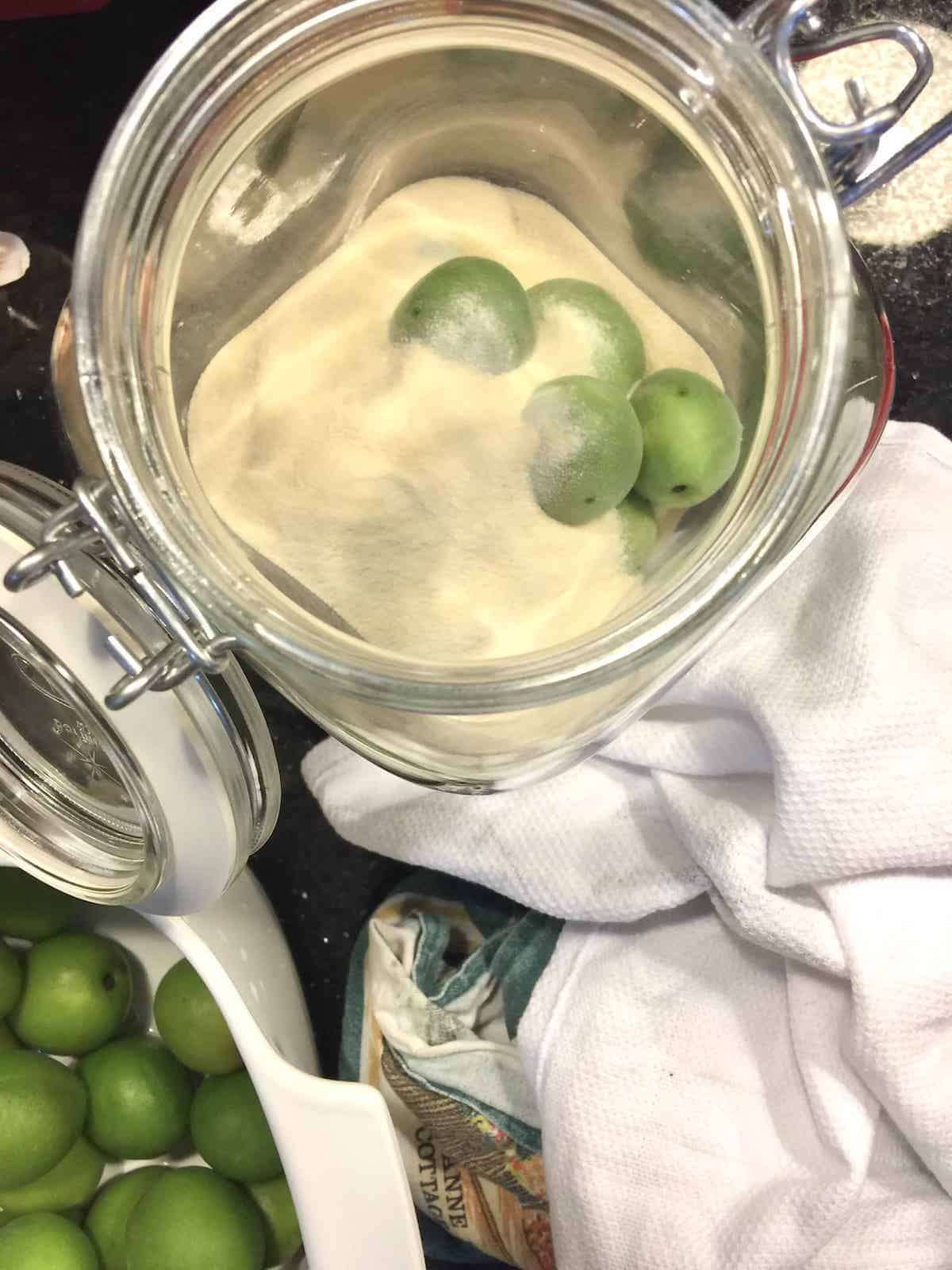
After pricking each plum several times, layer one-third of the plums and sugar alternately in the jar, ending with a sugar layer. Seal and label the jar with the date, then allow the syrup to ferment and extract the plum juices, turning the mixture occasionally if possible.
This syrup can be used in Korean plum tea, as a sweetener in dishes like Mayak Eggs banchan, or in stews. Some ferment the syrup for over a year, but a shorter duration still produces usable syrup.
The recipe notes suggest various sugar options including xylitol, honey, granulated sugar, or rock sugar used traditionally in Japanese plum syrup production.
Ingredients
- 1 kg green plums You can also use ume from the Japanese store- it's the same fruit. Discard any moldy or spoilt plums, but bruised ones can be used, maesil
- 2 teaspoons baking soda To clean the plums
- 1 quart water Plus extra for washing the fruit after soaking
- 1 kg sugar I used xylitol, but you can substitute with honey, granulated sugar or even rock sugar. (The Japanese like to use rock sugar when making Japanese plum tea syrup.)
Instructions
- Clean the plumsSoak the maesil in a baking soda and water solution for 15 minutes. You need a 1% solution (so 2 teaspoons of baking soda for 1 quart- 946 ml- of water.) Rinse and dry the maesil very well at the end of the 15 minutes.
- Sterilise the jar Whilst the plums are soaking, sterilise your heat-proof glass jar. First add some warm water to the jar to prepare it for the boiling water then pour the warm water out. Next, with the jar in the sink, carefully pour the boiling water into the jar then pour it out. You may need oven gloves for this as the jar will be very hot to the touch. Dry the jar thoroughly after sterilsing.
- Layer the sugar and plumsPrick 2-3 holes in each maesil, then add ⅓ of the sugar and ⅓ of the maesil into the jar, making sure the sugar and maesil are layered (i.e. 1 layer of sugar followed by 1 layer of maesil etc) Repeat twice with the remaining ⅔ of maesil and sugar. You should end with a layer of sugar.
- LeaveSeal and label the jar with today's date then store it in a dark and cool place. (I used the cupboard under my sink.)
- After 7 days, use a sterilised wooden stir to mix things up, ensuring that the sugar has all dissolved. Re-seal and place back in its dark hide-out. From now till day 90, open the jar every now and then to release any gas build up. (Refer to the section above the recipe card for signs that your maesil ferment is going well.)
- After 3 months (or up to 3 years if you are patient!), strain and store the syrup in a sterilised jar in the fridge. Use the leftover maesil for wine, vinegar or pickles (There's a paragraph above with more information about this- I will also be doing a separate post once my maesil syrup has fermented.)
- To reward yourself for your long wait, use your homemade Korean plum syrup extract to make yourself a nice cuppa plum tea!
Notes
- Clean plums by soaking in a baking soda solution to remove residues before rinsing well.
- Sterilize the jar thoroughly to avoid unwanted fermentation risks.
- Layer plums and sugar alternately after pricking the plums to help syrup extraction.
- Use the syrup in drinks like Korean plum tea, as a sugar substitute in stews, or to enhance side dishes.
User Reviews
Overall Rating
5
You'll Also Love