Medu Vada Recipe | Sambar Vada
User Reviews
4.9
Medu Vada Recipe | Sambar Vada
Description
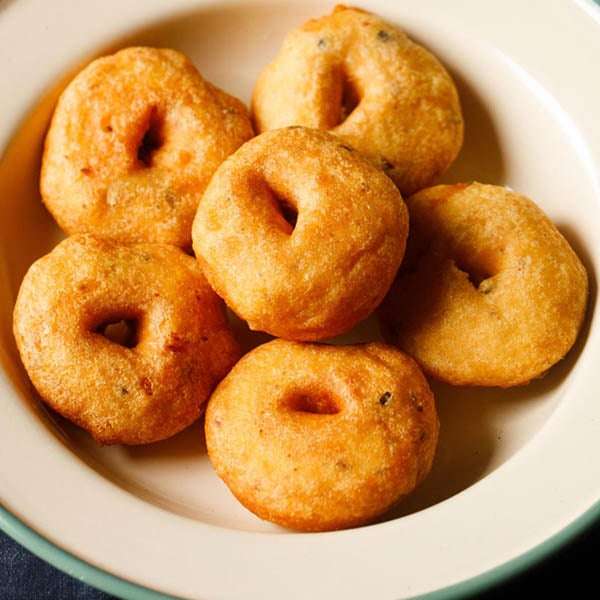
The Medu Vada recipe features urad dal lentils soaked and ground into a smooth batter that is combined with cumin seeds, black pepper, curry leaves, green chili, ginger, and optional ingredients such as onion and coconut. The batter is formed into ring-shaped doughnuts, either by hand or using banana leaves, to give the vada its traditional shape. Deep-frying at medium heat creates a crispy outer crust while keeping the interior tender and airy. This frying process requires care to avoid overcrowding the pan and to achieve a golden brown color.
Fully cooked Medu Vada have a distinct texture with a crunchy exterior and soft center, offering a mix of mild heat from green chilies and aromatic flavors from herbs and spices. They make a versatile snack or breakfast item and pair well with South Indian accompaniments like coconut chutney or sambar.
To ensure the batter is not too watery, semolina or rice flour can be added to achieve better binding. The use of fresh curry leaves and a pinch of asafoetida enhances the traditional flavor profile. Making the perfect medu vada requires skill in shaping the batter and maintaining correct oil temperature while frying.
Ingredients
- 1 cup urad dal (husked and split or whole black gram) - 200 grams
- 2.5 to 3 cups water - for soaking
- 3 to 4 tablespoons water - for grinding or blending lentils
- ½ teaspoon cumin seeds
- ½ teaspoon black peppercorns whole or crushed
- 1 tablespoon curry leaves or 7 to 8 curry leaves, chopped
- ⅓ cup onion optional, finely chopped
- 1 teaspoon green chili or 1 to 2 green chilies, chopped
- 1 teaspoon ginger finely chopped
- 1 pinch asafoetida (hing) - optional
- ¼ cup coconut optional, chopped pieces
- 2 tablespoons Coriander leaves optional, chopped
- ½ teaspoon salt or as required
- neutral cooking oil for deep frying, as required, generic cooking oil
Instructions
Making Vada Batter
- Rinse urad dal a couple of times in fresh water. Then soak the lentils for 4 hours or overnight.
- Grind or blend the soaked lentils to a smooth batter with water.
- If the batter becomes watery, then the instant relief would be to add some semolina or urad dal flour or rice flour to it.
- Add all the spices, herbs and salt. Mix well.
- Take a bowl of water. Apply some water from the bowl on both your palms. Take some batter in your right hand from the bowl. Give it a round shape by moving it around.
- With your thumb make a hole in the center. You can also use banana leaves or zip lock bags to give the medu vada its doughnut shape.
Frying Medu Vada
- In a kadai (wok) or pan heat oil for deep frying. Keep the heat to medium.
- Once the oil becomes hot, slid the vada gently and carefully into the hot oil.
- Shape the batter this way and gently slid them in the oil. Don't overcrowd the kadai or pan with the vada.
- Once the vada is slightly golden then gently turn over with a slotted spoon and continue to fry.
- Fry them till crisp and golden. The oil should be not very hot, but medium hot. You want the vadas to be cooked from inside. Very hot oil will quickly brown the vadas from outside but they will remain uncooked from inside. Less hot oil will make the medu vada to absorb too much oil. Even if the batter is thin then also the medu vadas will absorb too much oil.
- Fry all the medu vada this way till they become evenly browned and crisp.
- Drain them on kitchen tissue to remove excess oil.
- Serve the medhu vadai, hot or warm with sambar and coconut chutney. It can also be served with other dips like mint chutney, coriander chutney, tomato sauce or onion chutney, tomato chutney etc.
- One of the best combination is sambar vada where these medu vadai are dunked in piping hot sambar and served with a side of coconut chutney. This vada sambar meal is finished with steaming hot filter coffee.
Nutrition Information
Show DetailsNutrition Facts
Serving: 14Medu Vada
Amount Per Serving
Calories 72 kcal
% Daily Value*
| Serving | 1Medu Vada | |
| Calories | 72kcal | 4% |
| Carbohydrates | 8g | 3% |
| Protein | 4g | 8% |
| Fat | 3g | 5% |
| Saturated Fat | 1g | 5% |
| Polyunsaturated Fat | 1g | 6% |
| Monounsaturated Fat | 3g | 15% |
| Sodium | 89mg | 4% |
| Potassium | 5mg | 0% |
| Fiber | 3g | 12% |
| Sugar | 1g | 2% |
| Vitamin A | 86IU | 2% |
| Vitamin B1 (Thiamine) | 1mg | |
| Vitamin B2 (Riboflavin) | 1mg | |
| Vitamin B3 (Niacin) | 24mg | |
| Vitamin B6 | 1mg | |
| Vitamin C | 43mg | 48% |
| Vitamin E | 1mg | |
| Vitamin K | 1µg | |
| Calcium | 21mg | 2% |
| Vitamin B9 (Folate) | 248µg | |
| Iron | 1mg | 6% |
| Magnesium | 2mg | 1% |
| Phosphorus | 1mg | |
| Zinc | 1mg |
* Percent Daily Values are based on a 2,000 calorie diet.
User Reviews
Overall Rating
4.9
You'll Also Love