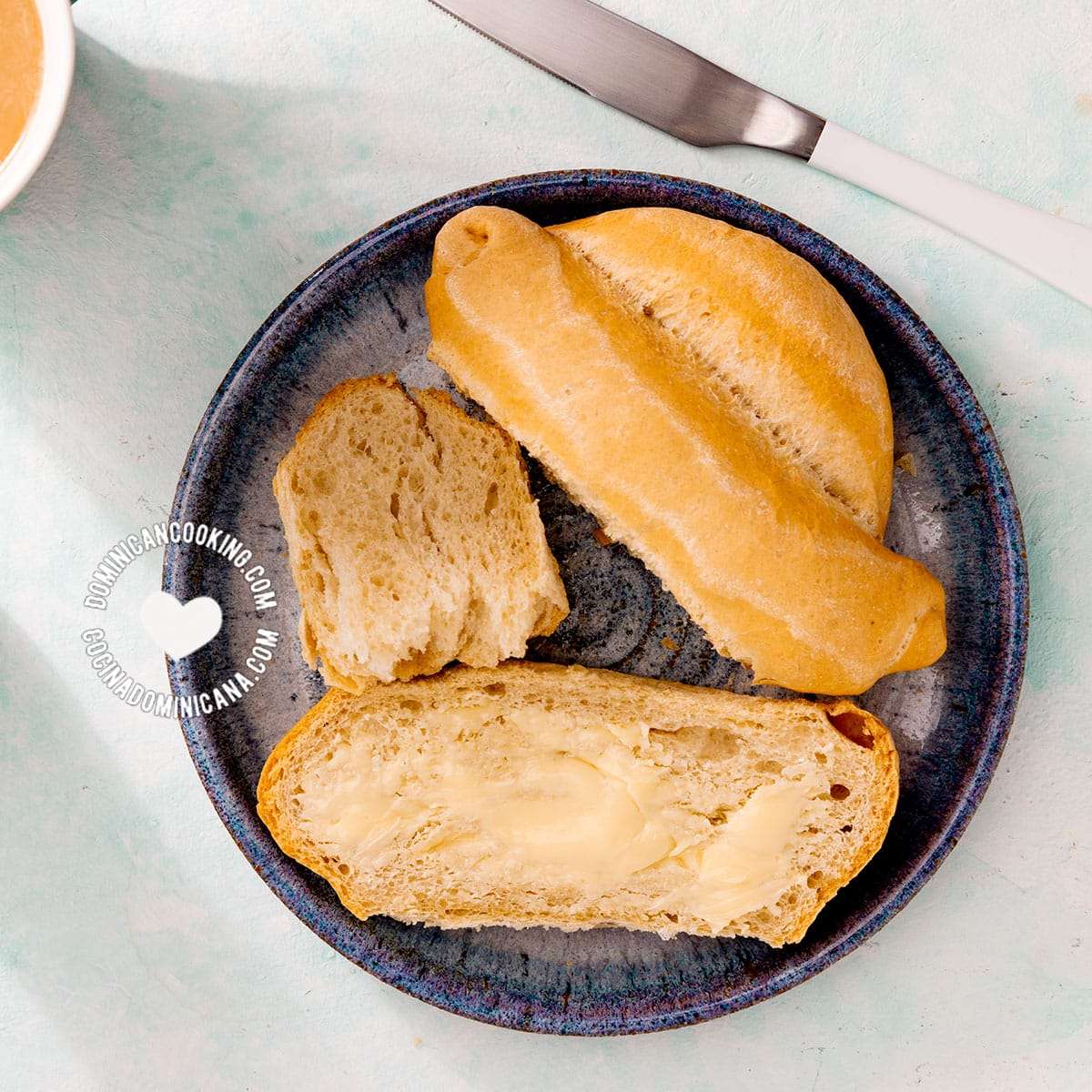
Pan de Agua [Recipe + Video] Dominican Breakfast Bread Rolls
User Reviews
5
-
Prep Time
1 hr 45 mins
-
Cook Time
30 mins
-
Total Time
2 hrs 15 mins
-
Servings
6 rolls
-
Calories
157 kcal
-
Course
Breakfast
-
Cuisine
South American, Dominican
Pan de Agua [Recipe + Video] Dominican Breakfast Bread Rolls
Description
This Pan de Agua recipe involves combining bread flour, salt, and instant yeast, then adding cold water to form a dough. Kneading is done in two stages: first to gather the dough ball, then incorporating vegetable oil followed by additional kneading until the dough is elastic and passes the windowpane test, indicating sufficient gluten development.
The dough is portioned into rolls and baked in an oven with steam generated by hot water in a tray and a water spray, producing bread with a moist interior and thin, crisp crust common to Pan de Agua. Careful temperature control and humidity in the oven influence the final texture and crust quality.
These rolls suit breakfast meals or sandwiches, complementing a variety of spreads or fillings with their tender crumb and moderate chew. The recipe emphasizes the importance of kneading and proper oven setup for steam baking.
Handling the hot oven and steam requires caution to avoid burns. Using oil to grease hands and surfaces helps in shaping sticky dough without damage.
Ingredients
- 2 cups bread flour [350 grams]
- 2 teaspoons instant dry yeast
- 1 tablespoon salt
- 1 cup water 236 mililiters] plus two tablespoons extra if needed, ice-cold
- 1 tablespoon vegetable oil (or olive oil), plus extra to grease hands, parchment paper, and countertop.
- 3 cups water to make steam in the oven, hot
- 2 tablespoon water in the spray bottle, room temperature
Instructions
1. Combining
- Combine flour, salt, and yeast, and sift together. Pour the flour into the mixer vase.Add 1 cup of cold water to the flour.
2. Kneading
- Start kneading at low speed (use the hook attachment if you're using a mixer). Run until most of the dough has gathered into a ball. You may need to scrape the sides if there's dry flour. If it looks too dry, add two tablespoons of cold water.Increase the speed to medium and run for 10 minutes. While you knead the dough, line two baking sheets with parchment paper greased with oil, and set them aside.
3. Adding oil
- Stop the mixer/bread maker and pour 1 tablespoon of vegetable oil onto the dough.
4. Knead again
- Start kneading at low speed until most of the oil has been incorporated into the dough (about 3 minutes).Increase the speed to medium and knead for another 10 minutes, or until it passes the windowpane test (see below)
5. Windowpane test
- Grease your hands with a bit of oil.Pull some of the dough and stretch gently until it's thin enough that you can see your fingers on the other side without breaking. If you can't do that, knead for another 5 minutes.
6. Form rolls
- Place the dough onto the greased countertop. Divide the dough into 6 equal balls (if you want to be exact, weigh the initial dough and divide it into six, then weigh the balls to make sure they're the same. I simply eyeballed it.Make the bolls into thin rolls to make modern mini-baguette-type pan de agua (about one inch [2.5 cm] in thickness. See the video to learn how to shape them into traditional rolls. As you form them, put them seam-side-down onto one of the lined and greased sheets.
7. Rising
- Cover the baking sheet with a clean cotton tea towel and let it rest in a place that's not too hot or cold (where you'd be comfortable).In the summer, I let mine rise in a room with the air conditioner on, because I live in the Dominican Republic, and it's typically hot most of the year. The rolls have to double in size, and the time it takes will depend on the temperature, humidity, and altitude, around 60 to 90 minutes. Check at 60 minutes and keep checking every 15 minutes if it's not done.
8. Preheat oven
- At about 40 minutes since the bread starter rising, preheat the oven to 350 º F [177 ºC] if it's a convection oven (with a fan), 375º [190 ºC] for a regular oven.Place a baking pan at the bottom of the oven, and pour 3 cups of hot water into it. The oven should be very steamy when you put the bread in the oven.
9. Ready rolls
- Once the rolls have doubled in size, remove the tea towel.Cover the bread with greased parchment paper (greased side-down). Place the other baking sheet on top without letting the baking sheet rest its weight on the bread.Flip the baking sheets, so now the bread is seam-side-up. Remove the top baking sheet and parchment paper.
10. Bake
- Spray the bread with a fine mist of water with the spray bottle and immediately place the baking sheet with the bread in the center of the oven and close fast so the steam doesn't escape.Bake for 20 minutes. If the pan still has water, remove it from the oven (be very careful).Move the bread to the top rack of the oven, and bake more until they have a golden brown crust (7 - 10 mins approx).
11. Serve
- Remove from the oven.See serving suggestions above the recipe.
Notes
- Exercise caution when handling hot ovens and steam; use proper mitts and holders.
- Grease hands and surfaces with oil when shaping to prevent sticking.
- Ensure the dough passes the windowpane test for best texture.
- Generating steam in the oven is important to produce the characteristic roll crust.
Nutrition Information
Show DetailsNutrition Facts
Serving: 6rolls
Amount Per Serving
Calories 157 kcal
% Daily Value*
| Calories | 157kcal | 8% |
| Carbohydrates | 31g | 10% |
| Protein | 6g | 12% |
| Fat | 1g | 2% |
| Saturated Fat | 1g | 5% |
| Sodium | 389mg | 16% |
| Potassium | 61mg | 1% |
| Fiber | 2g | 8% |
| Sugar | 1g | 2% |
| Calcium | 6mg | 1% |
| Iron | 0.4mg | 2% |
* Percent Daily Values are based on a 2,000 calorie diet.
User Reviews
Overall Rating
5
You'll Also Love